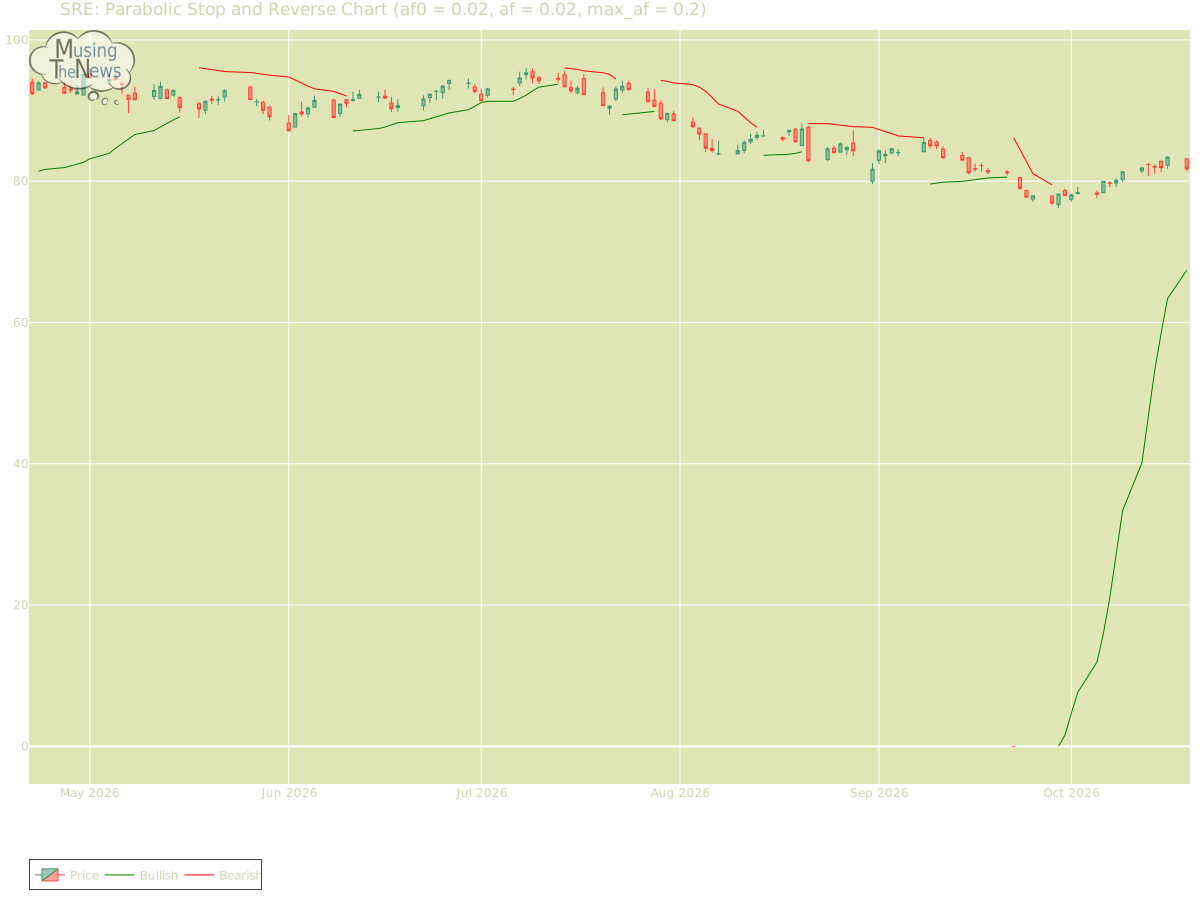
The PSAR remains bullish, establishing a key support level that could help uphold the market's upward trajectory. This persistent bullish outlook suggests that the market m...
By MusingTheNews
Updated 2026-10-20 23:25:50
Overall Technical outlook
Price Summary
On 2026-10-19, Sempra's stock began at 83.16, peaked at 83.16, declined to 81.4, and ended the day -1.71% lower at 81.74, with 4737600 shares traded. Over the past 52 weeks, the stock reached a maximum price of 99.75 and a minimum price of 0.0.
Technicals
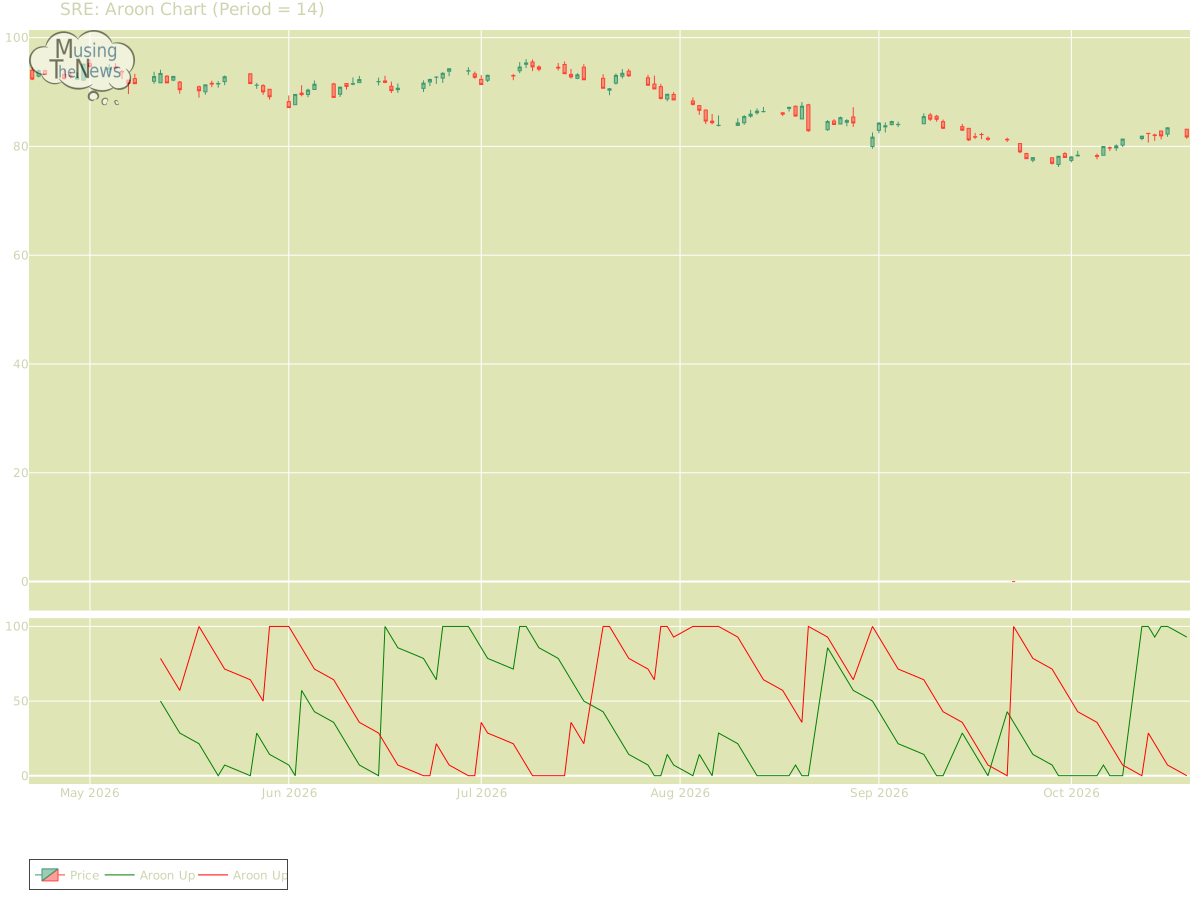
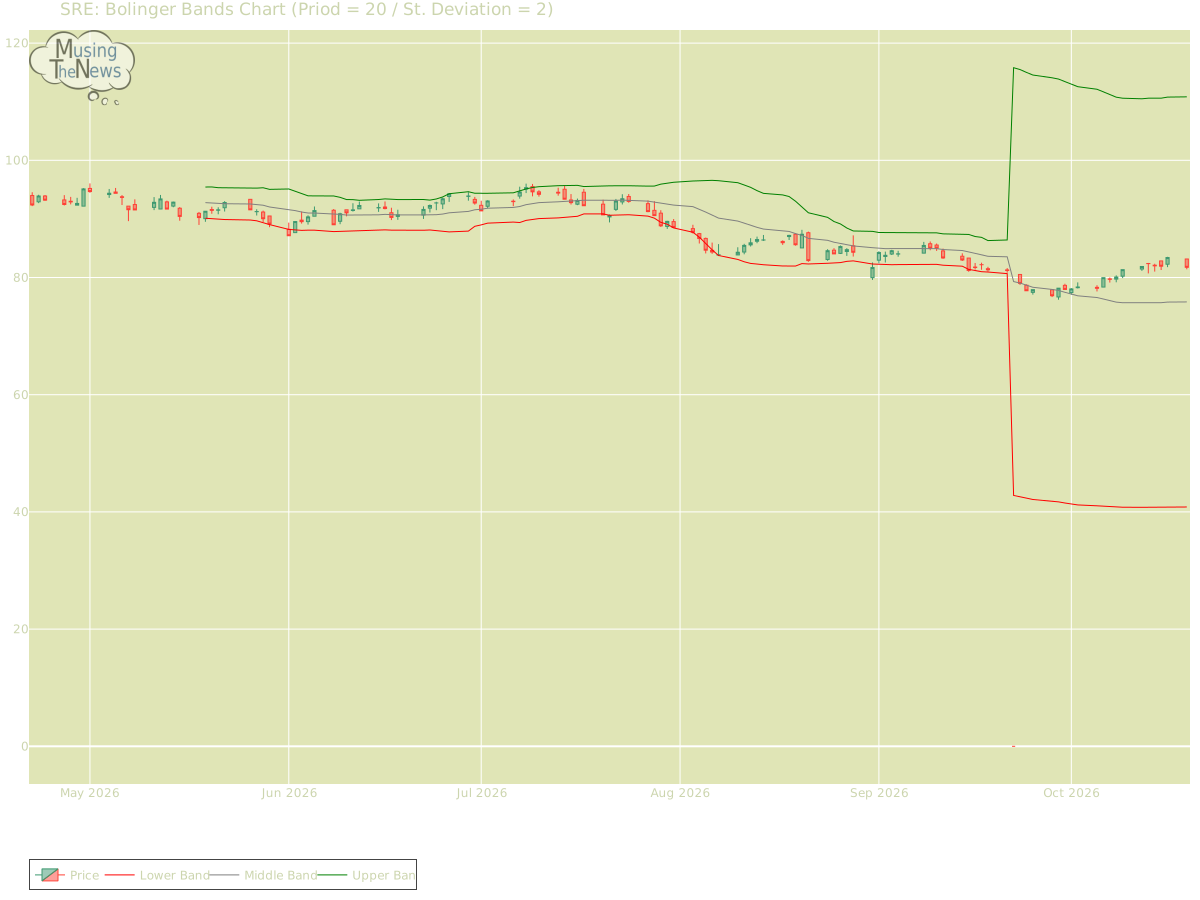
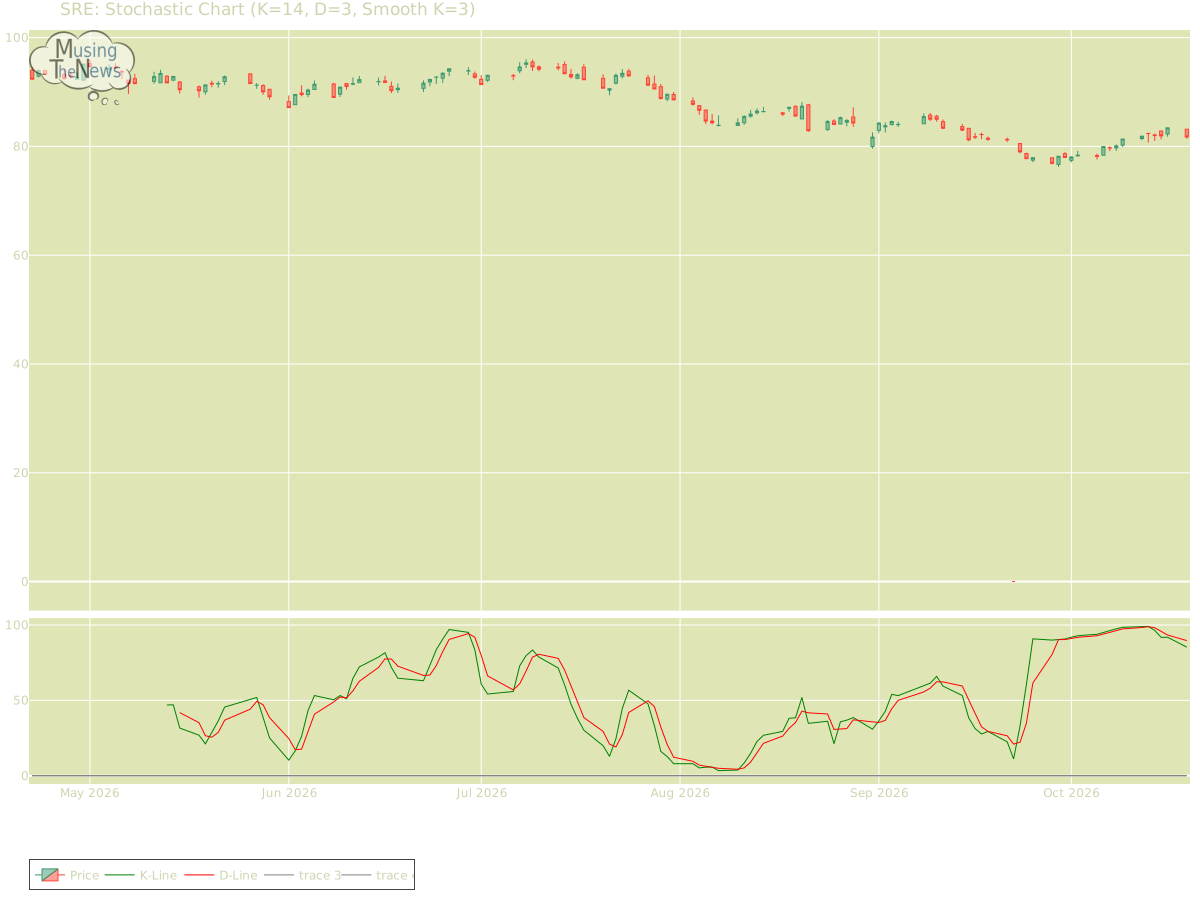
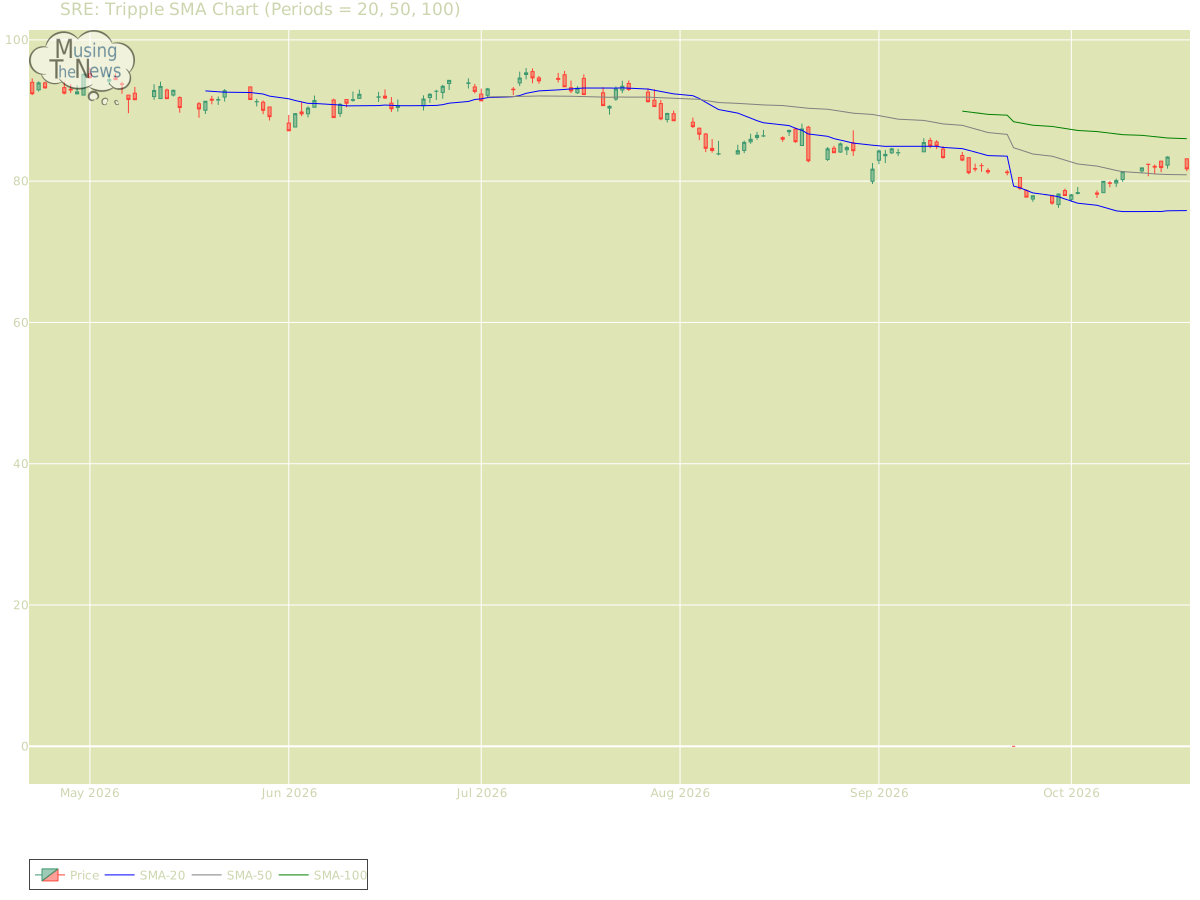
Aroon: The current reading of the AROON is neutral, offering no clear signals for a movement in either direction. This suggests that the market may be in a holding pattern, with no dominant trend in place.Aroon chart for SempraBol. Bands: The current reading of the BOLL BANDS is neutral, offering no clear signals for a movement in either direction. This suggests that the market may be in a holding pattern, with no dominant trend in place.Bolinger Bands chart for SempraParabolic SAR: The PSAR remains bullish, establishing a key support level that could help uphold the market's upward trajectory. This persistent bullish outlook suggests that the market may continue to rise, with the support providing a foundation for further gains.Parabolic Stop and Reverse chart for SempraStochastic: The stochastic indicator reflects the K-line falling below the D-line, though it remains above 80, hinting at the possible start of a bearish price move. This suggests that the market may be losing its recent strength, with a potential decline ahead. Traders should be on the lookout for further evidence of a bearish trend for Sempra.Stochastic chart for SempraTripple Moving Agerage: The current state of the Tripple MOVING AVG is neutral for SRE, providing no clear indication of a trend in either direction. This suggests that the market may be lacking momentum, making it difficult to predict future movements.Tripple SMA chart for Sempra Before focusing on a company's technical data, such as stock price movements, it's essential to analyze its fundamentals. These include factors like profitability, cash flow, and debt management. Additionally, considering the broader industry landscape—including market trends, competition, and regulatory changes—offers deeper insights. This comprehensive approach allows for a more meaningful interpretation of the company's technical indicators, providing a clearer picture of its financial health and future prospects.