Fundamentals for Kinder Morgan, Inc.
With KMI's Forward PE in a favorable range, the stock appears reasonably priced compared to its earnings. This suggests that it's not overpriced and there is room for growt...






Business Operations:
Sector: EnergyIndustry: Oil & Gas Midstream
Kinder Morgan, Inc. operates as an energy infrastructure company primarily in North America. It operates through Natural Gas Pipelines, Products Pipelines, Terminals, and CO2 segments. The Natural Gas Pipelines segment owns and operates interstate and intrastate natural gas pipeline, and storage systems; natural gas gathering systems and natural gas processing and treating facilities; natural gas liquids fractionation facilities and transportation systems; and liquefied natural gas gasification, liquefaction, and storage facilities. The Products Pipelines segment owns and operates refined petroleum products, and crude oil and condensate pipelines; and associated product terminals and petroleum pipeline transmix facilities. The Terminals segment owns and/or operates liquids and bulk terminals that stores and handles various commodities, including gasoline, diesel fuel, renewable fuel and feedstocks, chemicals, ethanol, metals, and petroleum coke; and owns tankers. The CO2 segment produces, transports, and markets CO2 to recovery and production crude oil from mature oil fields; owns interests in/or operates oil fields and gasoline processing plants; and operates a crude oil pipeline system in West Texas, as well as owns and operates RNG and LNG facilities. The company was formerly known as Kinder Morgan Holdco LLC and changed its name to Kinder Morgan, Inc. in February 2011. Kinder Morgan, Inc. was founded in 1997 and is headquartered in Houston, Texas.
Revenue projections:
Financial Ratios:
| currentRatio | 0.45800 |
|---|---|
| forwardPE | 20.11602 |
| debtToEquity | 98.61900 |
| earningsGrowth | 0.21200 |
| revenueGrowth | 0.10800 |
| grossMargins | 0.49407 |
| operatingMargins | 0.30065 |
| trailingEps | 1.55000 |
| forwardEps | 1.54454 |
KMI's current ratio of 0.458 indicates that the company may struggle to cover its short-term debt with existing cash reserves and current assets. This could signal potential liquidity issues, raising concerns about KMI's ability to meet its immediate financial obligations.
With KMI's Forward PE in a favorable range, the stock appears reasonably priced compared to its earnings. This suggests that it's not overpriced and there is room for growth, providing an encouraging opportunity for investors seeking future value increases.
KMI's elevated debt-to-equity ratio suggests the company is highly leveraged, meaning it has significant debt compared to equity. This can be risky, particularly if KMI's cash flow or profits decrease, making it harder to meet debt obligations.
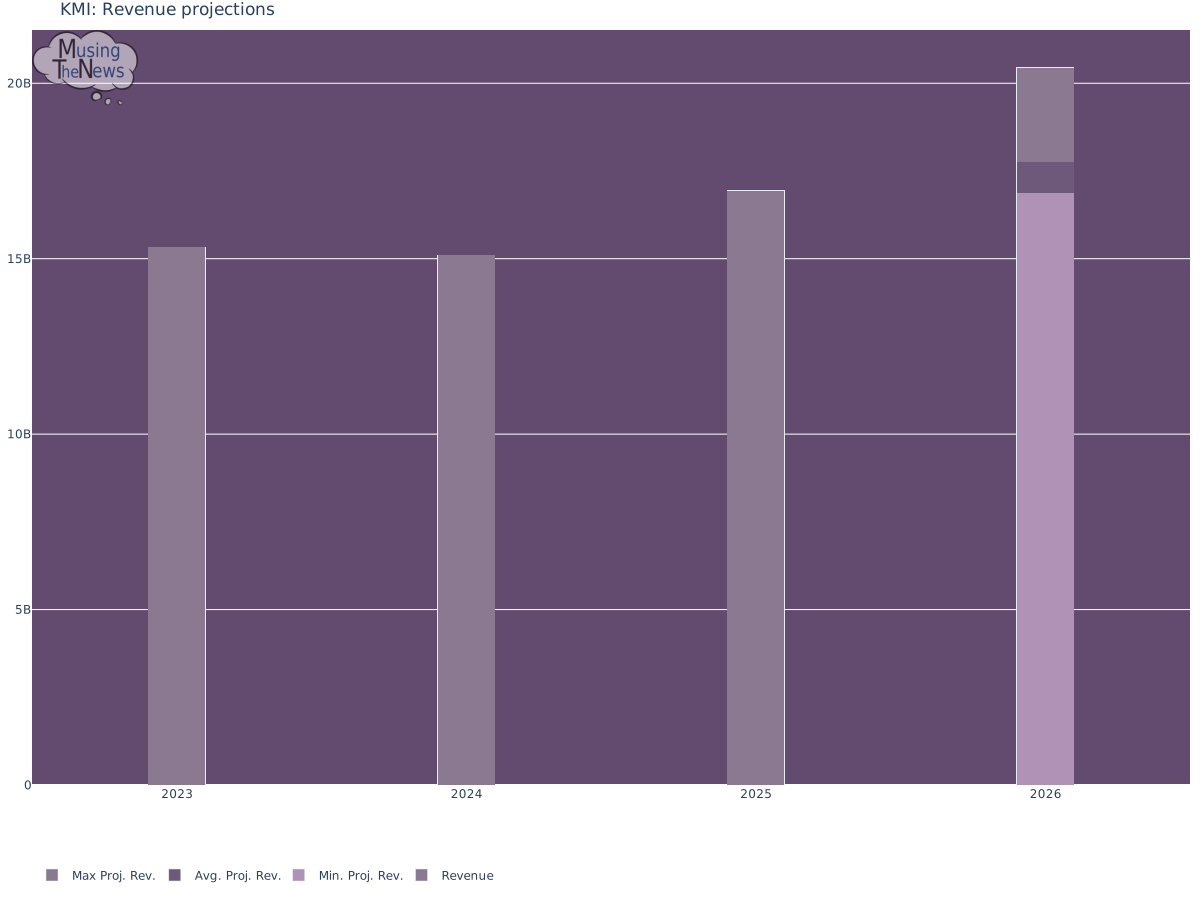
Kinder Morgan, Inc.'s positive earnings and revenue growth suggest that the company is expected to expand its business. This reflects a healthy financial outlook, as Kinder Morgan, Inc.'s increasing profits and sales signal further growth in the near future.
KMI's positive gross and operating margins reflect strong profitability and operational efficiency. These metrics indicate the company's ability to control costs while maintaining healthy revenue, contributing to its solid financial performance.
KMI's forward EPS falling below its trailing EPS suggests the company is expected to be less profitable this year. This signals a potential decline in earnings, which may raise concerns about KMI's financial future.
Price projections:
Insider Transactions:
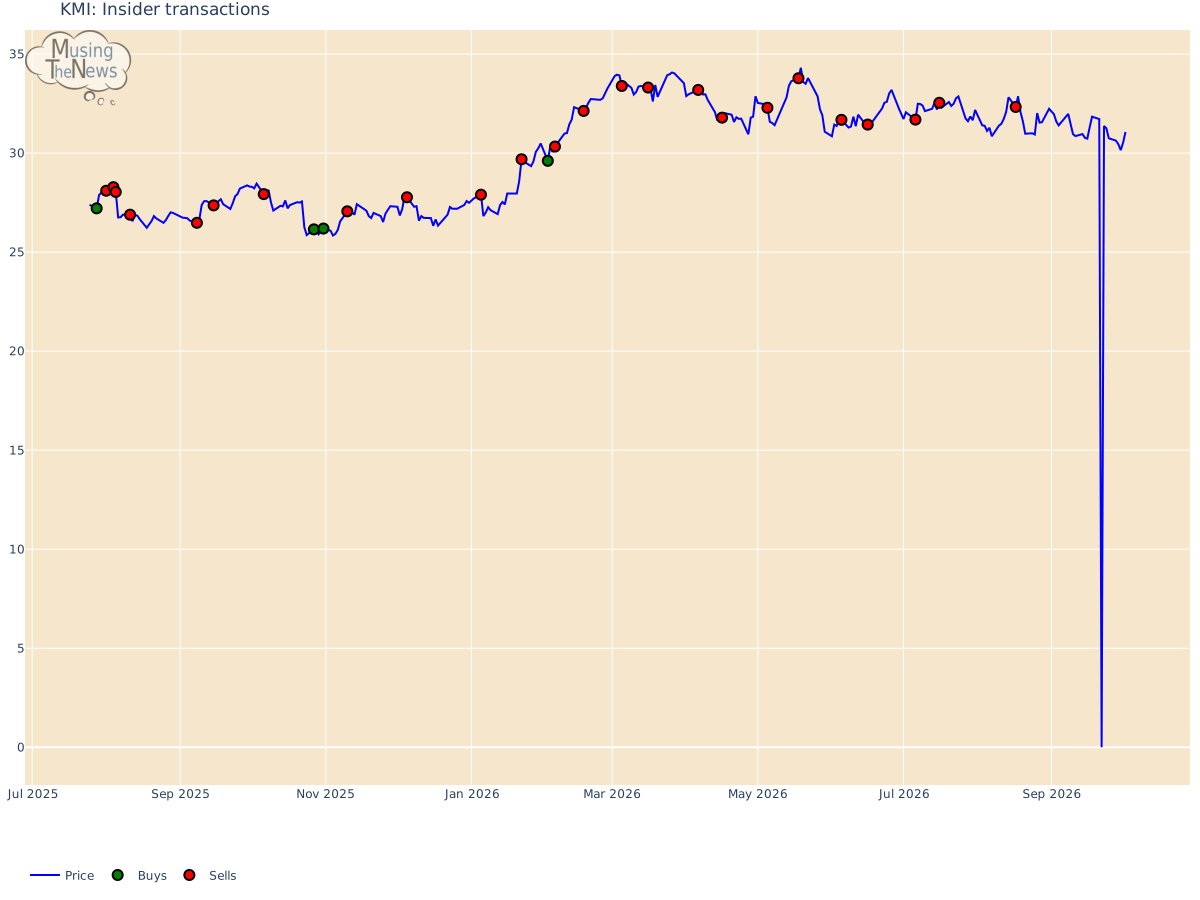
Kinder Morgan, Inc. experienced 24 sell transactions with market price of 30.224583625793457 per share.There were 4 transactions to buy KMI stock, with market price of 27.289999961853027.KMI has seen more sells at current price levels, which could indicate a potential decline. If this trend continues, investors may expect the stock's price to drop further as more people exit their positions.
Recommendation changes over time:
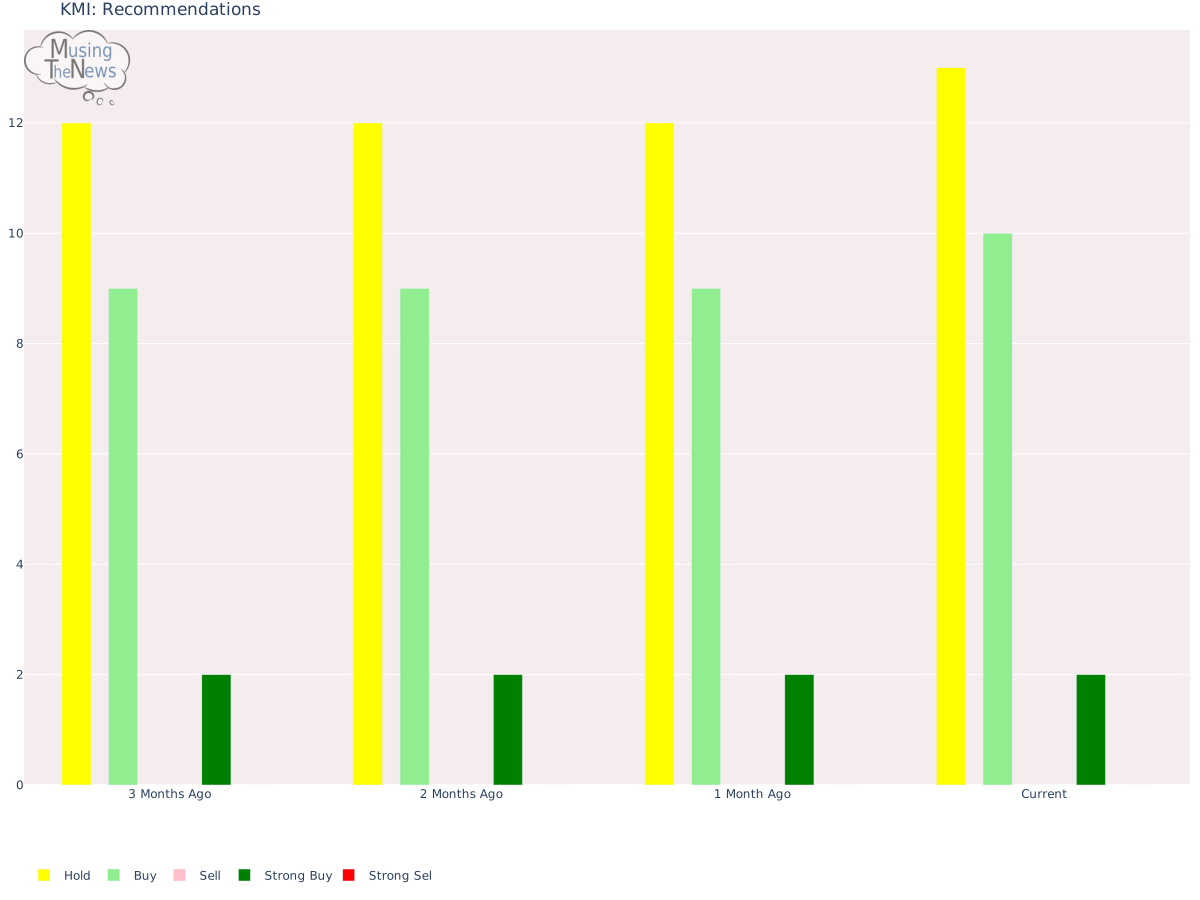
KMI has recently received a buy bias from analysts, indicating that the stock is being perceived as a favorable investment. This positive sentiment could encourage investors to see KMI as a wise place to allocate their funds, potentially leading to increased interest in the company's stock.