Fundamentals for Pfizer Inc.
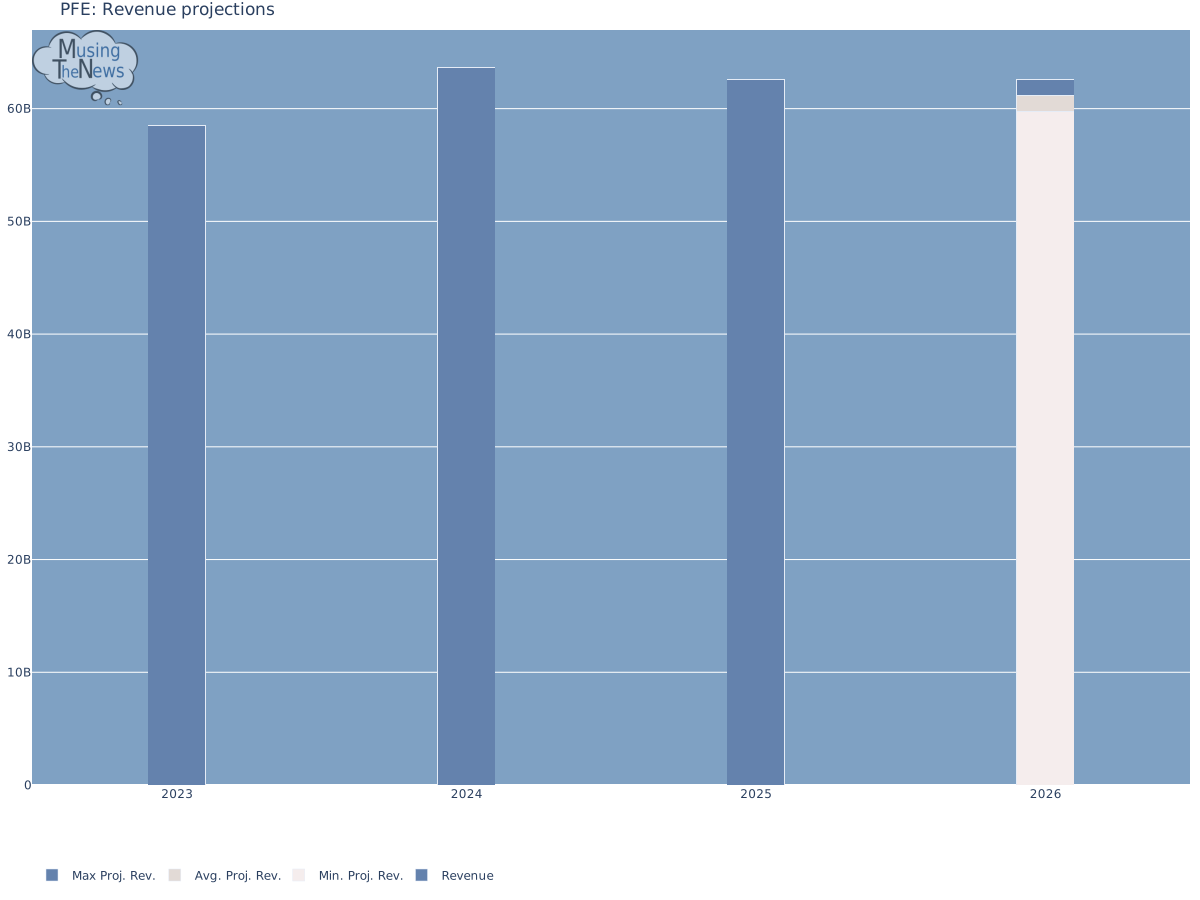
Pfizer Inc.'s revenue projections indicate a decrease from the prior year, which may make investors hesitant. A revenue decline could harm the company's bottom line, prompt...






Business Operations:
Sector: HealthcareIndustry: Drug Manufacturers - General
Pfizer Inc. discovers, develops, manufactures, markets, distributes, and sells biopharmaceutical products in the United States and internationally. It operates in three segments: Biopharma, PC1, and Pfizer Ignite. The company offers internal medicine products, including cardiovascular metabolic diseases products under the Eliquis brand; migraine products under the Nurtec ODT/Vydura and Zavzpret brand; vaccines under the Prevnar family, Abrysvo, Nimenrix, FSME/IMMUN-TicoVac, and Trumenba brands; and Paxlovid for the treatment of COVID-19. It also provides inflammation and immunology products, such as Xeljanz, Enbrel, Cibinqo, Litfulo, Eucrisa, and Velsipity; rare disease products for therapeutic areas comprising amyloidosis, hemophilia, and endocrine diseases under the Vyndaqel family, Genotropin, BeneFIX, Xyntha, Somavert, Ngenla, and Hympavzi brands; and anti-infective and immunoglobulin medicines under the Zavicefta, Octagam, and Panzyga brands. In addition, the company offers oncology products comprising ADCs, small molecules, bispecific, and other immunotherapies for the treatment of cancers, including breast cancer, genitourinary cancer, and hematologic malignancies, as well as melanoma, gastrointestinal, gynecological, and lung cancer under the Ibrance, Xtandi, Padcev, Adcetris, Inlyta, Lorbrena, Bosulif, Tukysa, Braftovi, Mektovi, Orgovyx, Elrexfio, Tivdak, and Talzenna brands. Further, it provides biosimilars under the Inflectra brand; oncology biosimilars comprising Retacrit, Ruxience, Zirabev, Trazimera and Nivestym, and other biosimilars; and sterile injectables, such as Sulperazon, Atgam, Fragmin, Solu Medrol, Solu Cortef, and Bicillin. The company has collaboration agreements with Bristol-Myers Squibb Company; Astellas Pharma US, Inc.; Merck KGaA; and BioNTech SE, as well as a strategic collaboration with Boltz, PBC to develop and deploy biomolecular AI foundation models. Pfizer Inc. was founded in 1849 and is headquartered in New York, New York.
Revenue projections:
Financial Ratios:
| currentRatio | 1.419000 |
|---|---|
| forwardPE | 9.996459 |
| debtToEquity | 71.006000 |
| earningsGrowth | -0.097000 |
| revenueGrowth | -0.004000 |
| grossMargins | 0.748980 |
| operatingMargins | 0.333840 |
| trailingEps | 0.700000 |
| forwardEps | 2.937040 |
Pfizer Inc.'s current ratio being 1.419 suggests that it has more than enough liquidity to cover short-term debt obligations. The company's cash reserves and current assets are sufficient to meet immediate liabilities, signaling solid financial health and minimal risk.
PFE's low earnings and revenue growth suggest shrinking profits. This negative trend could indicate that the company is struggling to maintain its financial performance and may face challenges ahead.
PFE's positive gross and operating margins suggest that the company is operating profitably. These strong margins indicate effective cost management and revenue generation, contributing to a solid financial foundation.
Price projections:
Insider Transactions:
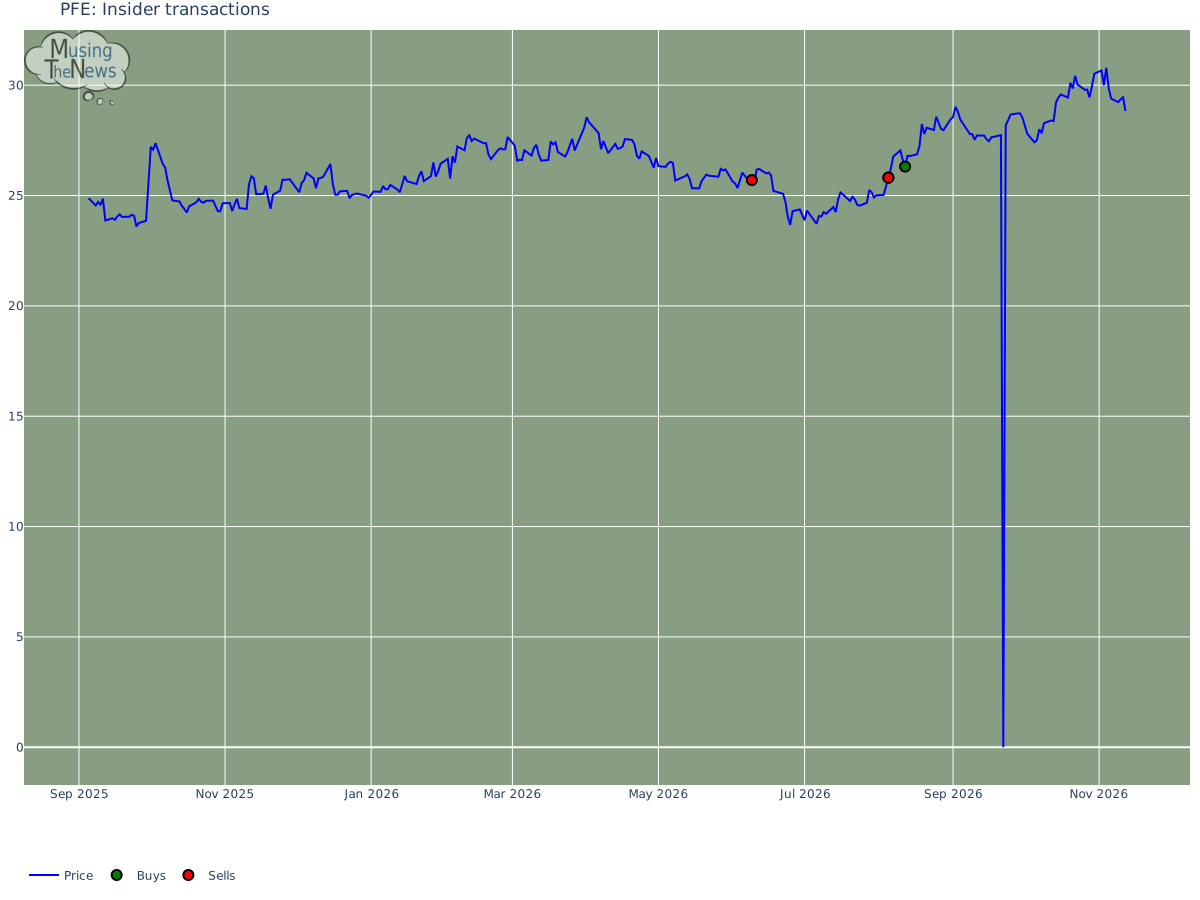
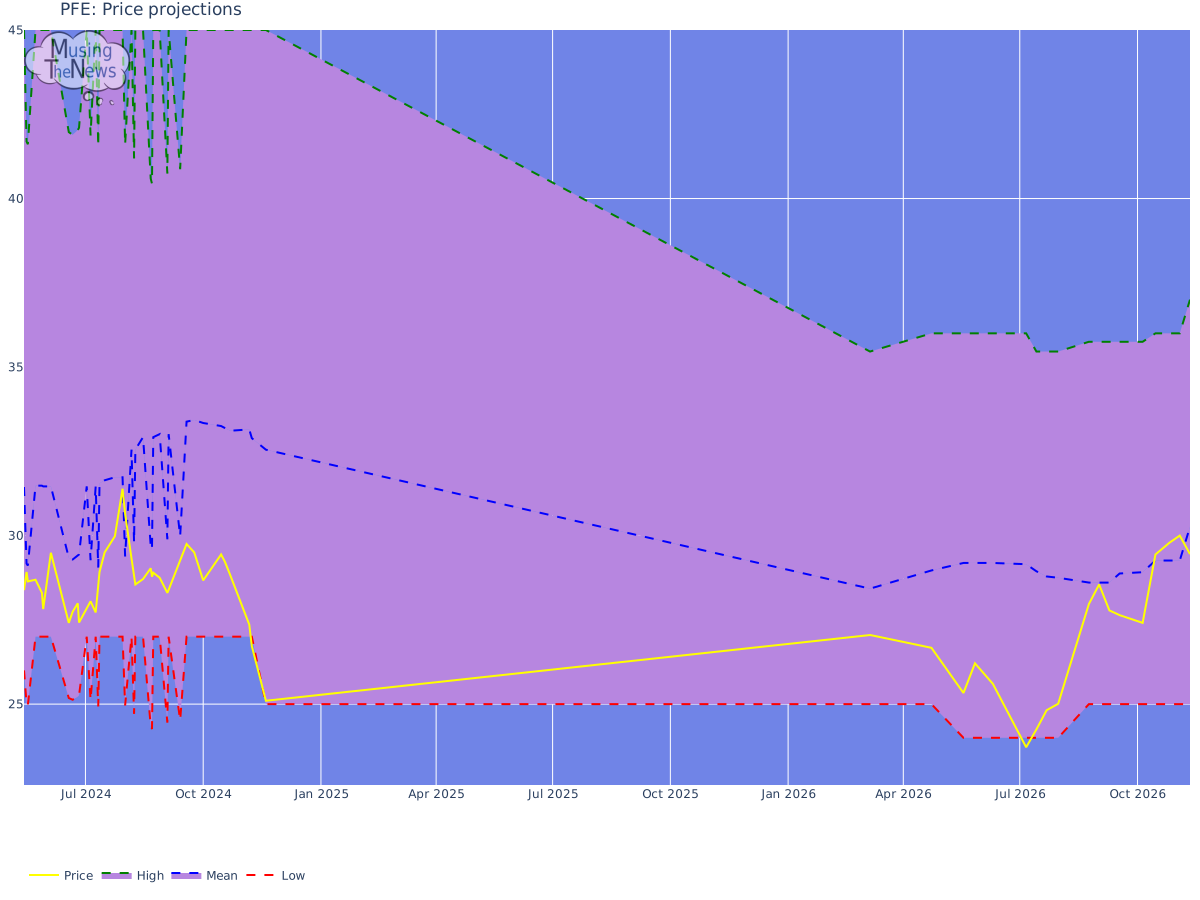
2 sales of PFE stock were made, with market price at 25.755000114440918 per share.2 purchases of PFE stock were recorded, with market price of 26.059999465942383 per share.Insider transactions show no strong upward or downward movement, offering little insight into the company's future performance or strategic direction.
Recommendation changes over time:
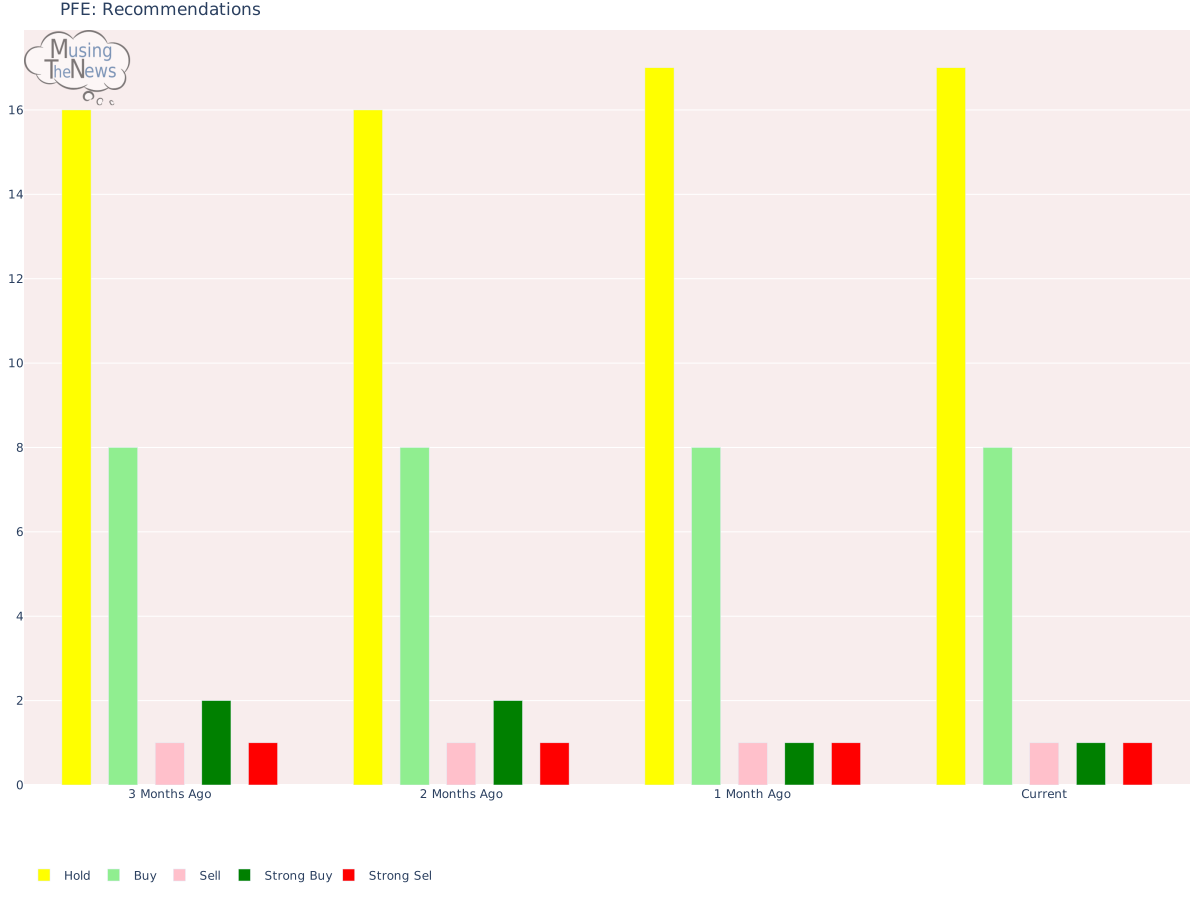
Pfizer Inc. has been receiving a buy bias from analysts, signaling strong confidence in the stock's future performance. This positive outlook might drive investors to view Pfizer Inc. as an attractive option for their portfolios, positioning the company as a stable and profitable investment choice.