Fundamentals for Northern Trust Corporation
Northern Trust Corporation's forward EPS exceeding its trailing EPS implies that the company is projected to be more profitable this year. This suggests an improvement in f...






Business Operations:
Sector: Financial ServicesIndustry: Asset Management
Northern Trust Corporation, a financial holding company, provides wealth management, asset servicing, asset management, and banking solutions for corporations, institutions, families, and individuals. It operates in two segments, Asset Servicing and Wealth Management. The Asset Servicing segment offers asset servicing and related services, including custody, fund administration, investment operations outsourcing, investment management, investment risk and analytical, employee benefit, securities lending, foreign exchange, treasury management, brokerage, transition management, banking, and cash management services. It serves corporate and public retirement funds, foundations, endowments, fund managers, insurance companies, sovereign wealth funds, and other institutional investors. The Wealth Management segment offers trust, investment management, custody, and philanthropic; financial consulting; guardianship and estate administration; family business consulting; family financial education; brokerage; and private and business banking services. This segment also provides global custody; fiduciary; family office consulting; and technology solutions to high-net-worth individuals and families, business owners, executives, professionals, retirees, and established privately-held businesses. In addition, it offers asset management, and related services and other products comprising active and passive equity; active and passive fixed income; cash management; muti-asset and alternative asset classes which includes private equity and hedge funds of funds; and multi-manager advisory services and products through separately managed accounts, bank common and collective funds, registered investment companies, exchange traded funds, non-U.S. collective investment funds, and unregistered private investment funds. Further, the company provides overlay and other risk management services. The company was founded in 1889 and is headquartered in Chicago, Illinois.
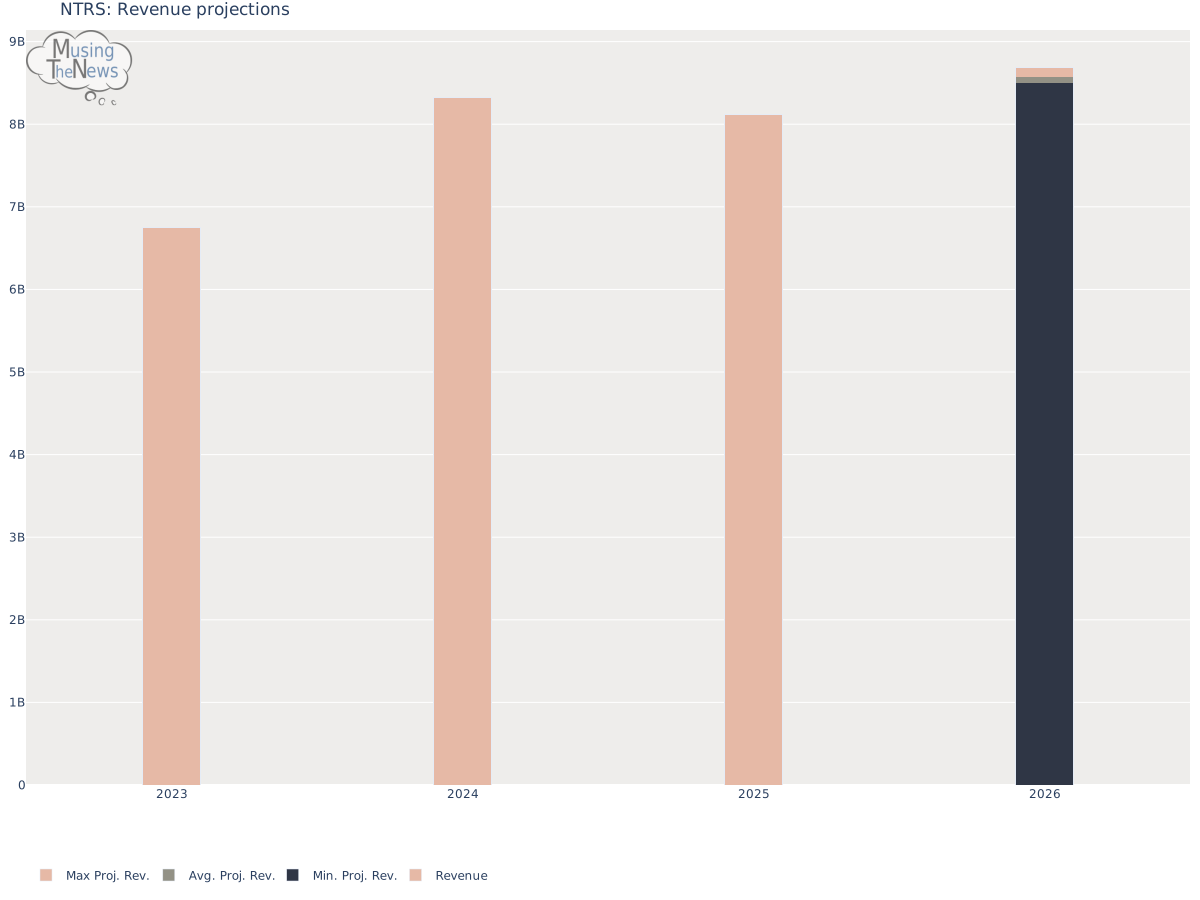
Revenue projections:
Financial Ratios:
| currentRatio | 0.000000 |
|---|---|
| forwardPE | 13.629945 |
| debtToEquity | 0.000000 |
| earningsGrowth | 0.485000 |
| revenueGrowth | 0.121000 |
| grossMargins | 0.000000 |
| operatingMargins | 0.347970 |
| trailingEps | 12.760000 |
| forwardEps | 13.051410 |
NTRS's Forward PE is in a favorable range, suggesting the stock is reasonably priced relative to its earnings. This indicates the stock is not overpriced, providing room for potential growth and making it an attractive option for investors looking for solid value and future upside.
NTRS's positive earnings and revenue growth indicate that the company is well-positioned for business expansion. This growth suggests a strong financial trajectory, with NTRS expected to continue increasing its profits and revenue in the coming periods.
Northern Trust Corporation's forward EPS exceeding its trailing EPS implies that the company is projected to be more profitable this year. This suggests an improvement in financial performance, with analysts expecting Northern Trust Corporation to generate stronger earnings compared to the previous financial year.
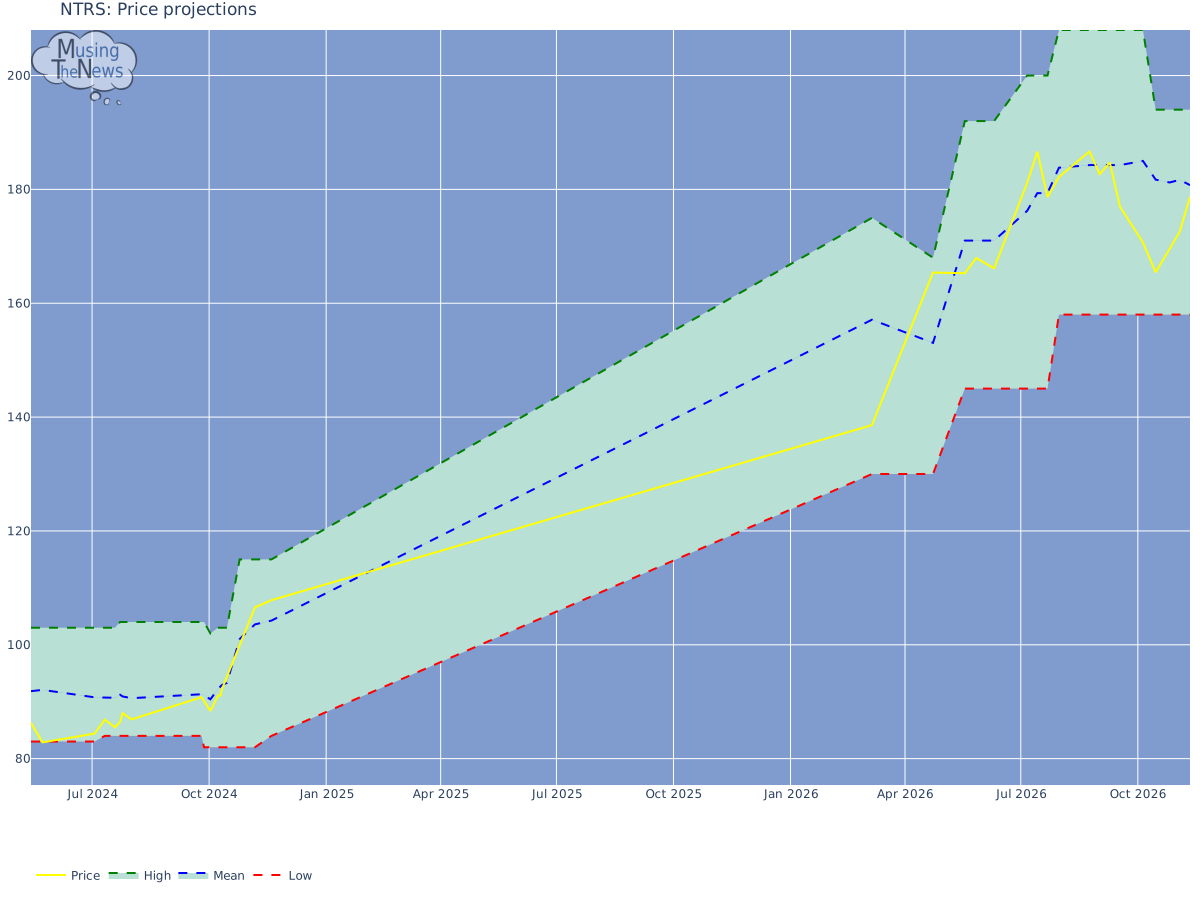
Price projections:
Insider Transactions:
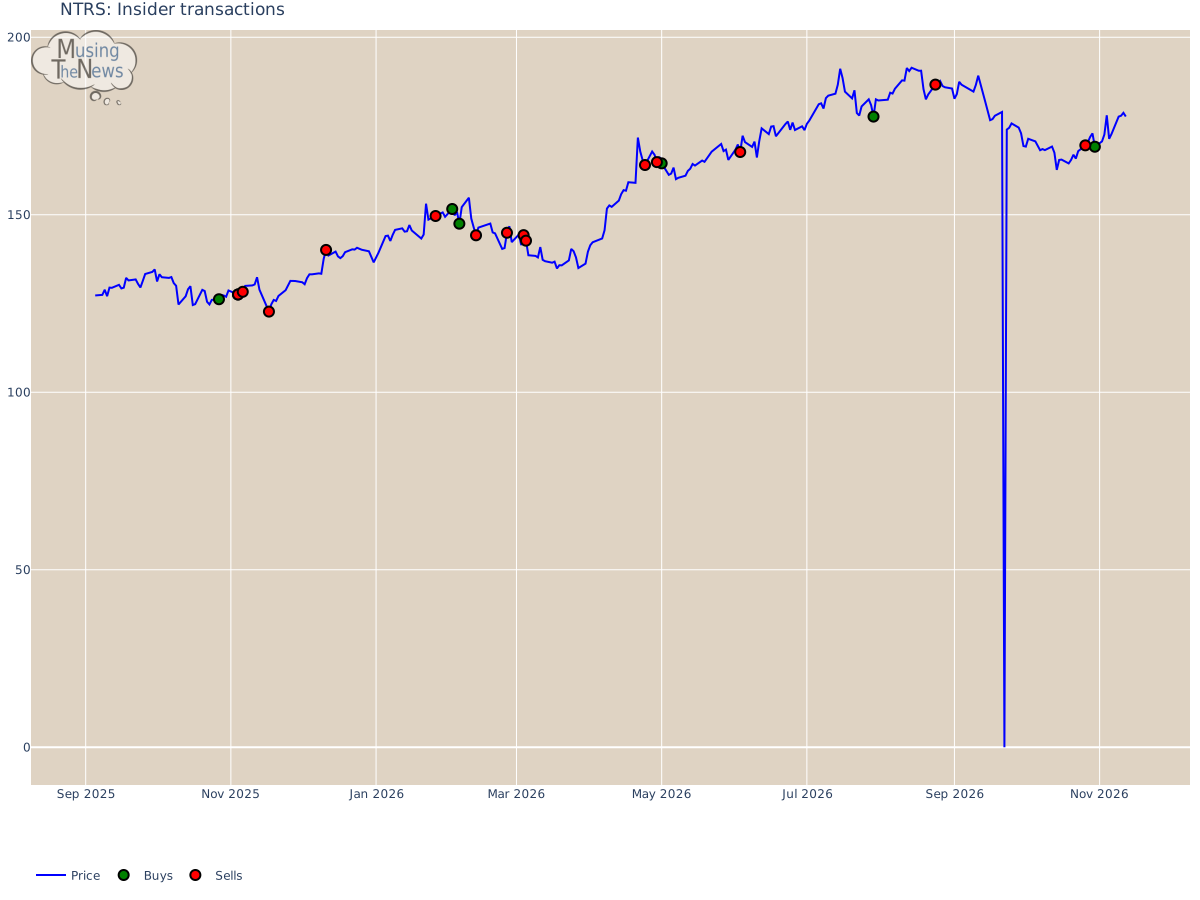
NTRS experienced 14 selling transactions, with market price of 149.79429136003768.NTRS had 7 buy transactions while market price was at 152.01856885637557 per share.The insider transaction records do not exhibit a strong trend, leaving the company’s future direction unclear based on this data alone.
Recommendation changes over time:
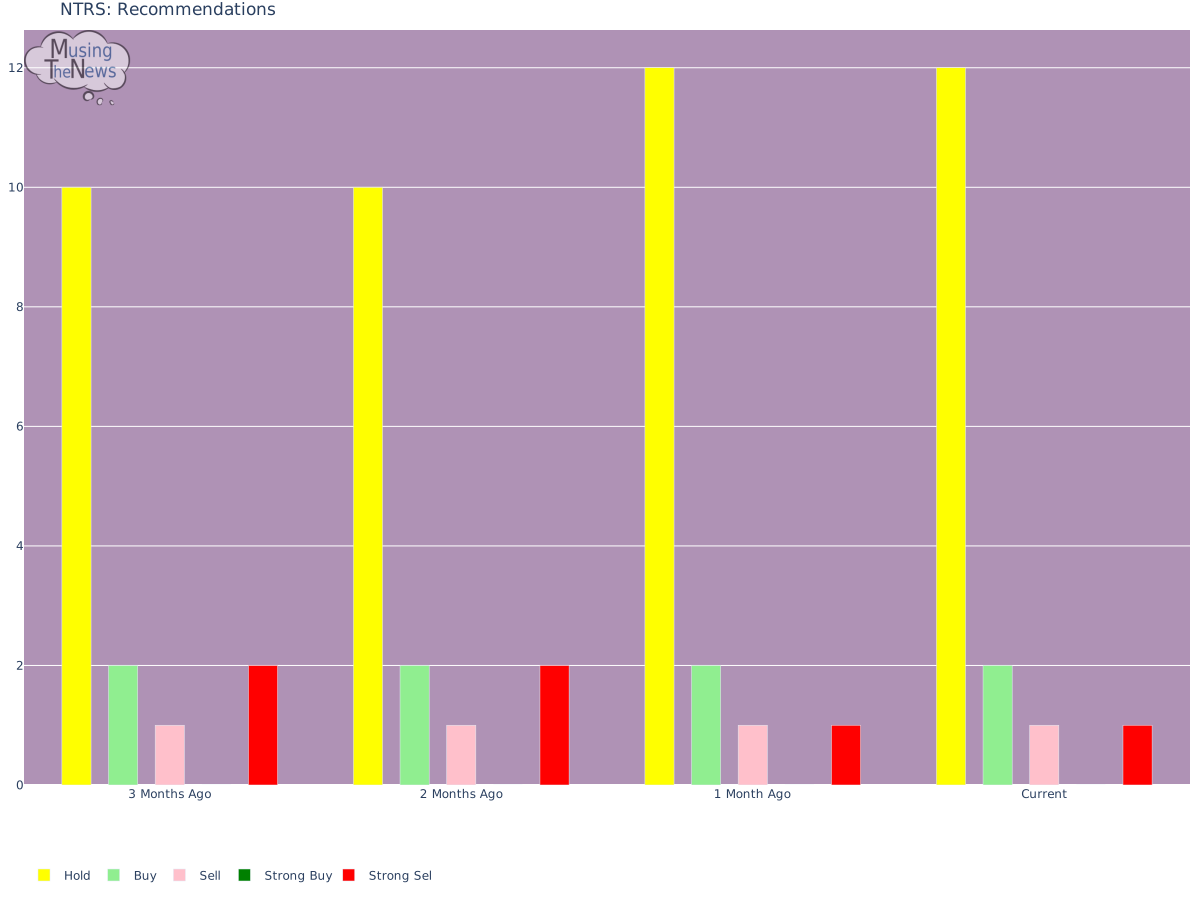
Analysts have developed a sell bias for Northern Trust Corporation, indicating potential caution for investors. However, it's important to base decisions on a broader set of market indicators to gain a more complete understanding of Northern Trust Corporation's future and avoid reacting solely to the analysts' negative sentiment.