Fundamentals for D.R. Horton, Inc.
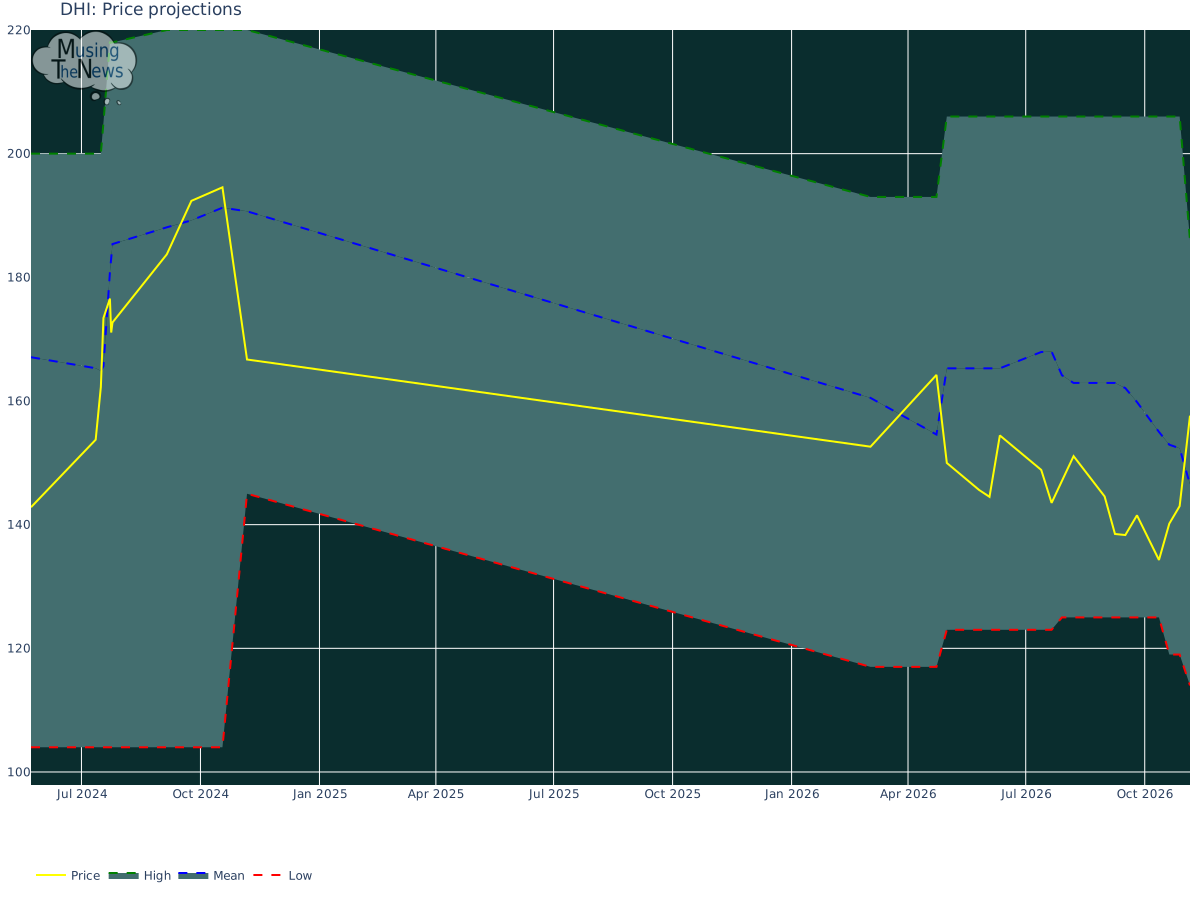
DHI's price projections have gradually declined, indicating growing uncertainty about the company's ability to meet previous targets. The downward trend reflects a more con...






Business Operations:
Sector: Consumer CyclicalIndustry: Residential Construction
D.R. Horton, Inc. operates as a homebuilding company in East, North, Southeast, South Central, Southwest, and Northwest regions in the United States. It engages in the acquisition and development of land; and construction and sale of residential homes in 126 markets across 36 states under the names of D.R. Horton. The company also constructs and sells single-family detached homes; and attached homes, such as townhomes and duplexes. In addition, it provides mortgage financing and title agency services; and engages in the residential lot development business. Further, the company develops, constructs, owns, leases, and sells multi-family and single-family rental properties; conducts insurance-related operations; and owns water rights and other water-related assets, as well as non-residential real estate, including ranch land and improvements. It primarily serves homebuyers. D.R. Horton, Inc. was founded in 1978 and is headquartered in Arlington, Texas.
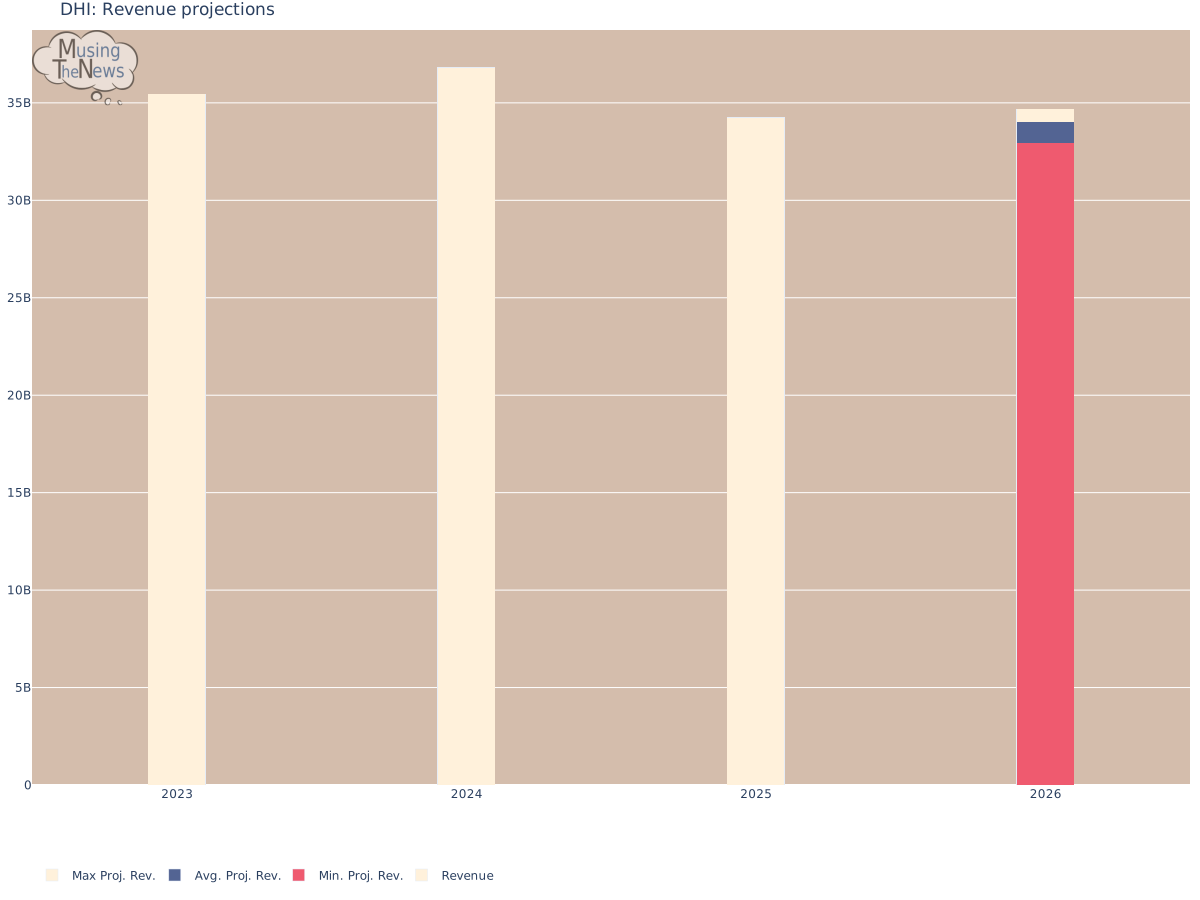
Revenue projections:
Financial Ratios:
| currentRatio | 4.297000 |
|---|---|
| forwardPE | 13.371099 |
| debtToEquity | 25.529000 |
| earningsGrowth | -0.124000 |
| revenueGrowth | -0.032000 |
| grossMargins | 0.205840 |
| operatingMargins | 0.111770 |
| trailingEps | 10.110000 |
| forwardEps | 10.803150 |
D.R. Horton, Inc.'s current ratio of 4.297 highlights the company's ability to easily cover its short-term debt using its available cash and assets. This indicates a strong liquidity position, ensuring D.R. Horton, Inc. is unlikely to face difficulties in meeting immediate financial obligations.
DHI's Forward PE is at a healthy level, meaning the stock price is aligned favorably with earnings. This suggests that the stock isn't overpriced, providing room for growth and making it an appealing option for investors looking to capitalize on potential future gains.
D.R. Horton, Inc.'s low Debt-to-Equity ratio demonstrates that the company is not over-leveraged. This means it maintains a healthy balance between debt and equity, lowering financial risk and contributing to overall financial stability, which could attract risk-averse investors.
D.R. Horton, Inc.'s low growth in earnings and revenue indicates a potential decline in profits. This suggests that the company could be facing financial challenges, making it harder to sustain its current profit margins.
D.R. Horton, Inc.'s negative gross and operating margins highlight that the company is incurring losses, unable to generate profit from production or operations. This could be a sign of rising costs or declining revenues, impacting its financial outlook.
With a forward EPS greater than its trailing EPS, DHI is forecasted to be more profitable this year than last. This growth expectation reflects confidence in the company's earnings potential and suggests an improving financial trajectory for the year ahead.
Price projections:
Insider Transactions:
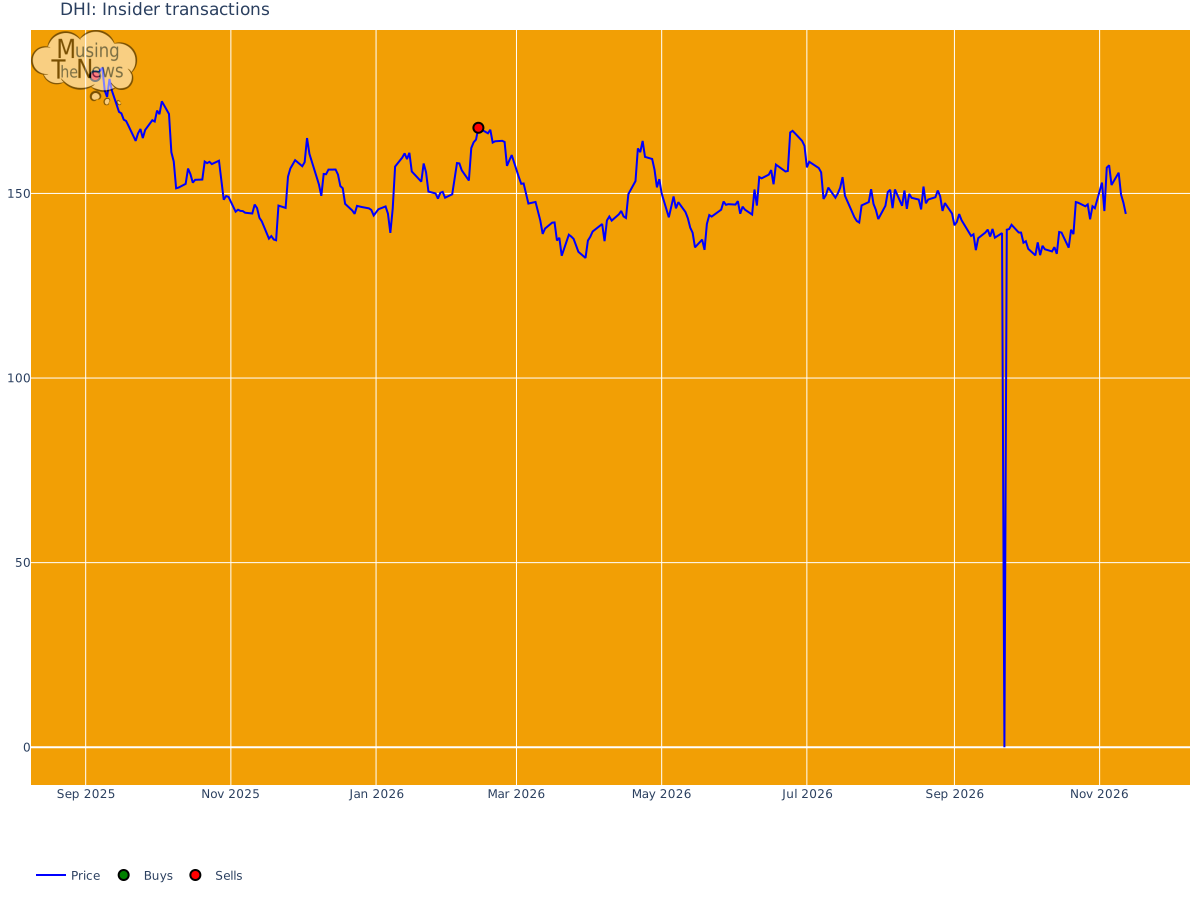
2 DHI shares were sold in recent transactions, with market price at 174.79000091552734.During the review period, no sell transactions were executed.Investors are purchasing DHI more frequently than selling it near the current price levels, which might point to a bullish sentiment. This pattern could be interpreted as a favorable outlook for the stock's future.
Recommendation changes over time:
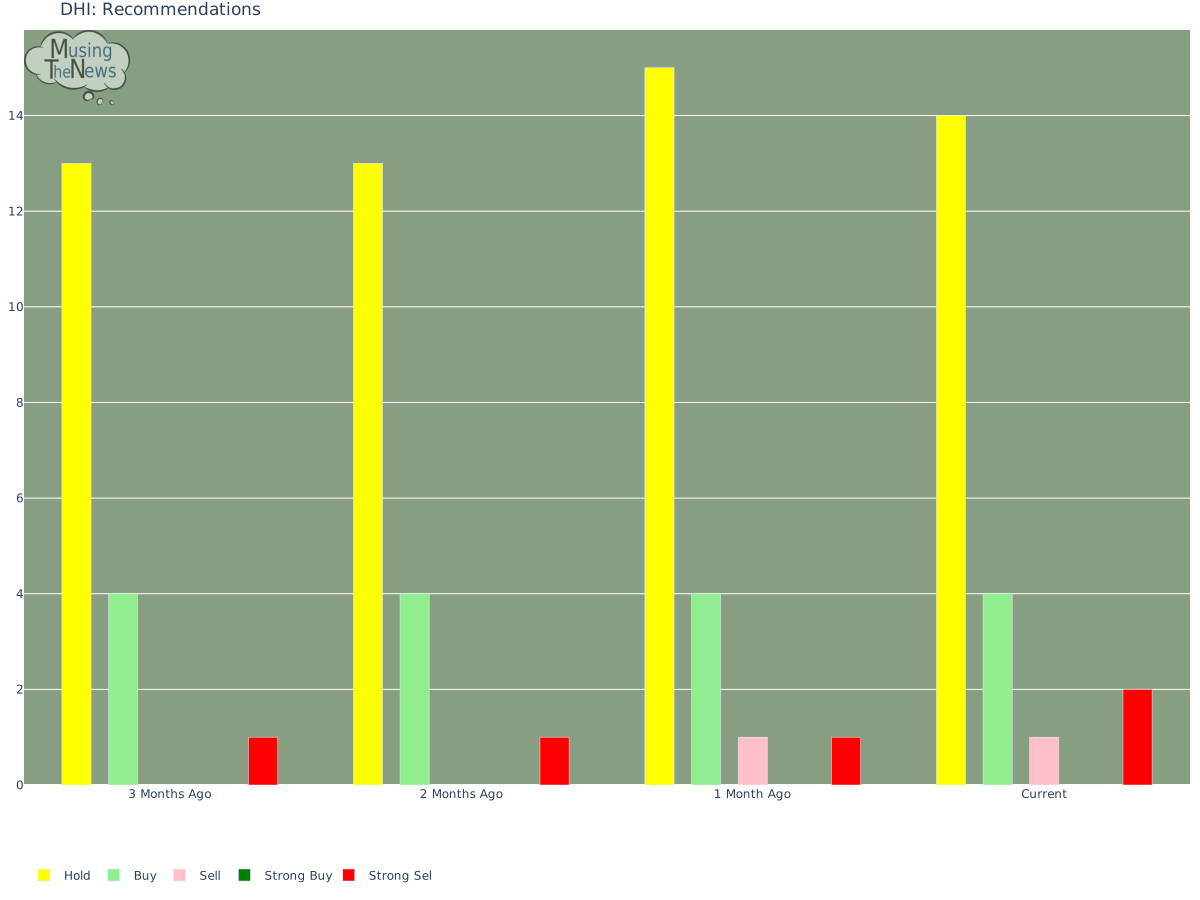
Analysts have shown a sell bias toward D.R. Horton, Inc., signaling potential caution for investors. However, it's recommended to base investment decisions on a wider range of market indicators to get a fuller understanding of the stock's trajectory, avoiding overreliance on a single sentiment.