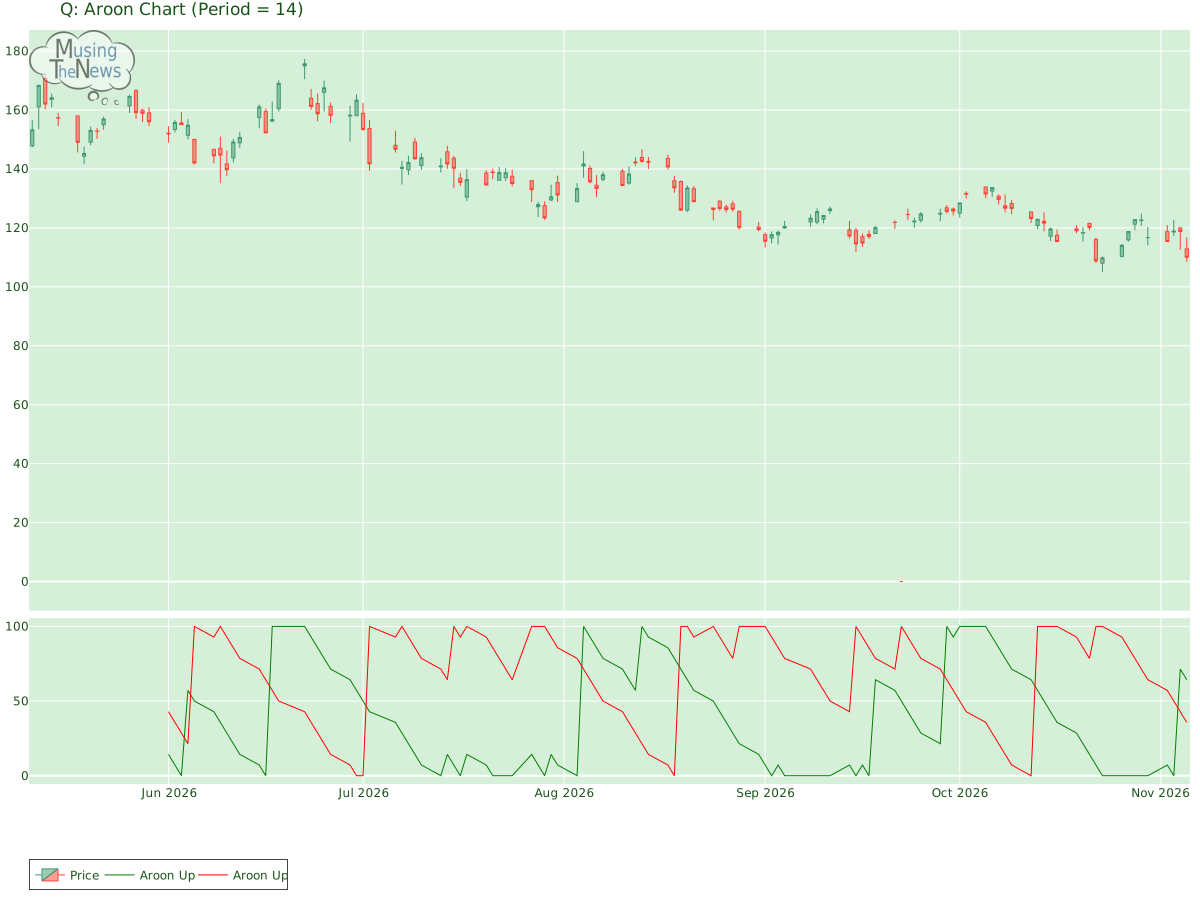
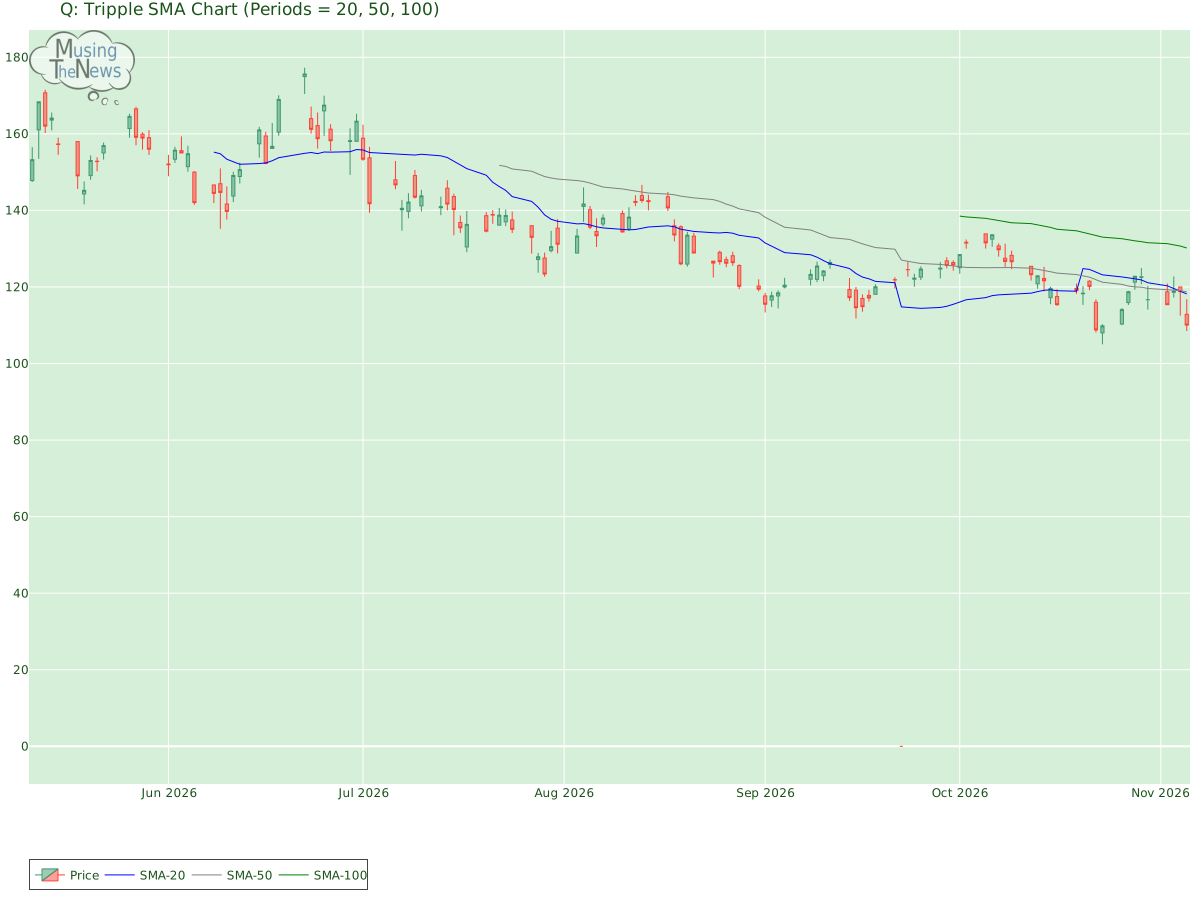
The AROON is currently neutral, showing no clear bias toward a rising or falling trend. This lack of directional clarity suggests that the market may be in a holding patter...
By MusingTheNews
Updated 2026-11-06 22:27:20
Overall Technical outlook
Price Summary
In today's trading session, Q's shares tumbled by -2.48%, marking a poor day. On 2026-11-05, Q's stock opened at 112.84, reached a peak of 116.8, dropped to 108.5, and ended -2.48% lower at 110.04, with a volume of 3367100 shares. The top price for the stock in the last 52 weeks is 175.64, with the bottom price being 0.0.
Technicals
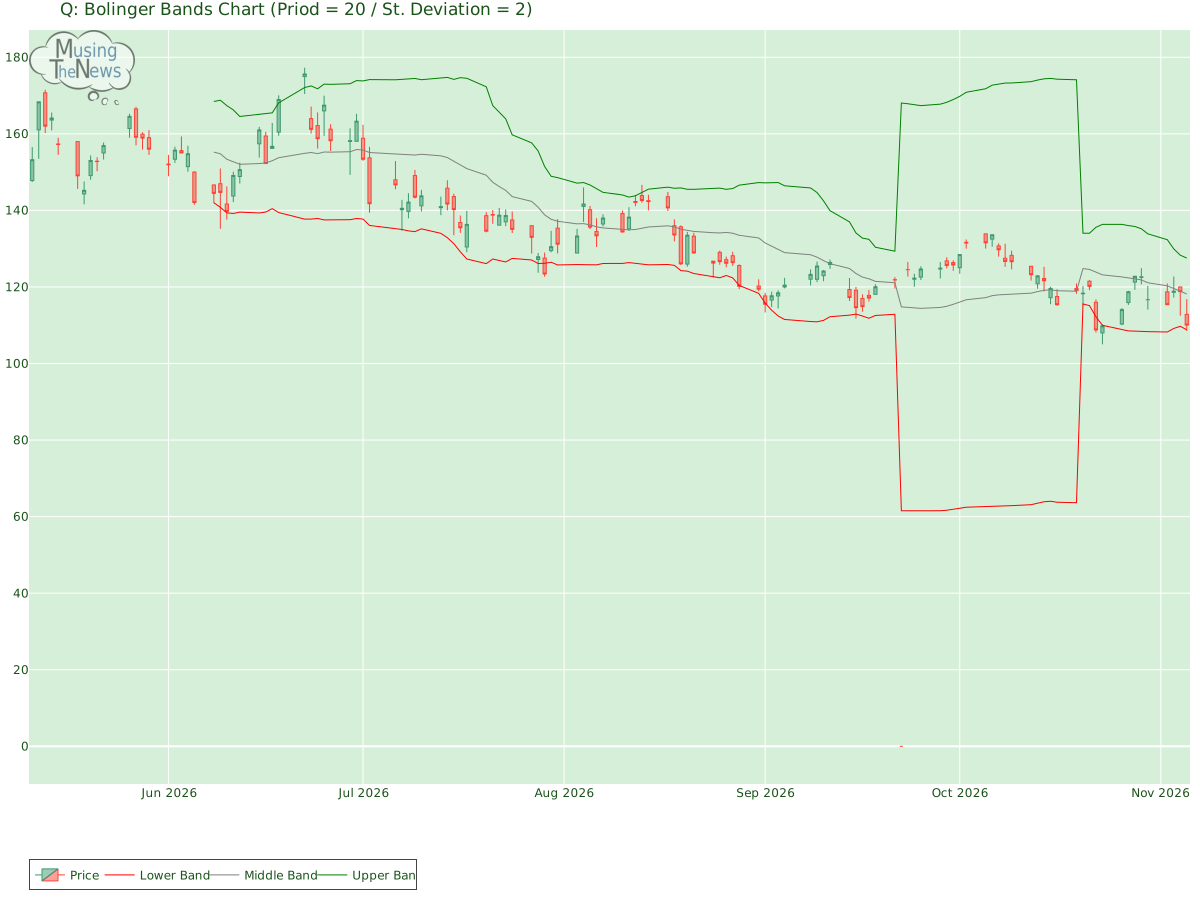
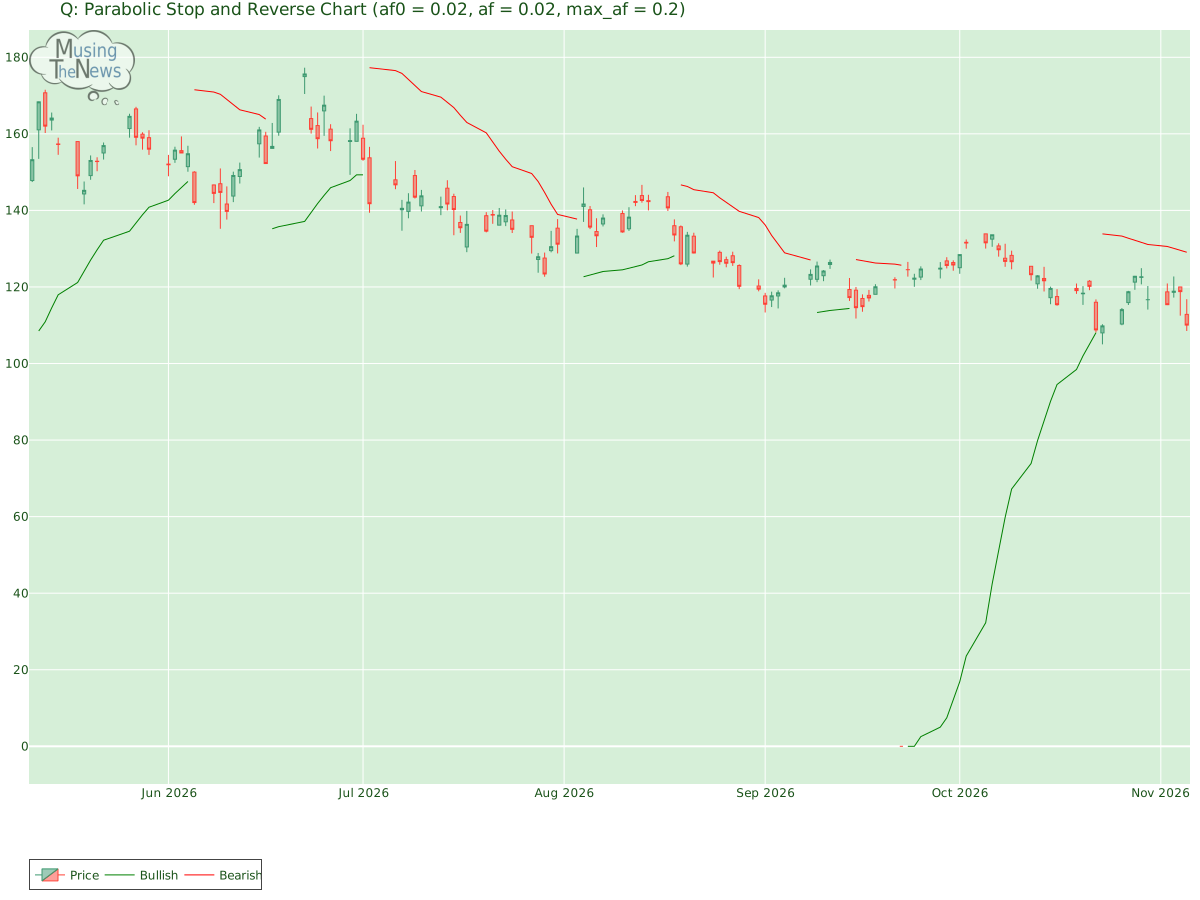
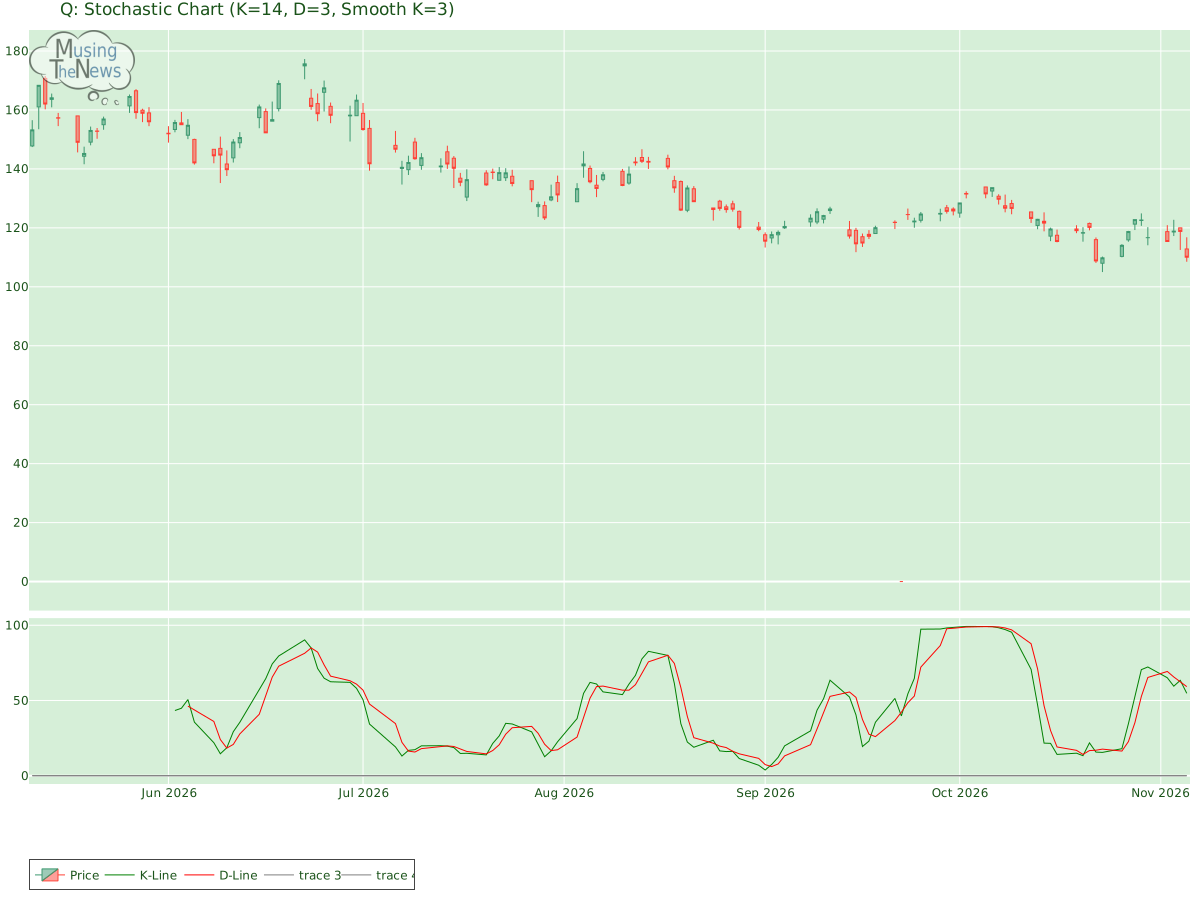
Aroon: The AROON is currently neutral, showing no clear bias toward a rising or falling trend. This lack of directional clarity suggests that the market may be in a holding pattern, awaiting further developments.Aroon chart for Qnity Electronics, Inc.Bol. Bands: The current state of the BOLL BANDS is neutral, with no clear trend direction indicated. This lack of directional bias suggests that the market may be in a phase of consolidation or uncertainty.Bolinger Bands chart for Qnity Electronics, Inc.Parabolic SAR: The PSAR remains in a bearish mode, setting a resistance level that could impede any upward movement. This resistance indicates that the market may continue to face bearish pressure, with limited potential for breaking higher.Parabolic Stop and Reverse chart for Qnity Electronics, Inc.Stochastic: The STOCHASTIC is showing a neutral stance, not indicating a clear upward or downward trend for Qnity Electronics, Inc.. This suggests a period of market balance, where neither side is showing dominance.Stochastic chart for Qnity Electronics, Inc.Tripple Moving Agerage: A bullish trend for Qnity Electronics, Inc. is reflected in the alignment of the 20-50-100 period moving averages, though the slopes of the faster averages raise concerns about a potential reversal. The weakening momentum in the shorter-term averages suggests that the current trend may not last, signaling the possibility of a shift in direction.Tripple SMA chart for Qnity Electronics, Inc. To accurately interpret a company's technical data, it is important to first examine its fundamentals. These include financial performance, management quality, and growth prospects. In addition, understanding the dynamics of the industry in which the company operates—such as competition, market trends, and regulatory factors—provides further insights. This combined analysis helps create a fuller picture, allowing for more precise conclusions to be drawn from the company's technical performance and stock behavior.