Fundamentals for Illinois Tool Works Inc.
Illinois Tool Works Inc. experienced 6 sell transactions with market price of 281.8250020345052 per share.2 separate purchases of ITW stock were made, while market price wa...






Business Operations:
Sector: IndustrialsIndustry: Specialty Industrial Machinery
Illinois Tool Works Inc. provides industrial products and equipment in North America, Europe, the Middle East, Africa, the Asia Pacific, and South America. It operates through seven segments: Automotive OEM; Food Equipment; Test & Measurement and Electronics; Welding; Polymers & Fluids; Construction Products; and Specialty Products. The Automotive OEM segment offers plastic and metal components, fasteners, and assemblies for automobiles, light trucks, and other industrial uses. The Food Equipment segment provides warewashing, cooking, refrigeration, and food processing equipment; kitchen exhaust, ventilation, and pollution control systems; and food equipment maintenance and repair services. The Test & Measurement and Electronics segment produce and sells test and measurement; and electronic manufacturing and maintenance, repair, and operations solutions. The Welding segment produces arc welding equipment, and metal arc welding consumables and related accessories. The Polymers & Fluids segment produces adhesives, sealants, lubrication and cutting fluids, and fluids and polymers for auto aftermarket maintenance and appearance. The Construction Products segment offers engineered fastening systems and solutions for the residential construction, renovation/remodel, and commercial construction markets. The Specialty Products segment provides beverage packaging equipment and consumables, product coding and marking equipment and consumables, and appliance components and fasteners. The company serves automotive OEM and aftermarket, commercial food equipment, construction, general industrial, industrial capital goods, consumer durables, and other markets, as well as MRO markets. It distributes its products directly to industrial manufacturers, as well as through independent distributors. Illinois Tool Works Inc. was founded in 1912 and is based in Glenview, Illinois.
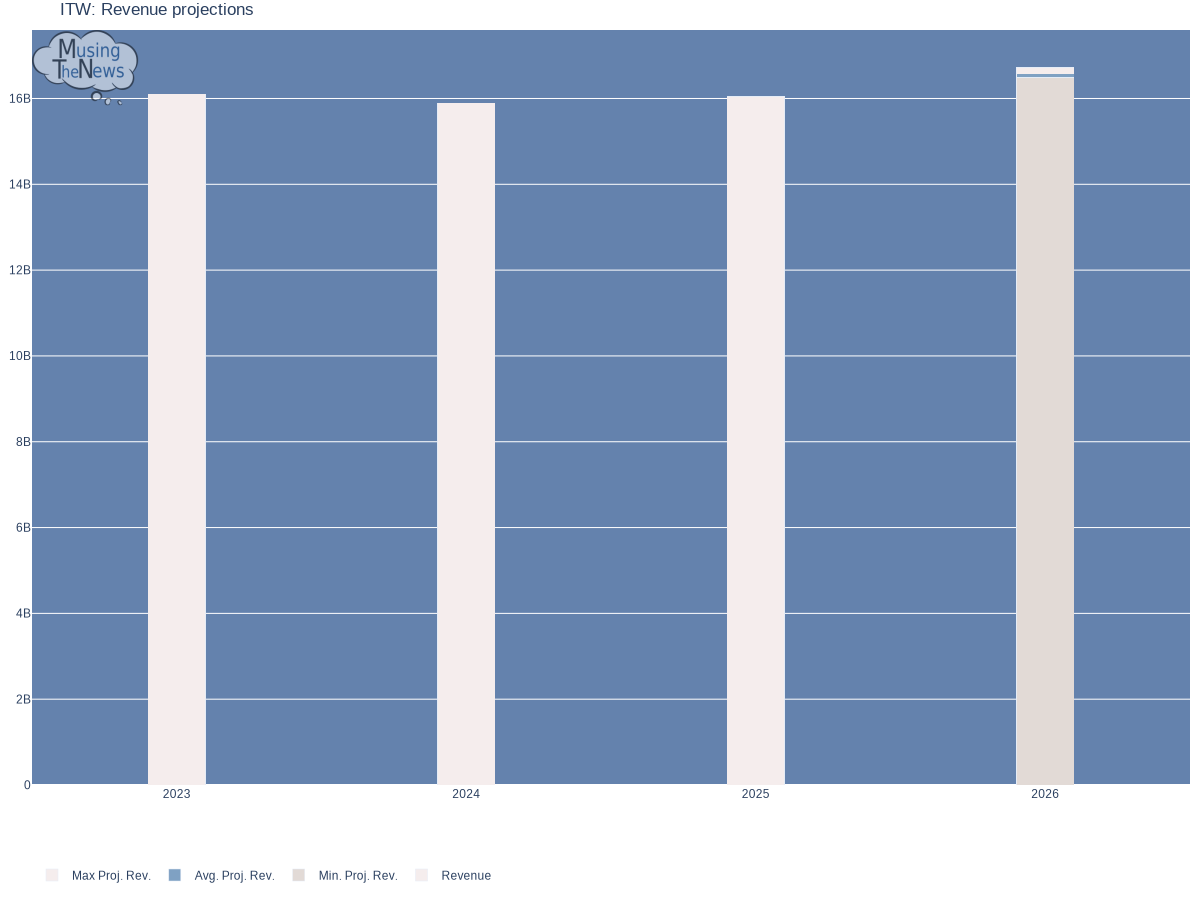
Revenue projections:
Financial Ratios:
| currentRatio | 1.294000 |
|---|---|
| forwardPE | 22.782127 |
| debtToEquity | 298.281000 |
| earningsGrowth | 0.068000 |
| revenueGrowth | 0.044000 |
| grossMargins | 0.443170 |
| operatingMargins | 0.268590 |
| trailingEps | 11.090000 |
| forwardEps | 12.363640 |
ITW's current ratio of 1.294 means the company has enough liquidity to meet its short-term debt obligations. With sufficient cash reserves and current assets, ITW can comfortably cover its liabilities, reflecting a strong financial outlook.
ITW's Forward PE is positioned well, reflecting a favorable balance between stock price and earnings. The stock isn't overpriced, offering room for growth and making it a potentially rewarding investment as its value has room to rise further.
ITW's high debt-to-equity ratio signals that the company is heavily leveraged. This suggests ITW may be relying more on debt than equity to finance its operations, which could expose the company to greater financial risk in challenging economic conditions.
With positive gross and operating margins, ITW demonstrates its profitability and efficiency. These metrics show that the company is managing costs well while generating strong revenue, highlighting robust financial health.
Illinois Tool Works Inc.'s forward EPS exceeding its trailing EPS reflects expectations of increased profitability for the current year. This suggests that the company is projected to achieve higher earnings than in the previous financial year, signaling positive growth and improved financial health.
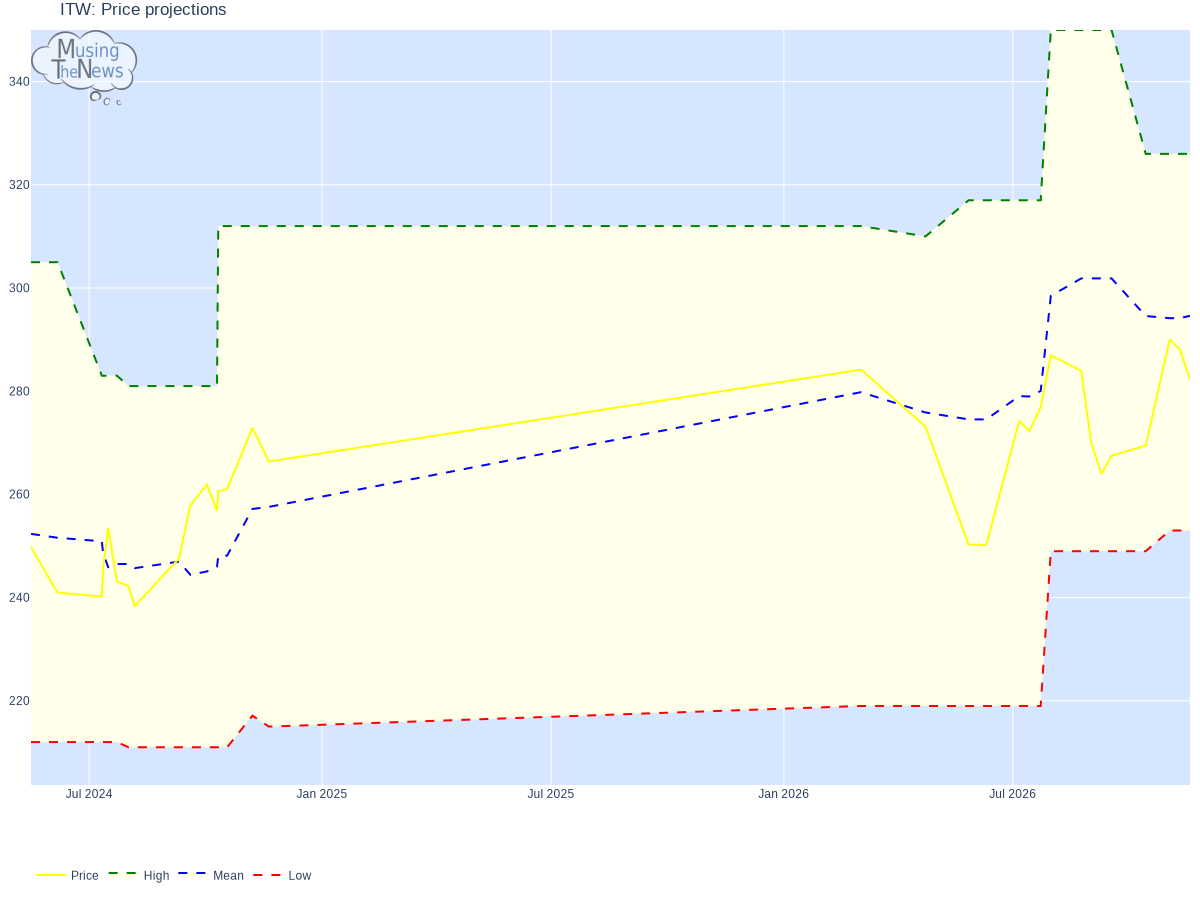
Price projections:
Insider Transactions:
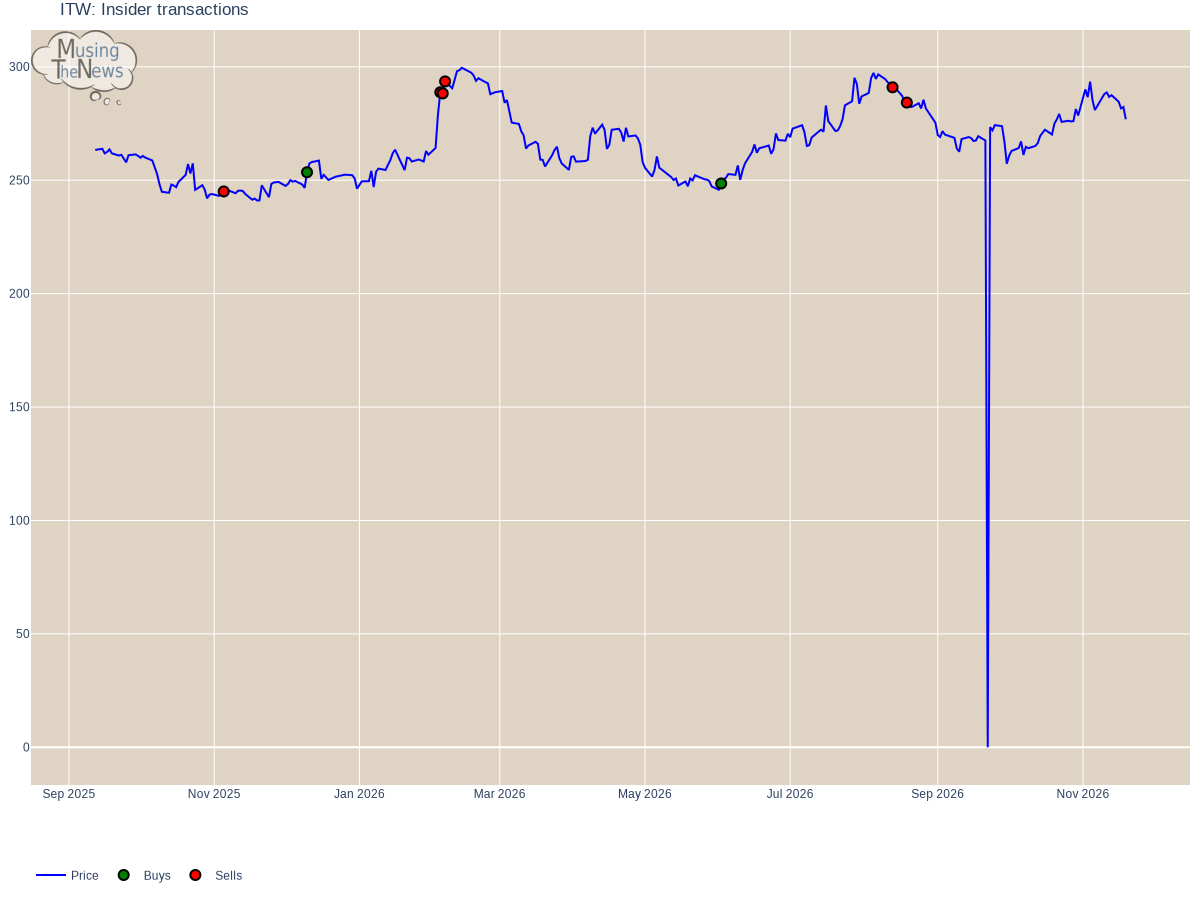
Illinois Tool Works Inc. experienced 6 sell transactions with market price of 281.8250020345052 per share.2 separate purchases of ITW stock were made, while market price was at 251.05500030517578 per share.The trend of more sells than buys around ITW's current price levels suggests possible weakness. If this pattern continues, it could lead to additional price declines, as selling pressure might increase, signaling investor concerns.
Recommendation changes over time:
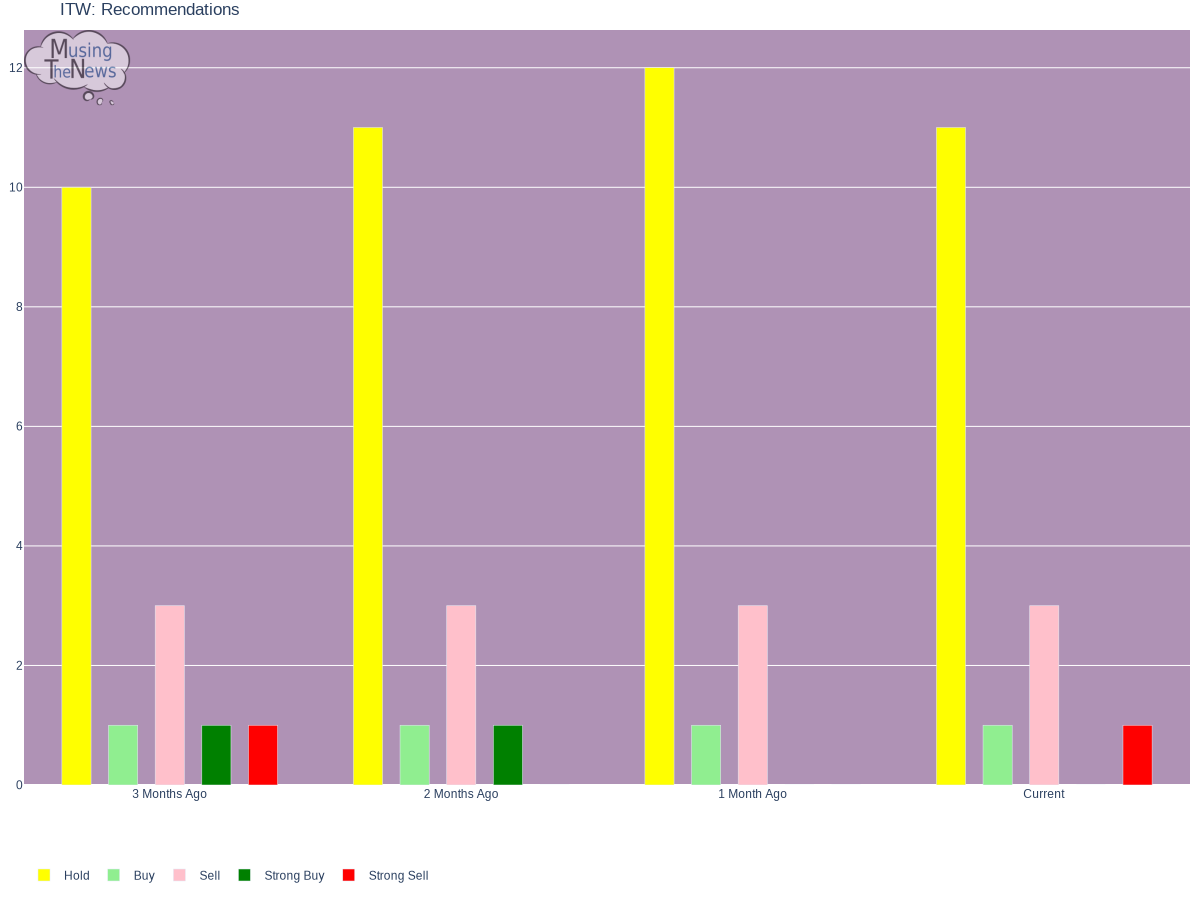
Analysts have developed a sell bias for ITW, urging caution for investors. It's essential to base investment decisions on multiple market indicators to avoid hasty conclusions. Relying on a broader scope of information will provide a more accurate assessment of ITW's overall potential.