
Good prospects:
Latest Regulatory Filings for SP5
Companies with the best and the worst fundamentals.
America’s Empty Offices Hit Pensions Hard
Rural Hospitals Buckle Under Private Equity
Fake Brokers, Spoofed GPS: Who Pays for Cargo Crime?
Crypto’s $2.4T Reality Check in 2026

The Machines That Ate the Grid: Five Centuries of Power Hunger
Fake Brokers, Spoofed GPS: Who Pays for Cargo Crime?



The New Face of Freight Crime: Organized, Digital, and Closing In on Small Business
In the spring of 2025, two truck drivers operating out of Laredo, Texas were duped by criminals impersonating company officials who instructed them to reroute a shipment of celebrity tequila worth seven figures to a fictitious warehouse in Los Angeles. The perpetrators didn't just fabricate the paperwork they spoofed the trucks' GPS signals, ensuring the freight disappeared silently and without triggering any real-time alerts. By the time the deception was discovered, the cargo was gone and the trail was cold. The incident made national headlines partly because of its celebrity angle, but it was far from exceptional. Variations of this scheme are now unfolding hundreds of times a week across America's freight corridors, and the victims increasingly include the small manufacturers and agricultural exporters of the Midwest and Southwest who have neither the resources nor the logistics infrastructure to absorb the fallout.
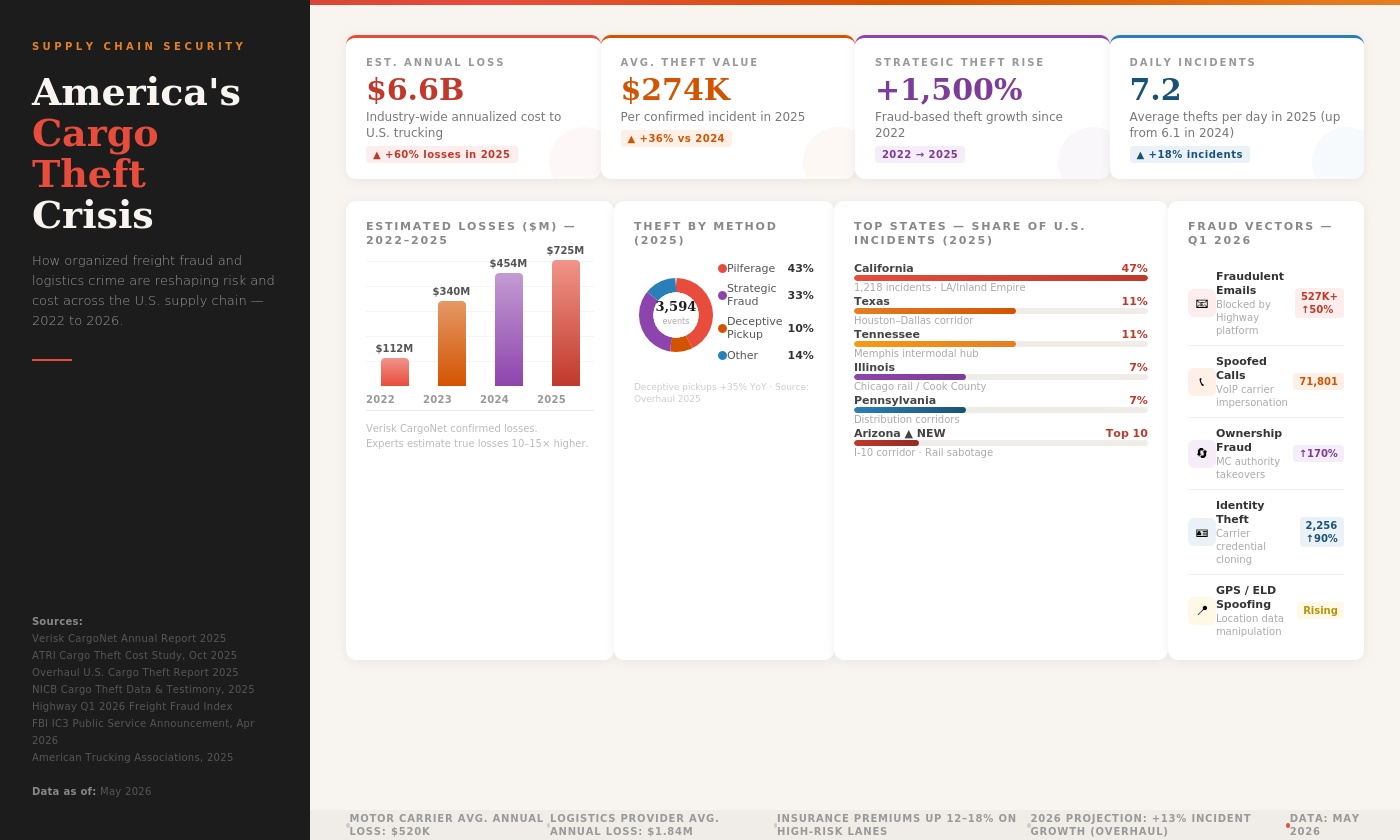
The scale of the problem is difficult to overstate. According to research published by the American Transportation Research Institute (ATRI) in late 2025, annualized cargo theft costs to the trucking industry reach as high as $6.6 billion, equivalent to more than $18 million per day. The National Insurance Crime Bureau (NICB), headquartered in Oak Brook, Illinois, estimates that when broader supply chain crime is factored in, total annual losses across the United States exceed $35 billion a figure that has surged roughly 1,500 percent since 2021. Verified cargo theft incidents tracked by Verisk CargoNet rose 18 percent year-over-year in 2025, with estimated losses climbing 60 percent to nearly $725 million. The average theft value per incident reached $273,990, up 36 percent from the prior year, reflecting increasingly selective, high-value targeting by organized criminal groups.
Strategic Theft: From Smash-and-Grab to Sophisticated Fraud
The nature of cargo crime has shifted fundamentally. While opportunistic trailer break-ins still occur, the dominant force reshaping the threat landscape is what industry analysts call "strategic theft" fraud-based schemes that exploit identity, technology, and institutional gaps rather than physical vulnerability. According to congressional testimony delivered to the United States Senate Committee on the Judiciary in July 2025 by NICB President and CEO David J. Glawe, strategic cargo theft has increased 1,500 percent from 2022 to 2025 and now accounts for 33 percent of all cargo theft reported to CargoNet. Glawe testified that organized crime groups are systematically exploiting regulatory gaps in the Federal Motor Carrier Safety Administration (FMCSA) to commit misdirected loads and double-brokering scams.
Double brokering is among the most prevalent tactics. Fraudsters acquire dormant but legitimate motor carrier authority numbers sometimes purchased on secondary markets for under $300 in filing fees and use clean safety histories to pass standard broker vetting. They then re-broker loads to unsuspecting legitimate carriers, divert the freight, and vanish behind newly incorporated shell companies. According to data published by Highway, a carrier identity solutions firm, change-of-ownership fraud surged 169.6 percent in the first quarter of 2026 alone, with 399 ownership changes flagged across carrier profiles. The firm blocked 527,940 fraudulent inbound emails during Q1 2026, a 49.9 percent year-over-year increase, and intercepted 71,801 spoofed phone calls in a single quarter.
GPS and electronic logging device (ELD) spoofing adds a particularly insidious dimension to modern freight fraud. By manipulating location data, bad actors can make a diverted load appear to be proceeding normally along its expected route. The deception often goes undetected until a delivery window is missed by which point recovery options are severely limited. Investigators from the FBI's Internet Crime Complaint Center warned in an April 2026 public service announcement that since at least 2024, cyber threat actors have been gaining unauthorized access to broker and carrier computer systems through spoofed emails, fake URLs, and compromised accounts, then posting fraudulent load listings on industry load boards at scale, sometimes in the tens of thousands. These operations target shippers, brokers, and carriers simultaneously, making the fraud difficult to untangle.
Geography of the Crisis: Texas, Illinois, Arizona, and Beyond
Cargo theft has historically concentrated around ports and dense logistics hubs, but the geographic spread of strategic theft is eroding that pattern. According to Overhaul's 2025 U.S. and Canada Cargo Theft Report, California and Texas together accounted for 58 percent of U.S. cargo theft incidents in 2025, with Illinois and Pennsylvania each representing approximately 7 percent of reported cases. The Dallas-Houston corridor on Interstates 10 and 35 remains particularly active, with identity-fraud pickup thefts linked in part to South American criminal networks. Chicago's Cook County, with its dense concentration of rail yards, trucking corridors, and warehouse facilities, continues to be among the highest-risk locations in the Midwest.
What has changed more recently is the penetration of freight fraud into states that previously reported minimal activity. BSI Group analysts specifically identified the Southwest and Midwest as top areas of concern for rail cargo theft, citing major corridors near Los Angeles, Chicago, and Memphis. Arizona has entered the top ten states for cargo theft, a development directly tied to the mobility of double-brokering schemes, which allow criminals to operate far from traditional hot spots. As noted by Scott Cornell, a transportation and cargo theft specialist, in published industry reporting, double brokering "has allowed thieves to target freight in nontraditional cargo theft areas. Arizona has recently entered the top 10. We're seeing more cargo theft in Nevada. We're seeing more cargo theft in Midwestern states where we traditionally have not seen cargo theft." Along Arizona's Interstate 10 corridor and rail lines through New Mexico, crews have been documented physically disabling brakes on slow-moving trains to access containers a tactic combining old-fashioned sabotage with modern coordination tools including encrypted radios.
Missouri, positioned at the intersection of major north-south and east-west freight routes, has seen growing exposure to warehouse diversion schemes. The Memphis intermodal gateway, which sits near the Missouri border and serves as one of the nation's busiest cargo transfer points, has experienced sustained theft activity according to BSI analysis. Shipments of food, beverages, and agricultural commodities the lifeblood of Midwest and Southwest exporters have become increasingly targeted. Verisk CargoNet data shows food and beverage products represent 22 percent of all theft incidents nationally, second only to electronics at 24 percent, with copper and building materials also seeing rapid increases.
The Asymmetric Burden on Small Manufacturers and Agricultural Exporters
For multinational corporations, cargo theft is costly but manageable. They maintain in-house logistics and security teams, negotiate bulk insurance rates, employ dedicated compliance departments, and can absorb individual losses within larger operational budgets. For a small grain processor in central Illinois, a family-owned food manufacturer in San Antonio, or a specialty agricultural exporter in the Arizona desert, a single fraudulent pickup or warehouse diversion can represent an existential financial event.
The ATRI research found that motor carriers average more than $520,000 in annual theft losses, while logistics service providers average more than $1.84 million. These figures, severe as they are, likely understate the damage to the smallest operators, who face the compounding effect of losses relative to revenue. A mid-sized regional carrier or a small manufacturing firm running on thin just-in-time inventory margins cannot easily reroute shipments, fund emergency replacement stock, or weather the reputational damage of missed deliveries to retail buyers. American Trucking Associations President and CEO Chris Spear stated in October 2025 that "the real, everyday victims are small business owners, truck drivers, and carriers who quietly absorb devastating losses that rarely make headlines."
Insurance is where the structural inequality becomes most acute. Cargo premiums on high-risk lanes have risen 12 to 18 percent according to industry reporting, and some underwriters have begun declining coverage for loads moving through identified high-risk corridors during peak shipping periods. Valorie Steinbeck, head of the inland marine and commercial transportation unit at claims adjuster Crawford and Company, confirmed in published reporting that increased cargo theft is directly driving rate increases. According to ATRI's 2024 survey data, the insurance cost burden is highly uneven by fleet size: while large fleets pay the most out of pocket in absolute terms, smaller operators often pay the highest premiums per mile. For a small trucking company serving agricultural exporters in rural Arizona or Missouri, paying inflated premiums while simultaneously losing freight to fraud is a compounding drain on a business that operates with little financial cushion.
Just-in-time manufacturing and export logistics are uniquely vulnerable to the delays and uncertainty that freight fraud introduces. When a load of soybeans, processed meat, or specialty chemicals fails to arrive at a rail transfer facility or distribution hub on schedule, the consequences cascade rapidly. Contract penalties, spoilage costs for perishables, and emergency re-sourcing expenses fall hardest on firms without the inventory buffers or logistics redundancy that larger players maintain. In a market already stressed by tariff uncertainty and fluctuating freight rates in 2025 and into 2026, even a single significant theft event can force small agricultural exporters to default on supply contracts or renegotiate terms at a disadvantage.
Rural Trucking Networks Under Pressure
The rural independent trucking sector which forms the logistical backbone of Midwest and Southwest agricultural supply chains is absorbing disproportionate pressure from both sides of the fraud equation. Independent owner-operators and small fleets are targeted by fraudulent load boards and double-brokering schemes because their verification infrastructure is limited and their need to keep trucks loaded incentivizes speed over due diligence. At the same time, they face rising operational costs driven in part by the broader insurance market responses to theft trends.
Summar Financial, a trucking finance and insurance firm, noted in a January 2026 analysis that for small and mid-size carriers, "a single compromised email, a manipulated invoice, or a fraudulent change to payment instructions can delay settlements, trigger broker disputes, or temporarily freeze payments" with drivers still needing to be paid, fuel still needing to be purchased, and insurance costs not pausing during investigations. This financial fragility makes rural carriers more susceptible to exiting the market, reducing the capacity available to agricultural shippers in areas underserved by large national carriers.
Truckstop.com's 2025 Freight Fraud Report, drawing on analysis of more than 63,000 entity reviews and over 600 investigated fraud cases during the year, found that many incidents involved spoofed emails, stolen credentials, or falsified contact information. The report identified three compounding trends heading into 2026: the use of AI-generated voices and documents that make fraudulent communications harder to detect, the growing sophistication of identity cloning, and the weakening of manual verification practices under time and cost pressure. Small brokers and carriers serving rural routes are the least equipped to deploy the automated verification platforms that industry analysts now consider standard defensive practice.
Secondary Effects: Employment, Export Competitiveness, and Regional Economies
The downstream effects of freight crime extend well beyond individual business losses. Regional employment in transportation, warehousing, and agricultural processing is sensitive to the health of rural trucking networks. When small carriers exit the market due to unsustainable insurance costs or theft-induced losses, the freight capacity serving rural agricultural communities contracts. This raises costs for local shippers, reduces competition among carriers, and in some cases forces small exporters to rely on more expensive long-haul logistics partnerships that erode their price competitiveness in global markets.
Overhaul projects cargo theft in the U.S. to increase by at least 13 percent in 2026, with annual incidents potentially reaching roughly 2,910 by year's end. If that trajectory holds, and if losses continue to grow at a faster rate than incident volume as the 60 percent loss surge against an 18 percent incident increase in 2025 suggests the financial pressure on rural supply chains will intensify further. Agricultural exporters in the Southwest and Midwest already compete against producers in South America, Europe, and Southeast Asia on narrow margins. When logistics costs rise unpredictably due to fraud-driven insurance increases, delivery delays, and emergency reshipping expenses, the competitiveness of American agricultural exports is meaningfully eroded.
The Senate Judiciary Committee hearing titled "Grand Theft Cargo: Examining the Costly Threat to Consumers and the U.S. Supply Chain" in 2025 produced testimony confirming that cargo theft ultimately functions as a regressive tax one paid disproportionately by smaller businesses and passed on to consumers in the form of higher prices. NICB's Glawe called explicitly for collaboration between the private sector, law enforcement, and policymakers, including advancement of the Combating Organized Retail Crime Act, which would strengthen federal criminal statutes targeting interstate and transnational organized theft. FMCSA has been under sustained pressure to modernize its carrier vetting portal, which continues to rely largely on self-attested data a structural vulnerability that allows serial offenders to reincorporate under new limited liability companies for minimal cost.
A System That Rewards Speed Over Safety
The underlying dynamics that allow freight fraud to flourish are structural as much as criminal. The fragmentation of the brokerage industry with approximately 25,000 to 26,000 active brokerages in the U.S., the vast majority of them small creates countless verification gaps. Load boards that prioritize speed and volume create conditions where bad actors can move quickly. Business email compromise schemes exploit the routine communication patterns of a high-velocity, low-margin industry. As Dale Prax, CEO of Freight Validate and fraud advisor to Truckstop.com, stated: "Security begins with identity, and operating authority should too. Before any company moves freight, there must be confidence in who's actually behind the authority, not just a name in a database. When identity isn't verified, the entire system relies on trust alone, and that's where fraud takes root."
The technology to detect and interrupt many of these schemes exists. Carrier identity verification platforms, AI-powered risk scoring tools, multi-sensor GPS anomaly detection, and real-time carrier behavior analytics are increasingly available. But access to these tools is uneven. Large national brokers and carriers can afford enterprise-grade verification platforms. A small broker in Springfield, Missouri or a regional food manufacturer in Tucson, Arizona typically cannot. The result is a security gap that mirrors the economic gap between large and small operators one that organized criminal networks have learned to exploit with precision.
What the data from 2025 and early 2026 makes clear is that freight fraud is no longer a peripheral concern for logistics professionals or a background cost for supply chain managers. It is an active, growing economic burden distributed unevenly across the American freight system, with the heaviest weight falling on the small manufacturers, agricultural exporters, and rural carriers least positioned to carry it.
If you have enjoyed reading, spread the word:
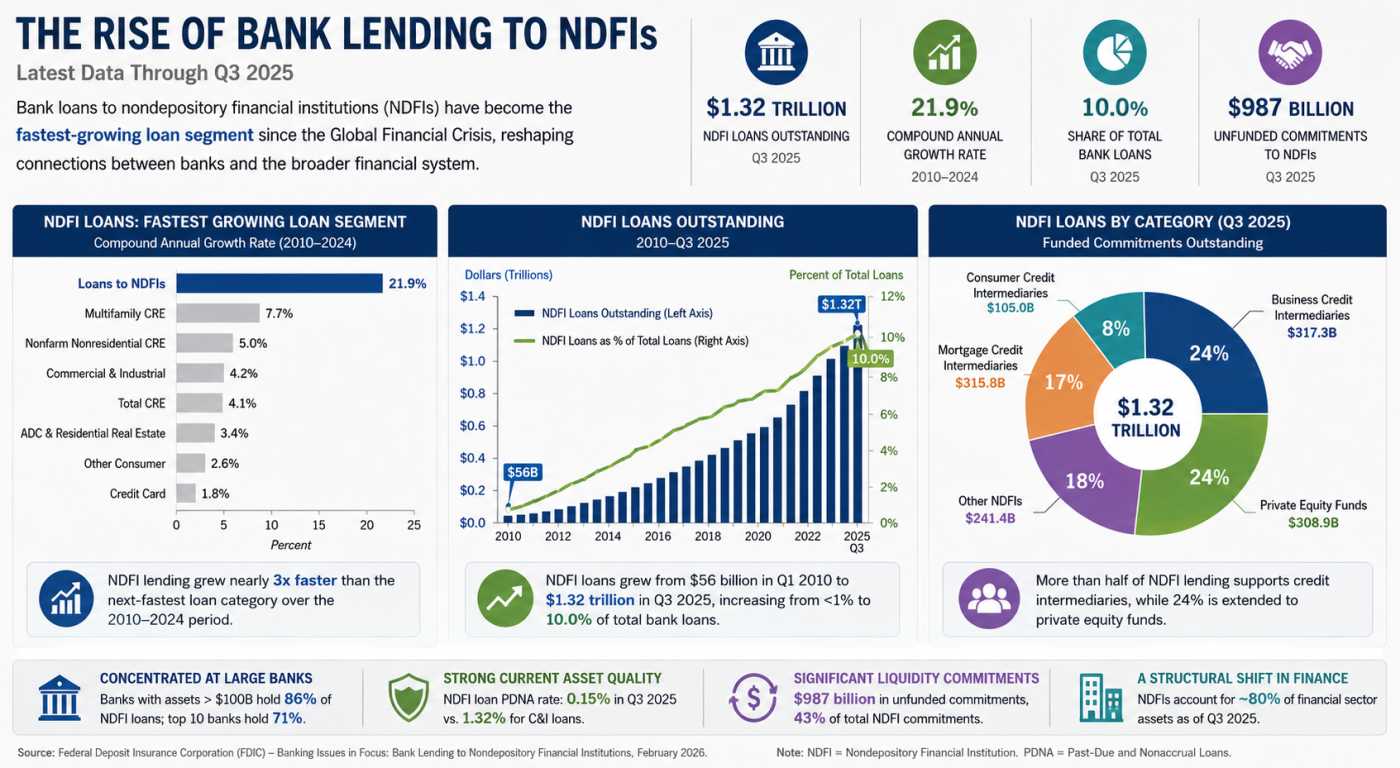
Private Credit’s Secret Banking Backbone Is Growing Faster Than Anyone Expected
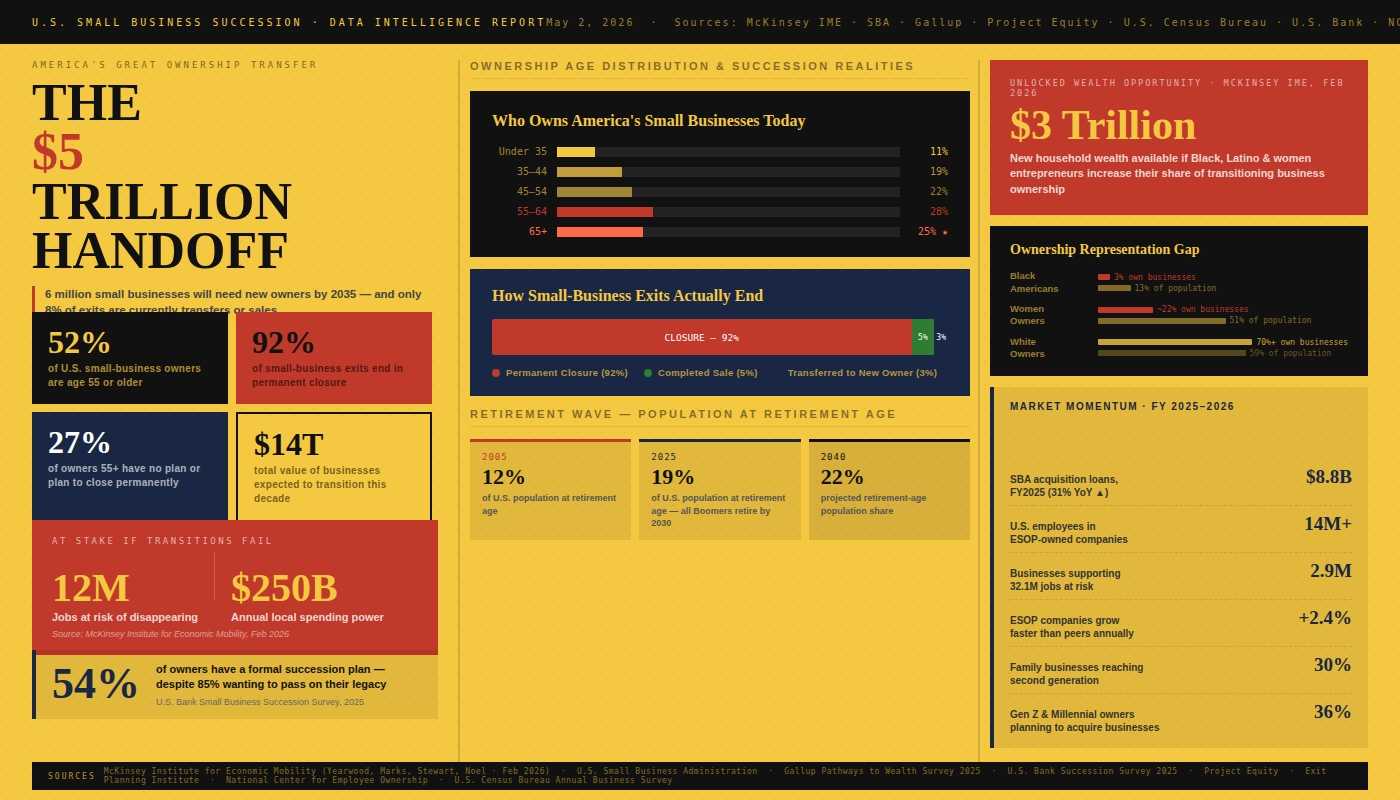
America's $5 Trillion Business Handoff Has Already Begun
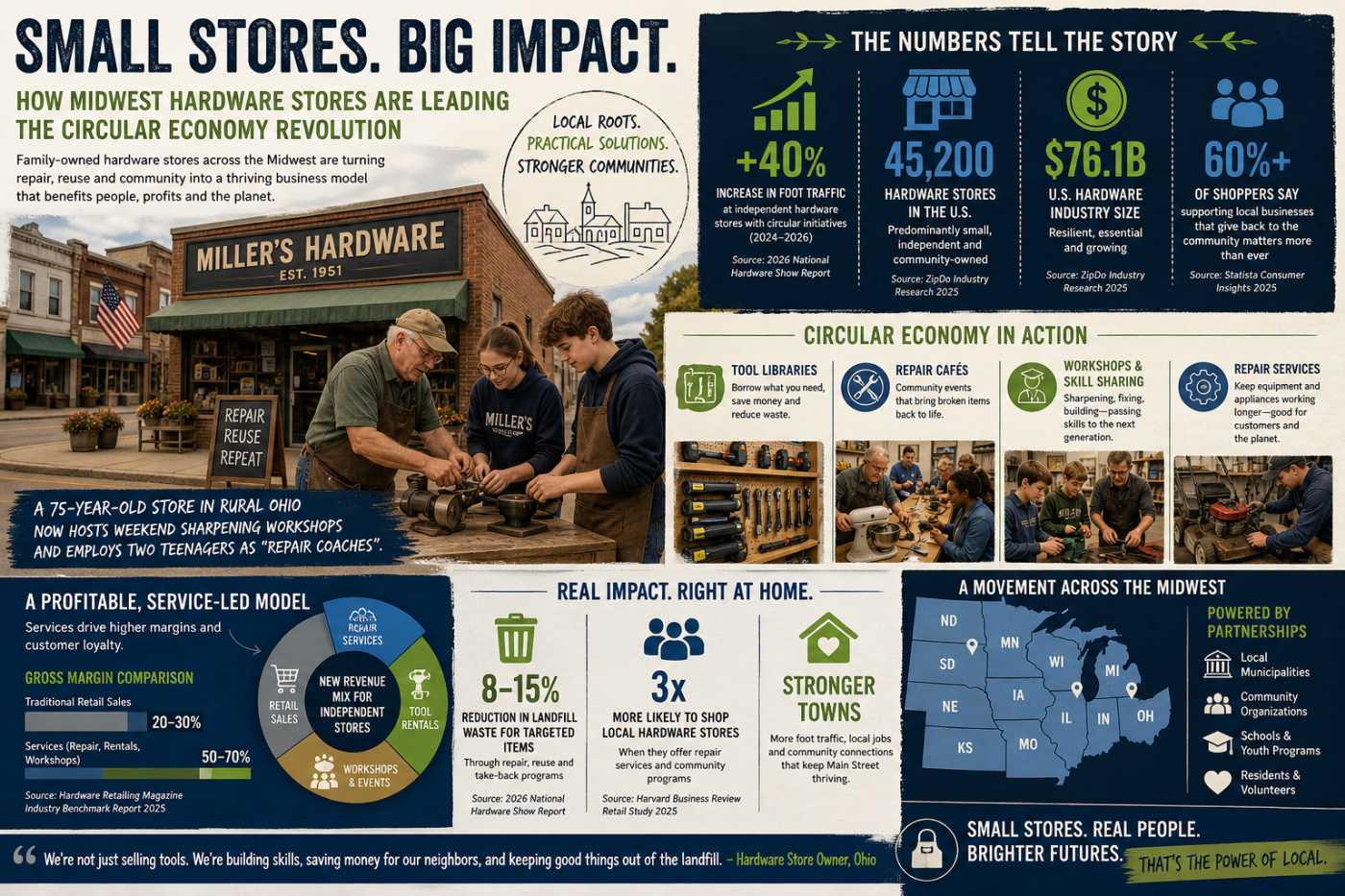
The Repair Economy Boom in Rural America
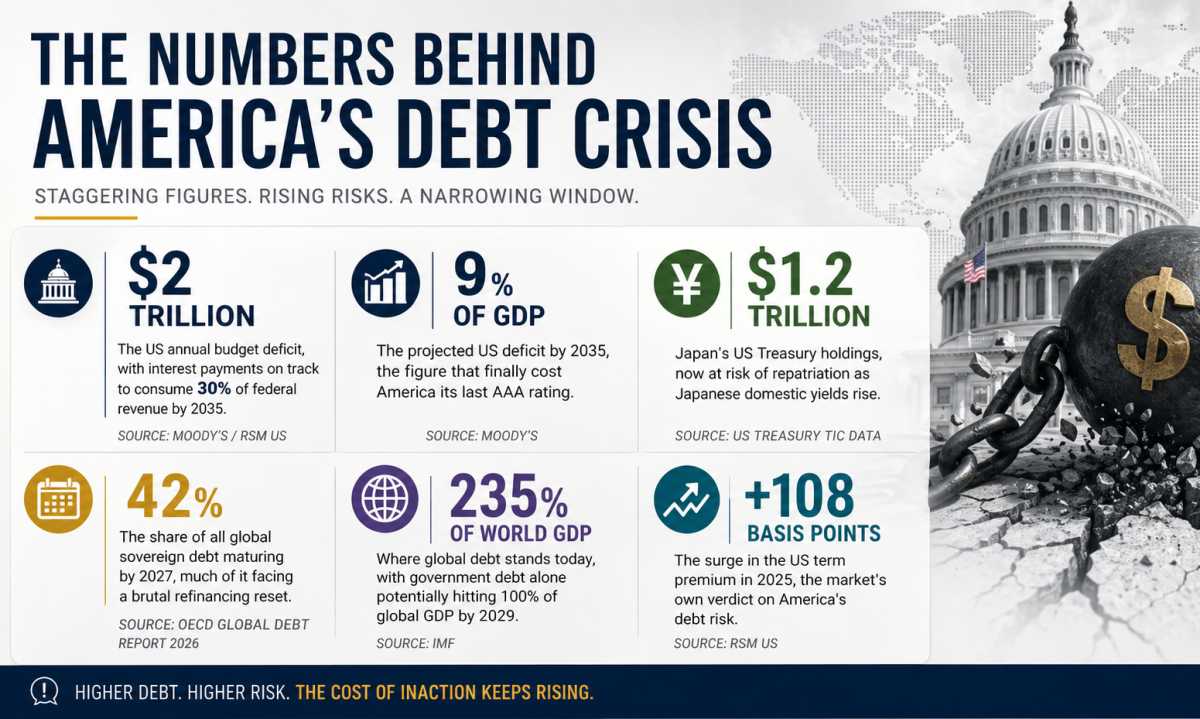
Debt, Deficits & Disaster: The Bond Market Crisis