Fundamentals for The Progressive Corporation
PGR's negative gross and operating margins indicate that the company is operating at a loss. This reflects an inability to cover production costs and operational expenses, ...






Business Operations:
Sector: Financial ServicesIndustry: Insurance - Property & Casualty
The Progressive Corporation operates as an insurance company in the United States. The company writes insurance for personal autos and special lines products, including motorcycles, RVs, and watercraft; and personal residential property insurance for homeowners and renters. It also writes auto-related liability and physical damage insurance for comprising dump trucks, log trucks, garbage trucks, tractors, trailers, straight trucks, tow trucks and wreckers, vans, pick-up trucks, and autos; business-related general liability and commercial property insurance for small businesses; and workers' compensation insurance for the transportation industry. In addition, the company offers other specialty property-casualty insurance and provide related services; personal property reinsurance products; and involved in investment activities. It sells its products through independent insurance agencies, as well as online and over the phone. The Progressive Corporation was founded in 1937 and is headquartered in Mayfield Village, Ohio.
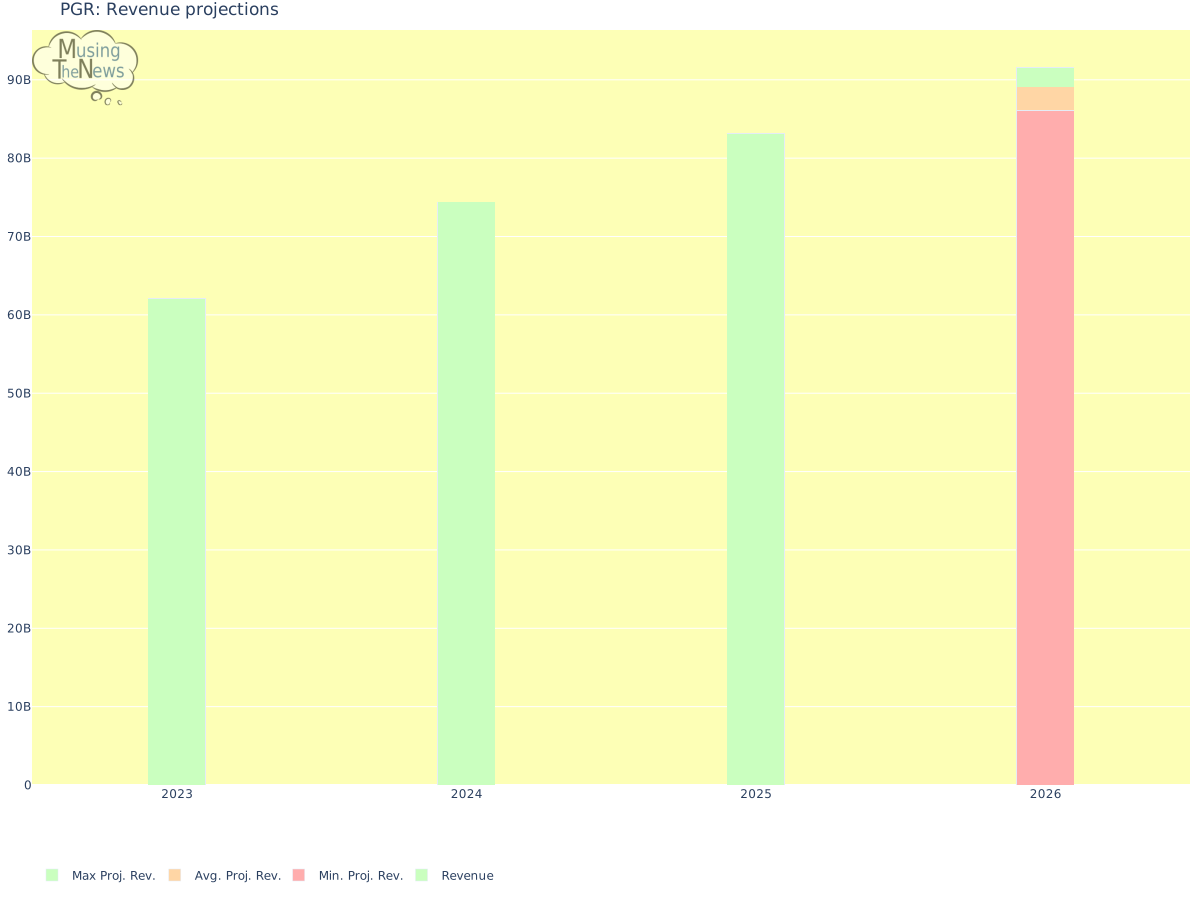
Revenue projections:
Financial Ratios:
| currentRatio | 0.290000 |
|---|---|
| forwardPE | 14.304346 |
| debtToEquity | 24.327000 |
| earningsGrowth | -0.018000 |
| revenueGrowth | 0.030000 |
| grossMargins | 0.172800 |
| operatingMargins | 0.143340 |
| trailingEps | 20.220000 |
| forwardEps | 16.201370 |
PGR's current ratio of 0.29 indicates that the company may struggle to cover its short-term debt with existing cash reserves and current assets. This could signal potential liquidity issues, raising concerns about PGR's ability to meet its immediate financial obligations.
The Progressive Corporation's Forward PE is in a favorable range, meaning its stock price compares well with its earnings and isn't overpriced. This leaves room for growth, making it a compelling opportunity for investors looking to benefit from potential future gains.
PGR's low Debt-to-Equity ratio means it is not excessively reliant on debt financing. This low leverage suggests lower financial risk and stronger equity control, positioning the company in a more stable financial situation and reducing vulnerability to debt-related issues.
The Progressive Corporation's low growth in both earnings and revenue indicates a likely decrease in profits. This suggests the company may be facing financial challenges, and investors should be cautious about its future performance.
PGR's negative gross and operating margins indicate that the company is operating at a loss. This reflects an inability to cover production costs and operational expenses, which could undermine its financial stability.
PGR's forward EPS is lower than its trailing EPS, indicating the company may experience reduced profitability. This signals that the company's earnings growth could slow down in the near future.
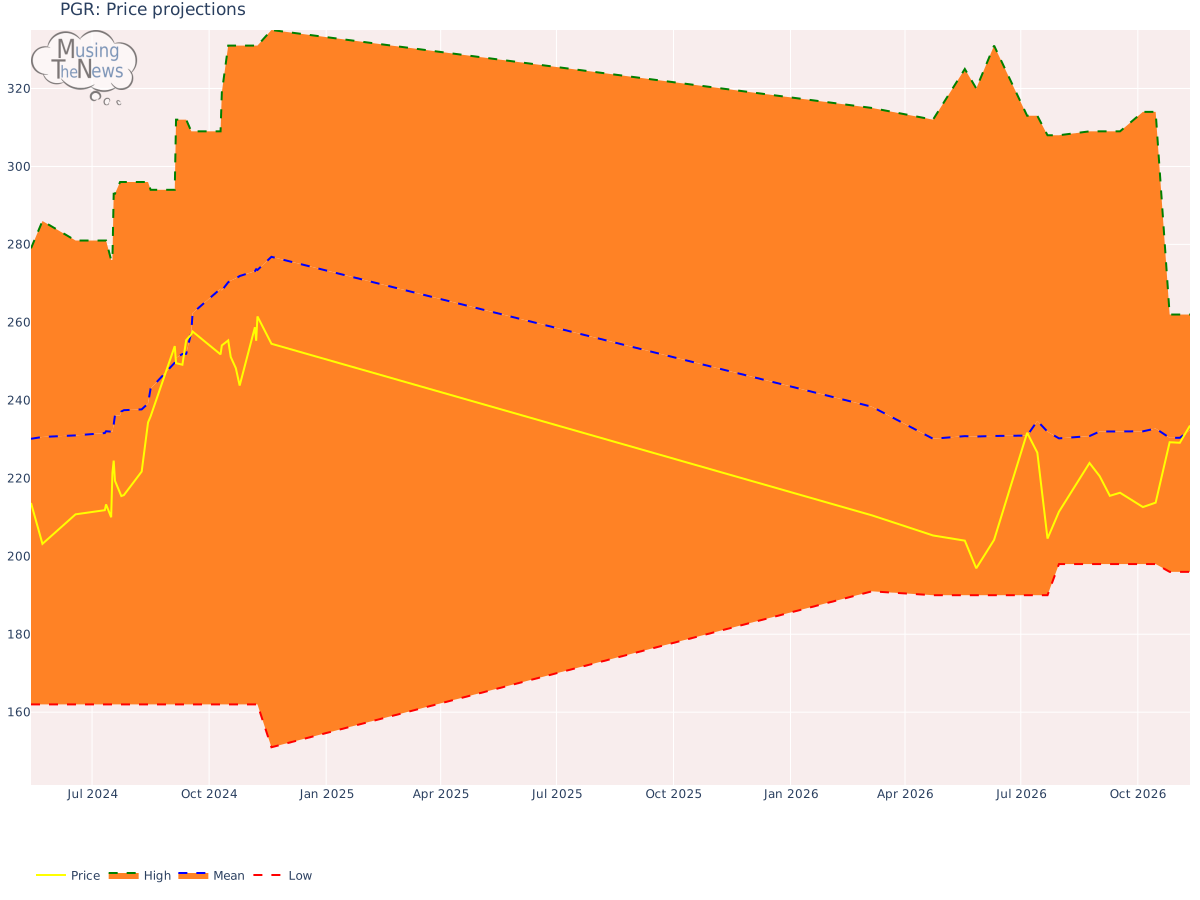
Price projections:
Insider Transactions:
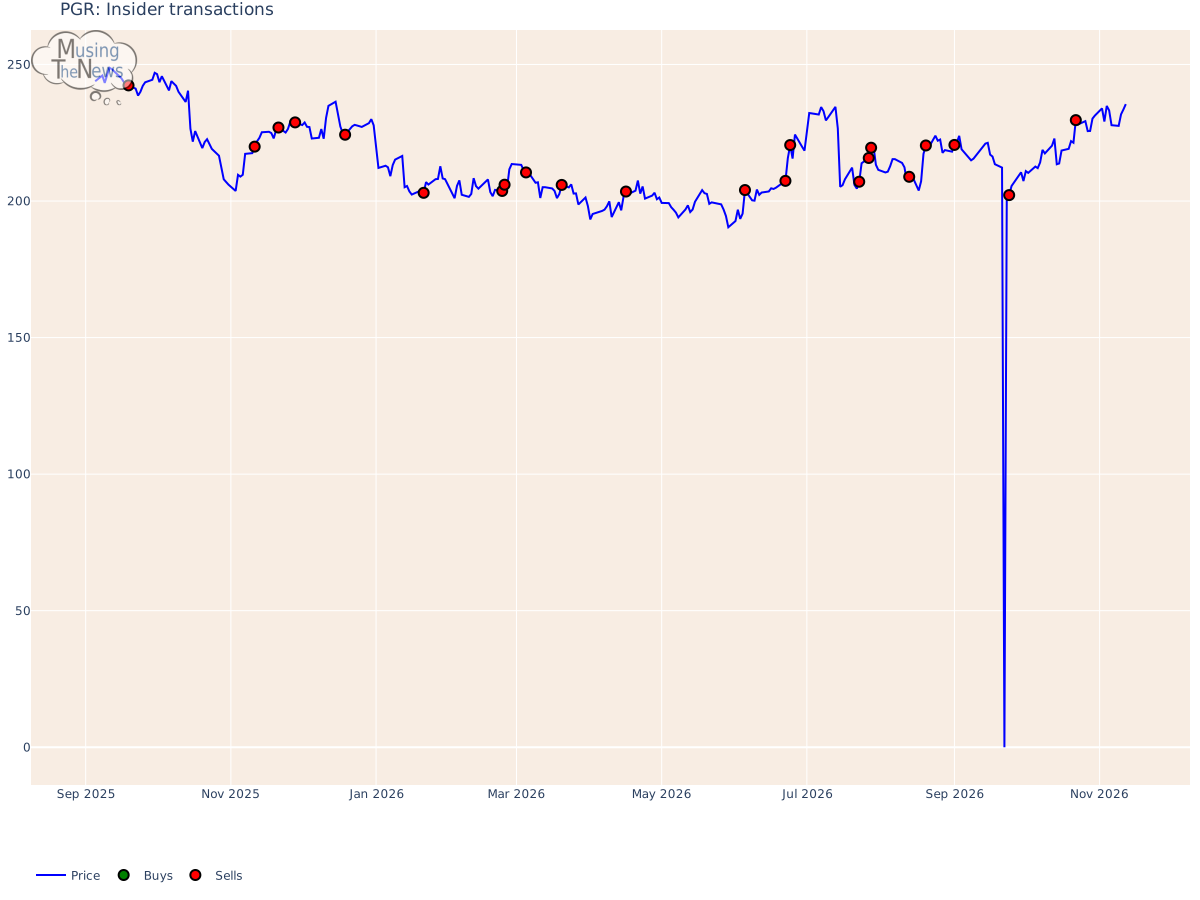
22 sales transactions of PGR were conducted, with market price at 215.02354361794212.No sell transactions took place in the period under consideration.PGR's current price levels are seeing more buying activity than selling, which might indicate a bullish sentiment. Investors appear to be confident, interpreting the buying trend as a sign of positive expectations for the stock's future performance.
Recommendation changes over time:
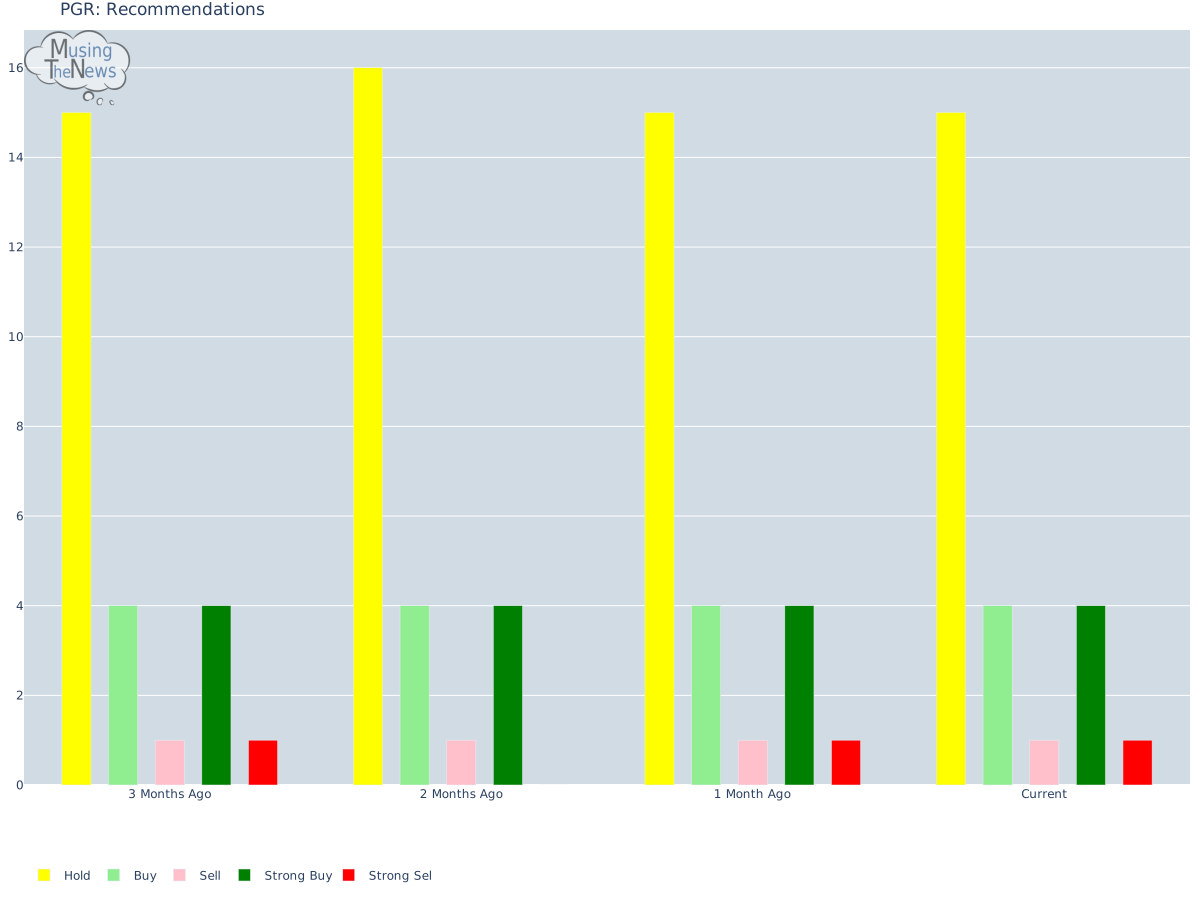
Analysts' recent buy bias toward The Progressive Corporation suggests the stock is gaining favor as a strong investment choice. This optimism could drive more investors to see The Progressive Corporation as a smart place to invest, further bolstering confidence in the company's long-term growth and potential returns.