Fundamentals for Delta Air Lines, Inc.
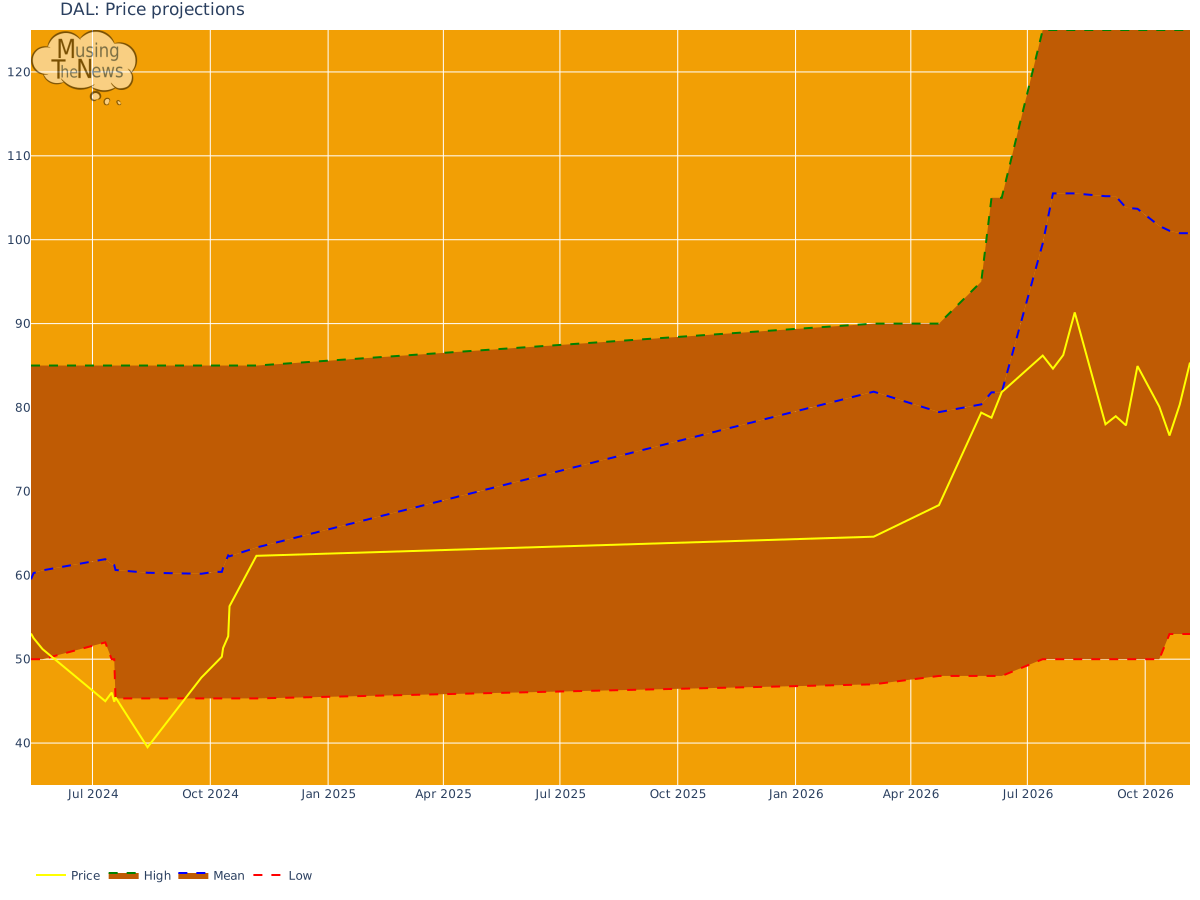
DAL's price has consistently remained near the lower edge of projections, suggesting that it is not fully meeting market expectations. This could indicate a need for improv...






Business Operations:
Sector: IndustrialsIndustry: Airlines
Delta Air Lines, Inc. provides scheduled air transportation for passengers and cargo in the United States and internationally. The company operates through two segments, Airline and Refinery. Its domestic network centered on core hubs in Atlanta, Detroit, Minneapolis-St. Paul, and Salt Lake City, as well as coastal hub positions in Boston, Los Angeles, New York-LaGuardia, New York-JFK, and Seattle; and international network centered on hubs and market presence in Amsterdam, Bogota, Lima, Mexico City, London-Heathrow, Paris-Charles de Gaulle, Santiago (Chile), Sao Paulo, Seoul-Incheon, and Tokyo. The company sells its tickets through various distribution channels, including delta.com and the Fly Delta app; and acts as a reservations specialists. It also provides aircraft maintenance and engineering support, repair, and overhaul services; and vacation packages to third-party consumers. The company operates through a fleet of approximately 1,292 aircraft. Delta Air Lines, Inc. was founded in 1924 and is headquartered in Atlanta, Georgia.
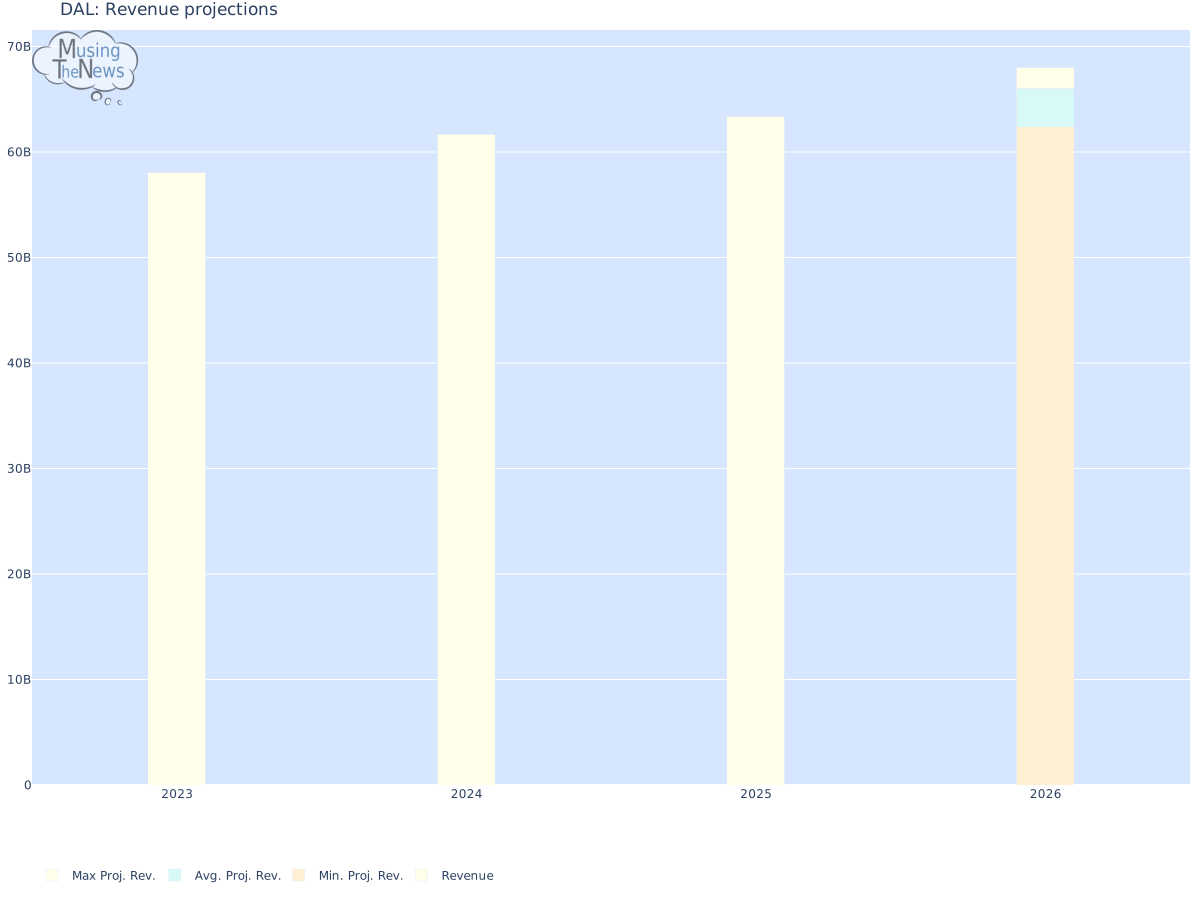
Revenue projections:
Financial Ratios:
| currentRatio | 0.402000 |
|---|---|
| forwardPE | 11.845455 |
| debtToEquity | 88.549000 |
| earningsGrowth | -0.470000 |
| revenueGrowth | 0.211000 |
| grossMargins | 0.178960 |
| operatingMargins | 0.072940 |
| trailingEps | 5.010000 |
| forwardEps | 7.306600 |
DAL's current ratio of 0.402 indicates that the company's cash reserves and current assets may not fully cover its short-term debts. This suggests potential liquidity risks and may require DAL to find alternative solutions to meet its near-term obligations.
DAL's Forward PE ratio is in a good range, reflecting a reasonable balance between stock price and earnings. The stock is not overpriced, leaving room for growth, which suggests potential for investors looking to capitalize on future value appreciation.
DAL's elevated debt-to-equity ratio suggests the company is highly leveraged, meaning it has significant debt compared to equity. This can be risky, particularly if DAL's cash flow or profits decrease, making it harder to meet debt obligations.
DAL's low growth in both earnings and revenue indicates potential profit shrinkage. This downward trend could be a sign of weakening financial health, signaling challenges for the company's future profitability.
DAL's negative gross and operating margins indicate that the company is unprofitable, struggling to cover its production and operational costs. This reflects potential weaknesses in cost management or declining sales performance.
DAL's forward EPS exceeds its trailing EPS, indicating that the company is projected to be more profitable in the current financial year compared to the previous one. This suggests positive growth and improved earnings, signaling an optimistic outlook for DAL's financial performance.
Price projections:
Insider Transactions:
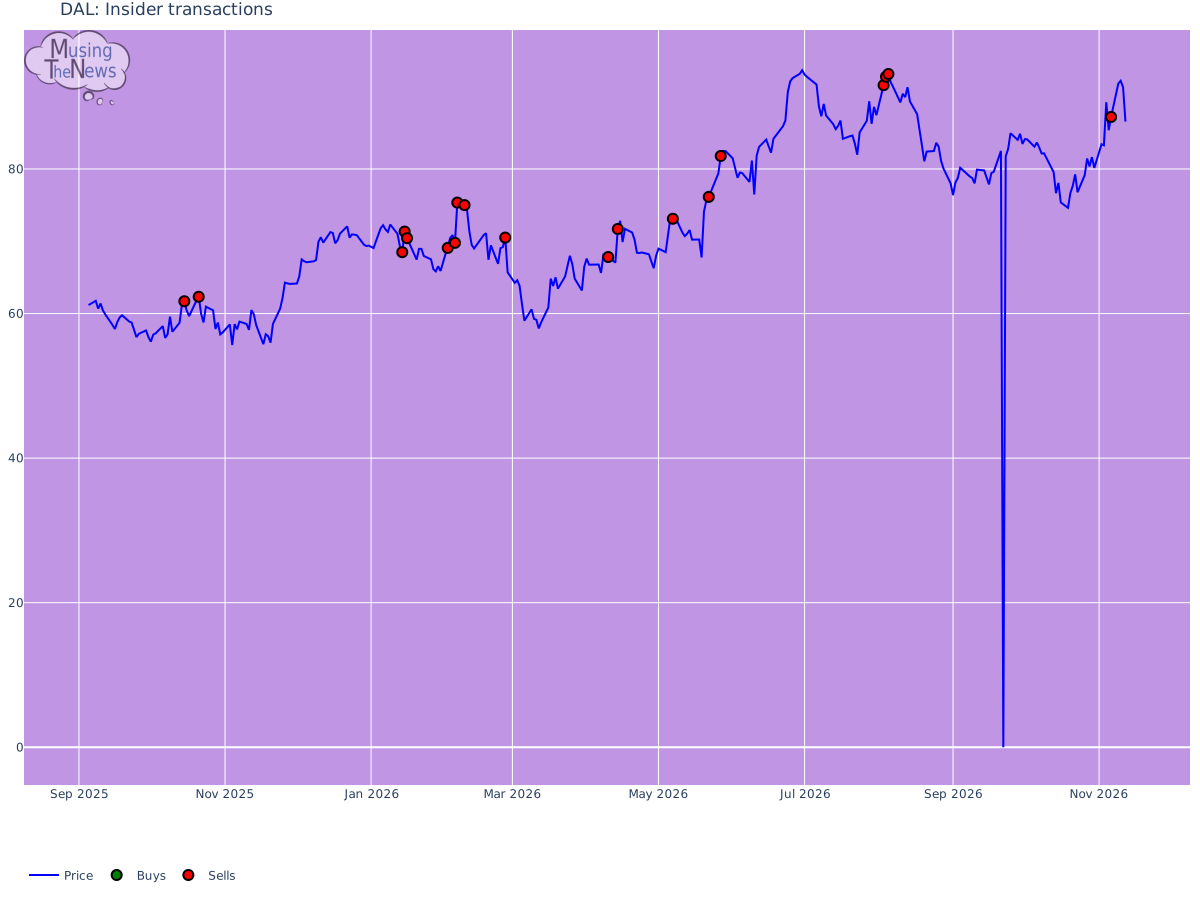
19 DAL stock sales were completed, with market price of 75.22473606310393.The period under consideration saw no sell transactions.More buys than sells near the current price levels of DAL might signal a favorable outlook for the stock. Investors seem to be showing confidence by purchasing more, potentially expecting positive future performance.
Recommendation changes over time:
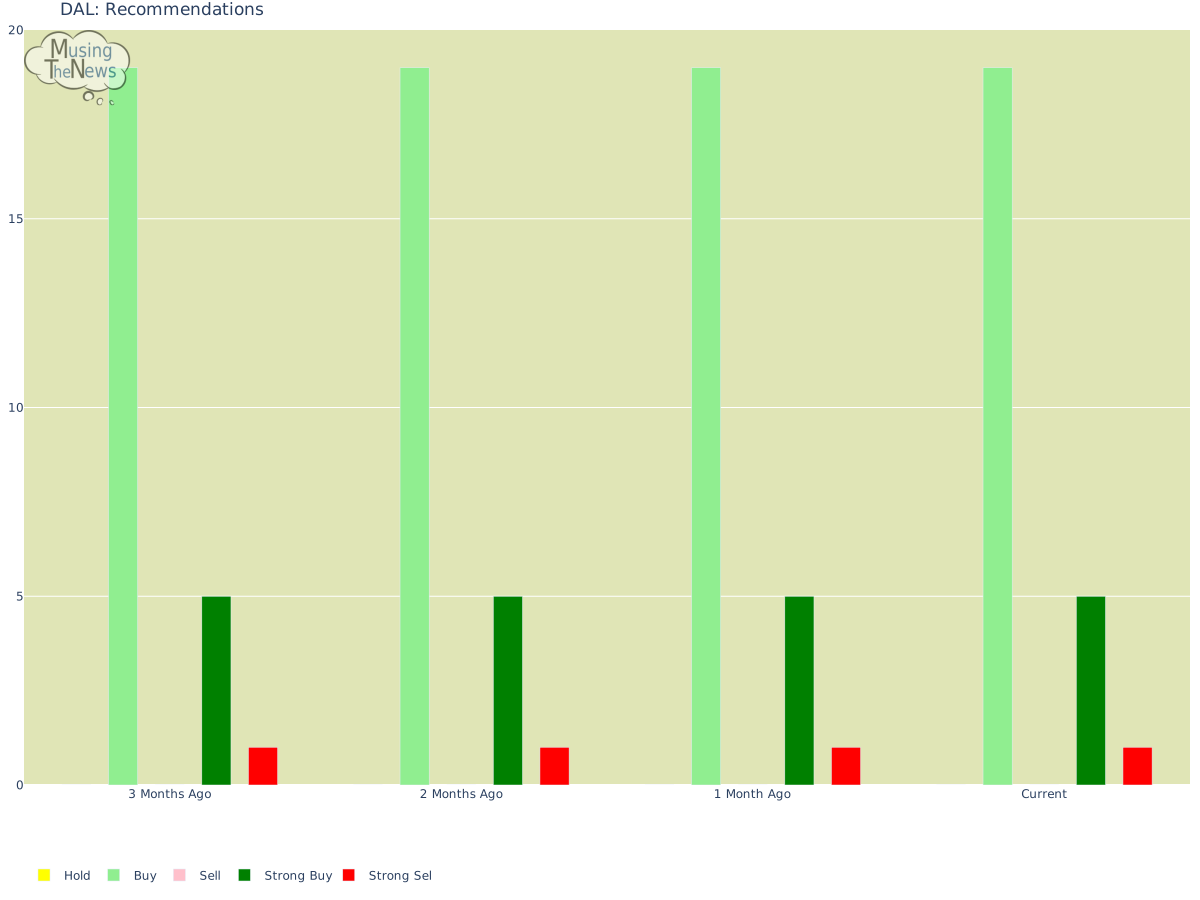
Analysts have shown a buy bias for Delta Air Lines, Inc., signaling it as a strong investment choice. This positive outlook could motivate investors to allocate funds to Delta Air Lines, Inc., seeing it as a reliable and potentially profitable option, especially in an environment where the stock market is highly scrutinized.