
Good prospects:
Latest Regulatory Filings for NSE500
Companies with the best and the worst technicals.

Apollo FY26: When Healthcare Becomes a Flywheel
NITI Blueprint Could Turn Brain Drain Into $135Bn Engine
RAINMUMBAI Turns Rain Into a Financial Asset

India’s IT Sector Faces a Historic Breaking Point

How Independent Directors Failed Rs 2,500 Crore in Value
MUDRA’s Unseen Women Army


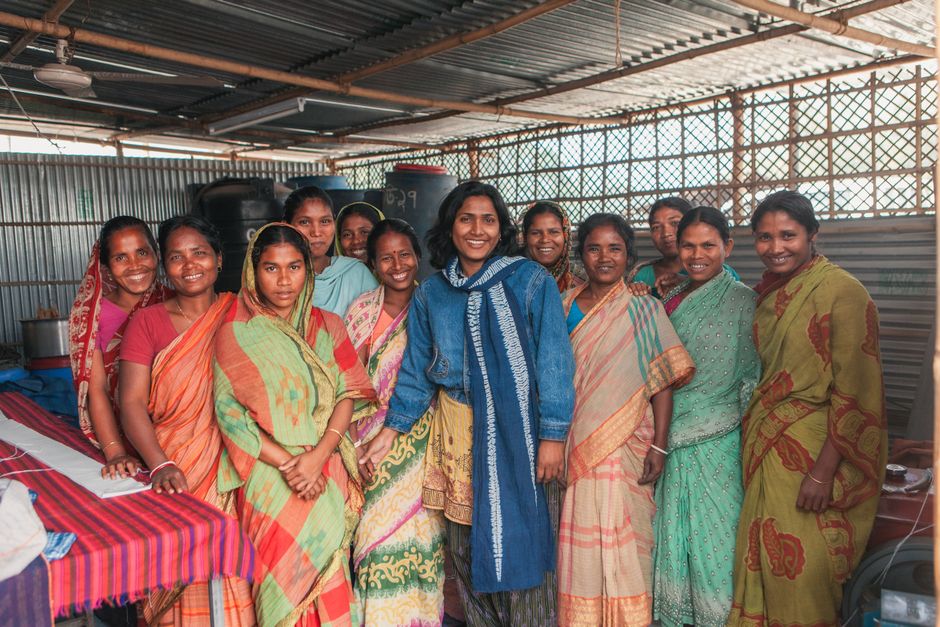
On a humid Tuesday morning in Sangli, Maharashtra, Pramila Sutar's phone buzzes with an order for 500 units of her turmeric-infused pickles. Two years ago, that buzz would have been a frantic call from a moneylender demanding 12 percent monthly interest. Today, it is a wholesale deal with a supermarket chain in Kolhapur. Pramila, 39, graduated from a Self-Help Group (SHG) to a MUDRA loan of ₹1.2 lakh in 2024, and then to a formal working capital line of ₹6 lakh from a district cooperative bank. Her journey from borrower to supplier is not a miracle it is a statistical certainty dressed in human skin. It is a story that is unfolding in tens of thousands of villages and small towns across India, yet it rarely commands a front-page headline.
Between 2021 and 2026, the number of women-owned enterprises in semi-urban and rural India grew by an estimated 43 percent, according to data compiled by the Reserve Bank of India's Financial Inclusion Index (FI-Index) report, authored by a team led by Dr. O.P. Mallik. The single most predictive factor? Proximity to a formal banking outlet. For every additional bank branch per 100,000 adults in a block, the probability of a woman launching a non-farm enterprise rises by 7.3 percent, per a 2025 working paper by the National Bank for Agriculture and Rural Development (NABARD) research team headed by Dr. R. Srinivasan. This is not charity; this is economic geometry.
The Geography of a Dream
For decades, rural Indian women were trapped in what economists call the “proximity penalty.” A bank branch 15 kilometres away might as well have been on another planet when you have no collateral, no male guarantor, and a household that expects you to return by midday to cook lunch. Then came the Jan Dhan-Aadhaar-Mobile (JAM) trinity, followed by a quiet, relentless push to rationalise bank branch licensing and village-level banking correspondents. As of March 2026, the Ministry of Finance's Progress Report on Financial Inclusion (authors: Joint Secretary Meera Sethi's team) notes that 98.7 percent of villages with a population above 2,000 now have a formal banking touchpoint within five kilometres.
That physical proximity changed everything. In the dusty town of Sirsa, Haryana, 44-year-old Kavita Deswal used to work as a farm labourer on her own family's two-acre plot unpaid, invisible. Three kilometres from her home, a new branch of the Sarva Haryana Gramin Bank opened in late 2024. Within two months, she applied for and received a ₹50,000 PMJDY overdraft facility. Today, she runs a small cold storage rental unit, funded by a ₹4.5 lakh MUDRA Shishu loan. Her customers are other women farmers who lost a third of their tomato crop to heat in 2025. “Now they pay me to store what they grow,” she says. Employment data from the Periodic Labour Force Survey (PLFS) 2025-26 shows that in blocks where a new bank branch opened in the preceding 24 months, female employment in agriculture dropped by 11 percent, while non-farm self-employment rose by 18 percent. That is the texture of structural transformation.
The SHG That Became a Supply Chain
Pramila Sutar's pickle business began as a kitchen experiment. Her SHG, “Jai Bhavani Mahila Mandal,” had 14 members who saved ₹50 a week. When a banking correspondent opened a fixed outlet inside the local panchayat building in 2023, the group's linkage to the State Bank of India became routine. They accessed a ₹1 lakh SHG loan at 7 percent interest. Pramila took her share ₹8,000 and bought raw mangoes, turmeric, and glass jars. Within a year, her pickles were outselling the local Nestlé product at the village haat. But the real break came when she applied for a MUDRA loan under the Tarun category (₹1.2 lakh) in April 2025. The branch manager, a young woman herself, helped her file a GST registration online. Pramila now employs five other women from her SHG: two for peeling and chopping, one for packaging, one for labelling, and one for social media orders. Her monthly turnover crossed ₹2 lakh in March 2026.
Across the country, the MUDRA scheme relaunched with a gender-focused component in 2024 called “MUDRA Mahila” has sanctioned 8.7 crore loans to women as of March 31, 2026, according to the Mudra Dashboard Annual Report (Small Industries Development Bank of India SIDBI, authors: MD Manoj Mittal's monitoring cell). Of these, 62 percent went to first-time borrowers in semi-urban and rural areas. But the headline numbers miss the nuance: these loans are not ending up in tiny tea stalls alone. They are capitalising micro-factories, solar-powered rice hullers, poultry feed units, and even two-wheeler repair garages run by women.
The Kisan Credit Card Woman Who Never Farmed
Perhaps the most surprising shift is the reinvention of the Kisan Credit Card (KCC). Originally designed for crop loans, the KCC was extended to animal husbandry and fisheries in 2019, and then to SHG-linked women in 2022. But in 2025, the National Bank for Agriculture and Rural Development (NABARD) released a field study (Lead Author: Dr. V. Sridhar) showing that 34 percent of women KCC holders in non-crop segments were using the credit to finance non-farm enterprises a de facto diversification strategy. Vanita Mandal, 51, from Banka district, Bihar, is a case in point. She took a KCC of ₹1.5 lakh in 2024 to buy two buffaloes. But when a dairy plant opened in the nearest town, she pivoted. She used the remaining buffer on her KCC to lease a small cold storage space the same unit that now stores paneer and milk products for 17 other women in her village. “I have never grown a single grain on my own land,” she laughs. “But I run a cold chain.” Her five employees are all landless women who used to migrate to Delhi for construction work. They now earn ₹450 a day sorting and packing dairy.
This is the quiet revolution that economic models predicted but media narratives missed. Why? Because the transformation is granular, slow, and lacks a villain. There is no dramatic microlending pioneer posing for cameras; instead, there are 100,000 branch managers, banking correspondents, and district cooperative officers doing their jobs. The headline “Bank Opens Branch, Women Start Businesses” is not sexy. Yet its cumulative effect is staggering. A household-level panel study by the International Initiative for Impact Evaluation (3ie) in partnership with the Ministry of Rural Development found that for every 10 percent increase in formal credit access for rural women, household food expenditure rose by 4 percent, children's school enrolment (especially daughters) rose by 6 percent, and intimate partner violence reported a small but significant decline of 2.7 percent driven by the woman's independent income and mobility.
The Employment Multiplier That Doesn't Get a Headline
When Pramila Sutar employed five women, she did more than make pickles. She created a template. One of her employees, Geeta Chavan, now has her own MUDRA loan for a papad rolling unit. Geeta employs two more. This is the employment multiplier of female-led enterprises. The NABARD All India Rural Financial Inclusion Survey 2025-26 (Lead Author: Dr. N.P. Mohapatra) notes that rural women-owned non-farm enterprises have an employment elasticity of 0.68 meaning a 10 percent increase in such enterprises leads to a 6.8 percent increase in rural non-farm jobs, most of which go to other women. In contrast, male-owned rural non-farm enterprises have an elasticity of 0.32. Women hire women. That is not sentiment; that is social proximity and trust.
Yet, the fact that this story barely makes it to the front pages reflects a deeper bias. Indian media, even in 2026, disproportionately covers urban startup founders with venture capital backing. A woman with a MUDRA loan and a cold storage unit does not fit the “disruptor” mould. She is not “scaling” to a Series A. She is, however, reshaping her local economy from the inside. The Reserve Bank of India's Annual Report 2025-26 (authors: Monetary Policy Department, led by Dr. Michael Patra) included a special box item noting that districts with the highest growth in women's Gross District Value Added (GDVA) from non-farm sectors were also districts where the share of bank credit to women-owned enterprises crossed 12 percent of total priority sector lending. The correlation is near-collinear. Proximity plus credit equals diversification.
The Unfinished Map
This is not a utopia. Many women still face gatekeeping husbands who demand control over loan accounts, bank staff who ask for “proof of husband's consent” illegally, and digital payment apps that assume male users. The Pradhan Mantri Jan Dhan Yojana (PMJDY) dashboard, overseen by the Department of Financial Services (Secretary Dr. Vivek Joshi), shows that while 56 percent of accounts are held by women, only 38 percent have seen any transaction in the last three months. The distance from account-holder to entrepreneur is bridged only by intense, localised handholding.
But for every hurdle, there is a quiet victory. In Jhabua, Madhya Pradesh, a block with three new bank branches since 2024, the number of women-owned poultry feed units has grown from zero to 44. In Nagaon, Assam, a KCC for fishery has morphed into a women-run ice block manufacturing unit that supplies 28 villages. These are not outliers; they are the new baseline. The story that should have been on the front page is not one of drama, but of design: a deliberate, bureaucratic, deeply Indian architecture of financial inclusion that is finally, after decades, reaching the last woman in the last row. And she is not waiting for permission she is building a supply chain.
If you have enjoyed reading, spread the word:
India’s Stock Market May Be Sitting on a Trap
Beyond Sugar: India's Bio-Economy Bets Big on Biofuel

MSMEs & Corridors: India's New Economic Engine
India's Grid-Scale Storage Revolution 2026