
Good prospects:
Latest Regulatory Filings for NSE500
Companies with the best and the worst technicals.

Apollo FY26: When Healthcare Becomes a Flywheel
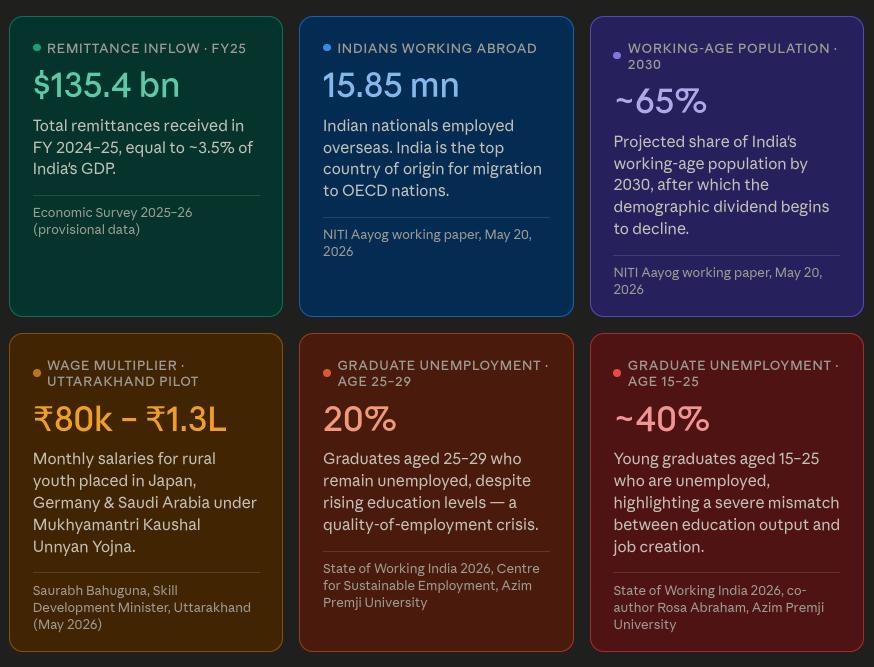
NITI Blueprint Could Turn Brain Drain Into $135Bn Engine
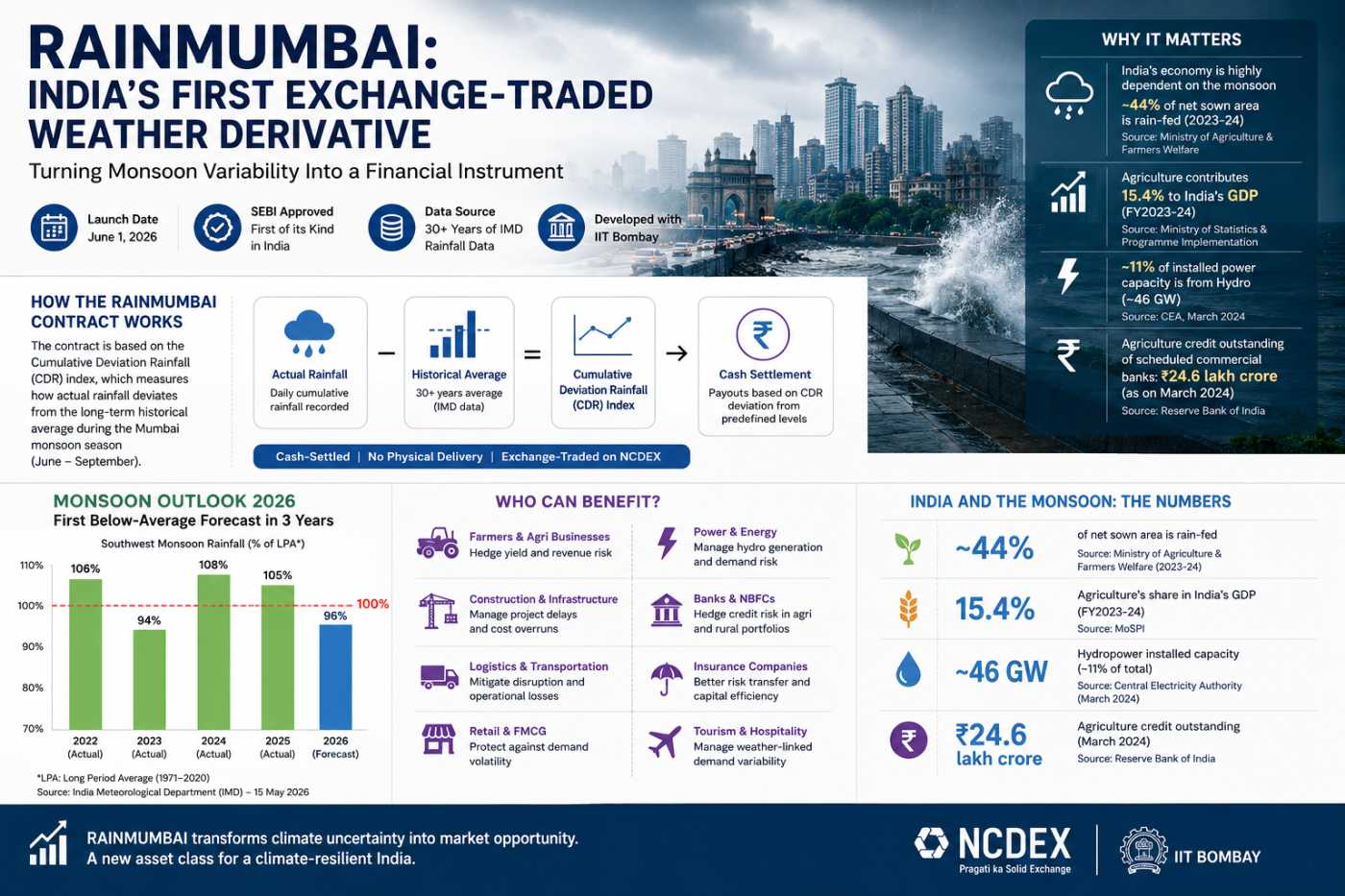
RAINMUMBAI Turns Rain Into a Financial Asset

India’s IT Sector Faces a Historic Breaking Point

How Independent Directors Failed Rs 2,500 Crore in Value
MSMEs & Corridors: India's New Economic Engine


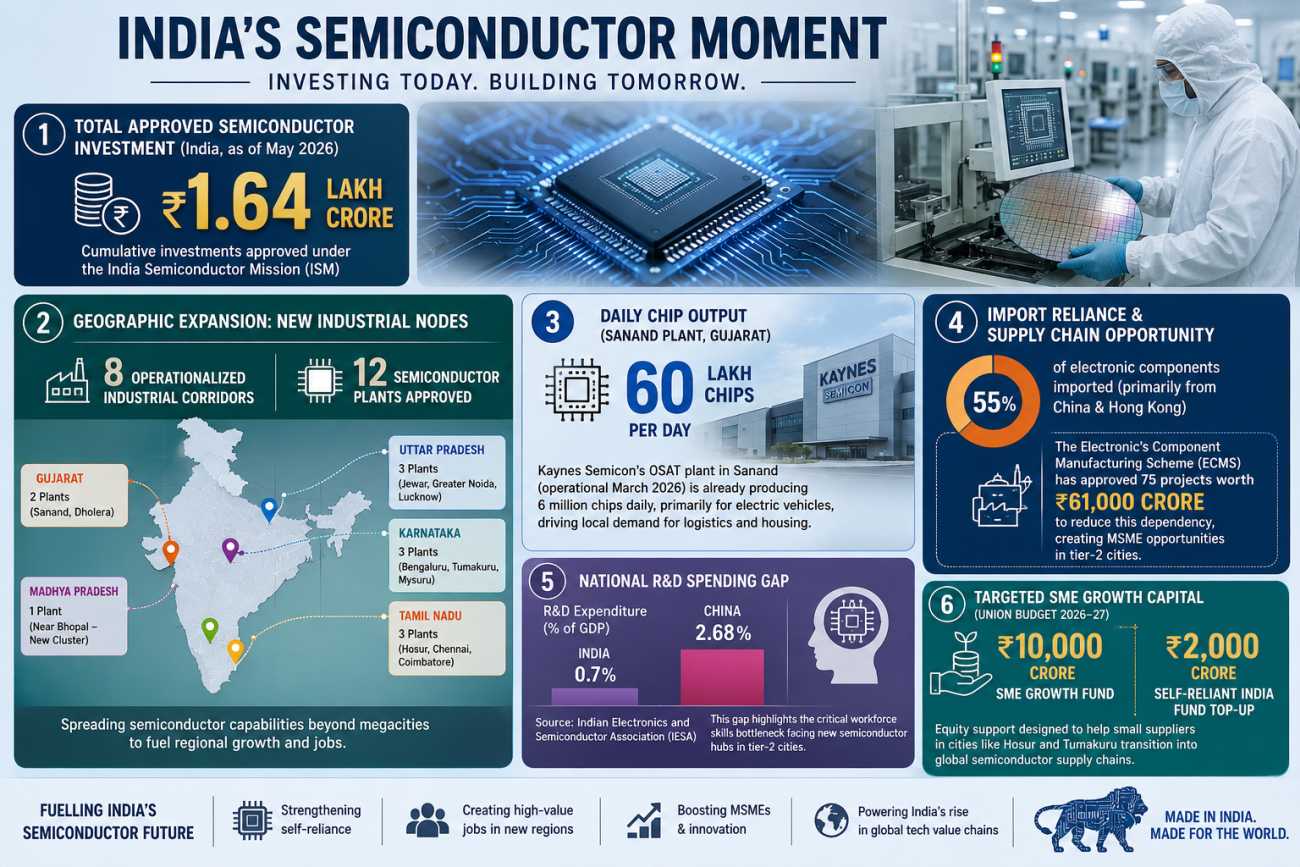
On May 5, 2026, the Union Cabinet approved two new semiconductor plants, bringing the total under the India Semiconductor Mission (ISM) to twelve since the program's inception. While the headline numbers cumulative investments nearing ₹1.64 lakh crore dominate national discourse, a quieter but more profound revolution is underway beneath the surface. Unlike previous industrial waves that concentrated wealth in Mumbai, Bengaluru, or the National Capital Region (NCR), the current push into electronics, chip assembly, and dedicated freight corridors is fundamentally rewiring the economic DNA of India's second-tier cities.
From the peripheral nodes of Gujarat's Dholera to the dusty plots near Jewar in Uttar Pradesh, tier-2 cities are not just hosting factories; they are becoming catalysts for a new urbanization model. According to data from the recent Union Budget 2026-27 and the National Industrial Corridor Development Programme (NICDP), these regions are witnessing skyrocketing demand for housing, the emergence of specialized logistics parks, a desperate scramble to set up technical institutes, and a golden era for Micro, Small, and Medium Enterprises (MSMEs) willing to navigate the supply chain. However, as investment flows, the operational challenges specifically a widening workforce skills gap and infrastructure bottlenecks threaten to cap the very growth these policies seek to unleash.
May 2026 Approvals: Cementing the ‘Chip Belt'
The specific cabinet approvals of early May 2026 illustrate a deliberate strategy to avoid geographic clustering. While Gujarat remains a heavyweight, the approval of a Rs 1,295 crore electronic manufacturing cluster near Bhopal, Madhya Pradesh jointly developed by the state and central governments signals a shift toward the Hindi heartland . This 200-acre hub, aimed at allied semiconductor operations, is designed to pull talent away from the traditional IT corridors of Indore and toward high-tech fabrication.
Simultaneously, the government gave the green light to the Crystal Matrix facility in Gujarat, a Rs 3,068 crore compound semiconductor fabrication plant based on Gallium Nitride (GaN) technology. This is significant as it represents India's first display fabrication facility, a sector previously dominated by East Asian supply chains . These approvals are part of the broader ISM 2.0 framework, which, as announced in the Budget, shifts focus from simple assembly (ATMP) to supporting ancillary ecosystems gases, chemicals, and capital equipment effectively forcing industrial corridors to mature beyond “screwdriver assembly” .
Industrial Corridors as the Great Disperser
The geographic dispersal of these investments is not accidental. It is driven by the National Industrial Corridor Programme, which has been operationalizing nodes designed specifically to decongest megacities. With four corridors completed and four nearing completion under the Rs 28,602 crore package, the government has created a framework where tier-2 cities are no longer “near” economic zones but are the economic zones .
For instance, the Delhi-Mumbai Industrial Corridor (DMIC) has supercharged the Dholera Special Investment Region (SIR) in Gujarat. Here, Tata Electronics is setting up a Rs 91,000 crore commercial fab with Taiwan's PSMC. But the hyperlocal effect is felt 50 kilometers away in places like Sanand, where Kaynes Semicon's Rs 3,300 crore OSAT plant, inaugurated in March 2026, is now operational, producing 60 lakh chips daily for electric vehicles . Similarly, the HCL-Foxconn joint venture in Jewar, Uttar Pradesh a region better known for the Noida International Airport is creating a high-tech wedge in the NCR's periphery, promising 20,000 wafers per month by 2028 . This corridor-led growth ensures that housing demand and supplier networks are stretched radially outward, creating entirely new satellite economies.
Real Estate: From Farmland to Grade-A Warehousing
The immediate hyperlocal business effect of these approvals is visible in the real estate and logistics sectors. In cities like Surat, Sanand, and Tumakuru (Karnataka), the demand for industrial and warehousing space has shifted from speculative to structural. The Union Budget 2026's allocation of Rs 5,000 crore per City Economic Region (CER) including Surat and Varanasi is de-risking private investment in these nodes .
Reports from industry bodies like Colliers India indicate that the push for electronics component manufacturing (backed by a Rs 40,000 crore outlay) is driving demand for Grade A industrial space. However, the nuance lies in the logistics shift. Traditionally, warehousing in India was about bulk storage. In the semiconductor world, it is about precision logistics vibration-controlled trucks, temperature-sensitive storage, and just-in-time delivery of inert gases. Real estate developers in these tier-2 cities are now pivoting to build specialized “clean warehousing” zones, moving far beyond the traditional godown model. The proposed Dedicated Freight Corridor linking Dankuni to Surat and the operationalisation of 20 new National Waterways will further lower logistics costs for these interior hubs, making land near these multimodal terminals the most valuable real estate in the state .
The MSME Evolution: From Street Shops to Global Suppliers
Perhaps the most significant, yet underreported, shift is occurring within the MSME supplier base. The electronics and semiconductor supply chain is a pyramid: a few large anchor companies (like Tata or Micron) sit atop thousands of small suppliers producing cables, printed circuit board assemblies (PCBAs), passive components, and high-purity chemicals. For decades, India's “missing middle” forced large assemblers to import these from China or Vietnam .
That gap is closing, albeit with friction. The Rs 10,000 crore SME Growth Fund and the Rs 2,000 crore top-up to the Self-Reliant India Fund, announced in the Budget, are specifically designed to provide equity support to these ancillary units . In Tamil Nadu's Hosur (a tier-2 city benefiting from the EV and electronics spillover from Bengaluru), small machine shops are retooling to manufacture semiconductor lead frames. In Karnataka's Tumakuru Industrial Area, MSMEs are forming consortiums to bid for sub-contracts for the anchor industrial units.
However, the transition is brutal. As noted in analyses by the Observer Research Foundation (ORF) America and industry veterans, Indian MSMEs excel at mechanical fabrication but struggle with the chemical purity and precision required for electronics. The introduction of “Corporate Mitras” in tier-2 cities, a policy announced in Budget 2026, aims to bridge this by providing affordable compliance and professional support, helping small entrepreneurs navigate the EU's Carbon Border Tax and ISO standards required by global chip buyers .
Technical Institutes: The Talent Bottleneck
The single greatest operational challenge to sustaining this tier-2 revolution is the workforce gap. While India boasts a vast pool of STEM graduates, the specific skill sets required for semiconductor fabs cleanroom protocol, lithography machine operation, chemical handling are rare. A report by the Indian Electronics and Semiconductor Association (IESA) notes that India's R&D spending is only 0.7% of GDP compared to China's 2.68%, and private investment in training is lagging .
In response, the government is mandating the establishment of training hubs. In Madhya Pradesh, the newly approved cluster near Bhopal will likely require the state's technical universities to overhaul their curricula from software-centric to hardware-centric. In Gujarat, the demand for skilled manpower at the Micron plant in Sanand (which started commercial production in February 2026) has already led to a proliferation of private industrial training institutes (ITIs) offering niche courses in mechatronics. However, the National Institute of Electronics & Information Technology (NIELIT) is scrambling to train enough master trainers. The current gap where a specialized semiconductor technician can command salaries higher than a mid-level software engineer is creating a localized wage inflation that is squeezing smaller MSMEs who cannot afford to compete for talent.
Operational Realities: Power, Water, and Patience
Despite the optimism, the ground reality in these tier-2 cities includes significant teething pains. Semiconductor fabs are hyper-sensitive to power quality (voltage dips that a textile mill ignores can ruin a wafer batch). While Gujarat offers power at subsidized rates of ₹2/unit, the stability of the grid in peripheral industrial corridors like the newly developed nodes in Odisha or Uttar Pradesh remains a concern . Similarly, fabs require millions of gallons of ultrapure water daily. In water-stressed regions of Karnataka and Gujarat, local authorities are struggling to balance industrial demand with agricultural needs, leading to delays in environmental clearances.
Furthermore, the shift toward ISM 2.0 which reduces the capex subsidy for assembly plants from 50% to lower levels is forcing companies to become viable faster. This creates a cascading pressure down the supply chain. For a logistics park developer in Surat, the risk is no longer just about finding tenants; it is about ensuring the anchor company survives the brutal global pricing competition from established players in Malaysia and Taiwan. Those tier-2 cities that fail to build reliable utility infrastructure in the next 18 months risk seeing their “approved” projects turn into “delayed” or “relocated” projects.
The Supply-Chain Opportunity: Gases, Chemicals, and Passive Parts
For savvy entrepreneurs, the current moment offers a blue ocean in the upstream supply chain. India currently imports over 55% of its electronic components, primarily from China and Hong Kong . The push for a Rare Earth Corridor in Budget 2026 aims to change that, focusing on mining and processing critical minerals for magnets used in chips and EVs .
For a tier-2 city like Vishakhapatnam or Nagpur, this represents a chance to host chemical plants that produce the high-purity acids needed for wafer etching, rather than just importing them. The government's approval of 75 projects under the Electronics Component Manufacturing Scheme (ECMS) in 2026, involving investments of over ₹61,000 crore, is specifically targeting this . These are not headline-grabbing “fabs,” but they are the high-margin, sustainable businesses that will determine whether India's tier-2 boom has legs. The cities that successfully integrate these specialized chemical and passive component manufacturers alongside the large assemblers will be the true winners of India's industrial realignment.
If you have enjoyed reading, spread the word:

India’s Stock Market May Be Sitting on a Trap

Beyond Sugar: India's Bio-Economy Bets Big on Biofuel
MSMEs & Corridors: India's New Economic Engine
India's Grid-Scale Storage Revolution 2026