business
India's $69B Eurasian Trade Power Play
An in-depth business feature examining how India's accelerating EAEU trade negotiations, BRICS chairmanship, local-currency settlements, and export diversification strategy are reshaping Eurasian commerce and positioning India as a rising architect of global trade.





India's Quiet Eurasian Pivot Is Becoming One of the Biggest Trade Stories of the Decade
For much of the past twenty years, India's trade diplomacy has been framed around the same familiar geographies: the United States, the European Union, the Gulf, and East Asia. Yet one of the most consequential shifts in India's export strategy is now emerging far from the traditional centers of global commerce.
As of mid-2026, negotiations between India and the Eurasian Economic Union (EAEU) have entered a visibly accelerated phase. What initially appeared to be another slow-moving free trade discussion is increasingly taking shape as a broader economic architecture project one that intersects with India's BRICS chairmanship, growing local-currency trade arrangements, supply-chain diversification efforts, and a rapidly changing global tariff environment.
The timing is remarkable. India entered 2026 as chair of BRICS at a moment when global trade is becoming more fragmented and multipolar. Simultaneously, Washington's decision to impose tariffs reaching as high as 50% on selected Indian exports has intensified discussions in New Delhi about market diversification and export resilience.
Rather than responding defensively, India appears to be using the moment to expand its negotiating leverage across multiple trade corridors at once.
The EAEU negotiations may ultimately become one of the clearest examples of this new approach.
A $69 Billion Trade Relationship Looking for Its Next Phase
The Eurasian Economic Union comprising Russia, Belarus, Kazakhstan, Armenia, and Kyrgyzstan represents a market stretching from Eastern Europe to Central Asia. While the bloc is often discussed through a geopolitical lens, the economic story is becoming increasingly significant for Indian exporters.
India's trade with Russia alone has expanded dramatically since 2022, driven initially by energy flows but increasingly supported by growing commercial relationships in pharmaceuticals, engineering goods, electronics, chemicals, machinery, agriculture, and logistics.
Combined trade between India and EAEU member economies has approached the $69 billion mark in recent years, creating the foundation for what policymakers increasingly view as an underdeveloped export opportunity rather than merely a strategic partnership.
The most important development came in late May 2026 when Russian Economic Development Minister Maxim Reshetnikov publicly confirmed that negotiations had advanced toward discussions of a limited and temporary free trade arrangement covering selected product groups.
According to Reshetnikov, the negotiations have become unusually complex because of India's scale and the breadth of its demands.
"Things are more complicated with India: the economy is larger, mutual interests are more complex... our colleagues' requests are also quite ambitious." Maxim Reshetnikov, Russian Economic Development Minister. Source: TASS, May 2026
That statement may prove more revealing than it initially appears.
The Meaning Behind India's 'Quite Ambitious' Demands
Historically, India entered many trade negotiations from a defensive position, often prioritizing protection of domestic industries over aggressive market access demands.
The current EAEU discussions appear different.
Russian officials have repeatedly characterized India's requests as ambitious. While detailed negotiating texts remain confidential, the language itself suggests a shift in how New Delhi views its role in global trade.
India is no longer negotiating as a market seeking preferential access alone. It is negotiating as one of the world's fastest-growing major economies, a manufacturing alternative for multinational supply chains, a technology services powerhouse, and a major consumer market with increasing geopolitical importance.
In practical terms, ambitious demands likely imply deeper tariff reductions, wider product coverage, improved logistics integration, stronger services access, easier customs procedures, and more favorable treatment for Indian exporters across multiple sectors.
That confidence has been reinforced by a series of recent trade breakthroughs.
In January 2026, India and the European Union finalized negotiations on a landmark trade agreement after nearly two decades of intermittent discussions. The agreement linked markets representing roughly a quarter of global GDP and demonstrated India's growing willingness to pursue large-scale trade integration when economic incentives align. Source: Reuters, January 2026.
The EAEU negotiations therefore do not appear to be an isolated initiative. They are increasingly part of a broader Indian trade strategy focused on building multiple export corridors simultaneously.
Why the Temporary Trade Zone Could Be More Important Than It Sounds
At first glance, the proposed interim arrangement may appear modest.
Russian officials describe it as a "limited and temporary" free trade zone covering selected categories of goods rather than a comprehensive free trade agreement.
Yet investors and exporters may be underestimating the significance of this approach.
Modern trade negotiations have become extraordinarily complex. Regulatory standards, customs systems, digital trade rules, services provisions, investment protections, logistics integration, and dispute-resolution mechanisms often require years to negotiate.
The temporary arrangement effectively creates a commercial fast lane.
Rather than waiting for every chapter of a comprehensive FTA to be finalized, both sides can begin liberalizing strategically important sectors immediately while broader negotiations continue.
This phased approach resembles how modern supply chains themselves evolve: gradually, selectively, and through pilot corridors before large-scale implementation.
For Indian exporters, such a framework could accelerate access to Eurasian markets in pharmaceuticals, agricultural products, engineering goods, chemicals, automotive components, textiles, consumer goods, and technology-linked manufacturing.
More importantly, it allows India to begin building commercial momentum before the final architecture is complete.
India's BRICS Chairmanship Is Quietly Reshaping Trade Diplomacy
The EAEU discussions are occurring alongside another major development: India's 2026 BRICS chairmanship.
Since assuming the rotating presidency on January 1, India has increasingly positioned itself as a bridge-builder within a rapidly expanding BRICS framework.
Russian Foreign Minister Sergey Lavrov publicly endorsed India's BRICS agenda, describing it as a "modern, highly relevant agenda that addresses today's challenges while preparing for the future."
The significance extends beyond diplomatic symbolism.
As BRICS expands and explores new mechanisms for trade settlement, infrastructure cooperation, digital payments, and financial connectivity, India is gaining an opportunity to shape the rules rather than merely adapt to them.
The EAEU negotiations fit naturally into this broader vision.
Rather than viewing trade agreements solely as tariff-reduction exercises, India increasingly appears to be linking them to logistics corridors, financial infrastructure, payment systems, and industrial cooperation.
That approach transforms trade agreements from transactional documents into long-term economic platforms.
The Underappreciated De-Dollarisation Link
Perhaps the most overlooked aspect of the India-EAEU discussions is their connection to the gradual evolution of cross-border settlement systems.
Much of the public debate surrounding de-dollarisation has focused on speculative narratives about replacing the US dollar.
The reality is considerably more practical.
Businesses care less about ideological debates than transaction costs, settlement efficiency, liquidity management, sanctions risk, and payment reliability.
In this context, the India-Russia experience offers important clues.
Russian Ambassador Denis Alipov stated in early 2026 that settlements between India and Russia have already reached a point where approximately 97% of transactions are conducted in national currencies.
"The share of national currencies has reached 97%, and we have advanced to a new level of banking cooperation using national payment systems." Denis Alipov, Russian Ambassador to India. Source: BRICS Expert Council Interview, February 2026
That statistic may represent one of the most significant trade developments currently receiving limited attention in financial markets.
The EAEU negotiations potentially provide a framework through which local-currency trade can expand beyond bilateral arrangements into a wider regional trading ecosystem.
For Indian exporters, this can reduce certain transaction frictions while creating new financing and settlement channels.
Importantly, India is not approaching the issue from an anti-dollar perspective.
Instead, New Delhi appears to be pursuing optionality.
The objective is diversification rather than replacement.
In an increasingly fragmented global trade environment, multiple settlement channels provide resilience.
That distinction helps explain why India has simultaneously strengthened relations with the United States, finalized a major EU trade agreement, expanded Gulf partnerships, and deepened Eurasian engagement.
The strategy is not bloc politics. It is network economics.
The Tariff Shock That Accelerated Diversification
The backdrop to these negotiations is equally important.
Recent US tariff measures targeting selected Indian exports have served as a reminder that even strong bilateral relationships can experience trade friction.
For Indian policymakers, the lesson appears to have been strategic rather than emotional.
Instead of reducing global engagement, India has accelerated it.
The result is a more diversified trade architecture spanning Europe, Eurasia, Southeast Asia, the Gulf, Africa, and emerging BRICS markets.
This diversification strategy reflects a broader trend among major economies. Governments increasingly seek redundancy within supply chains, export markets, payment systems, and logistics networks.
India's response has been notable because it is not centered on protectionism.
It is centered on expansion.
The EAEU negotiations therefore represent more than an effort to offset tariff pressure. They represent a deliberate attempt to widen India's commercial operating space.
The Logistics Opportunity Behind the Headlines
Trade agreements are ultimately constrained by physical infrastructure.
This is where the Eurasian story becomes particularly interesting.
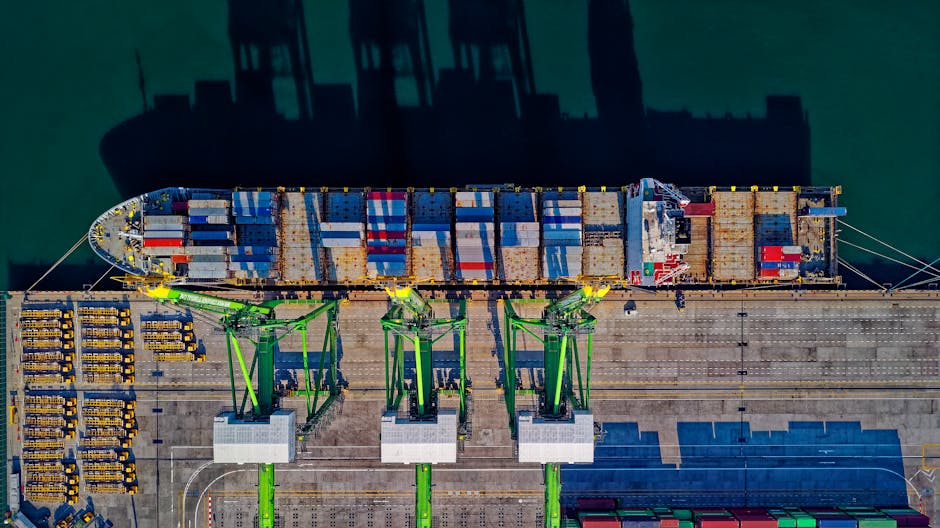
Indian and Russian officials have increasingly emphasized the International North-South Transport Corridor (INSTC), the Chennai-Vladivostok Maritime Corridor, and emerging Arctic shipping opportunities.
These projects aim to shorten transit times, reduce transportation costs, and create alternative trade routes linking India with Eurasian markets.
If even a portion of these corridors achieves operational scale, Indian exporters could gain access to new regional markets that historically remained difficult or expensive to reach.
The trade agreement discussions therefore intersect directly with logistics modernization.
Tariff reductions matter, but efficient corridors often determine whether trade actually materializes.
India's Emerging Role as a Trade Architect
The broader significance of the EAEU negotiations lies in what they reveal about India's changing role within the global economy.
For decades, India was frequently characterized as a cautious participant in trade liberalization.
The picture emerging in 2026 looks substantially different.
Whether negotiating with the European Union, expanding trade within BRICS frameworks, pursuing Eurasian integration, strengthening Gulf partnerships, or exploring new payment systems, India increasingly appears to be shaping trade architecture rather than merely responding to it.
The EAEU negotiations capture this transition particularly well.
A large and growing economy is leveraging its market size, manufacturing potential, technology capabilities, geopolitical relationships, and financial innovation simultaneously.
The result is a trade strategy built around diversification, connectivity, and long-term flexibility.
For businesses watching global trade realign in real time, that may be the most important signal of all: India is no longer simply seeking access to markets. Increasingly, it is helping design the routes through which future trade will flow.