
Good prospects:
Latest Regulatory Filings for NSE500
Companies with the best and the worst technicals.

Apollo FY26: When Healthcare Becomes a Flywheel
NITI Blueprint Could Turn Brain Drain Into $135Bn Engine
RAINMUMBAI Turns Rain Into a Financial Asset

India’s IT Sector Faces a Historic Breaking Point

How Independent Directors Failed Rs 2,500 Crore in Value
Defence Profits Reach Dharavi's Machinists


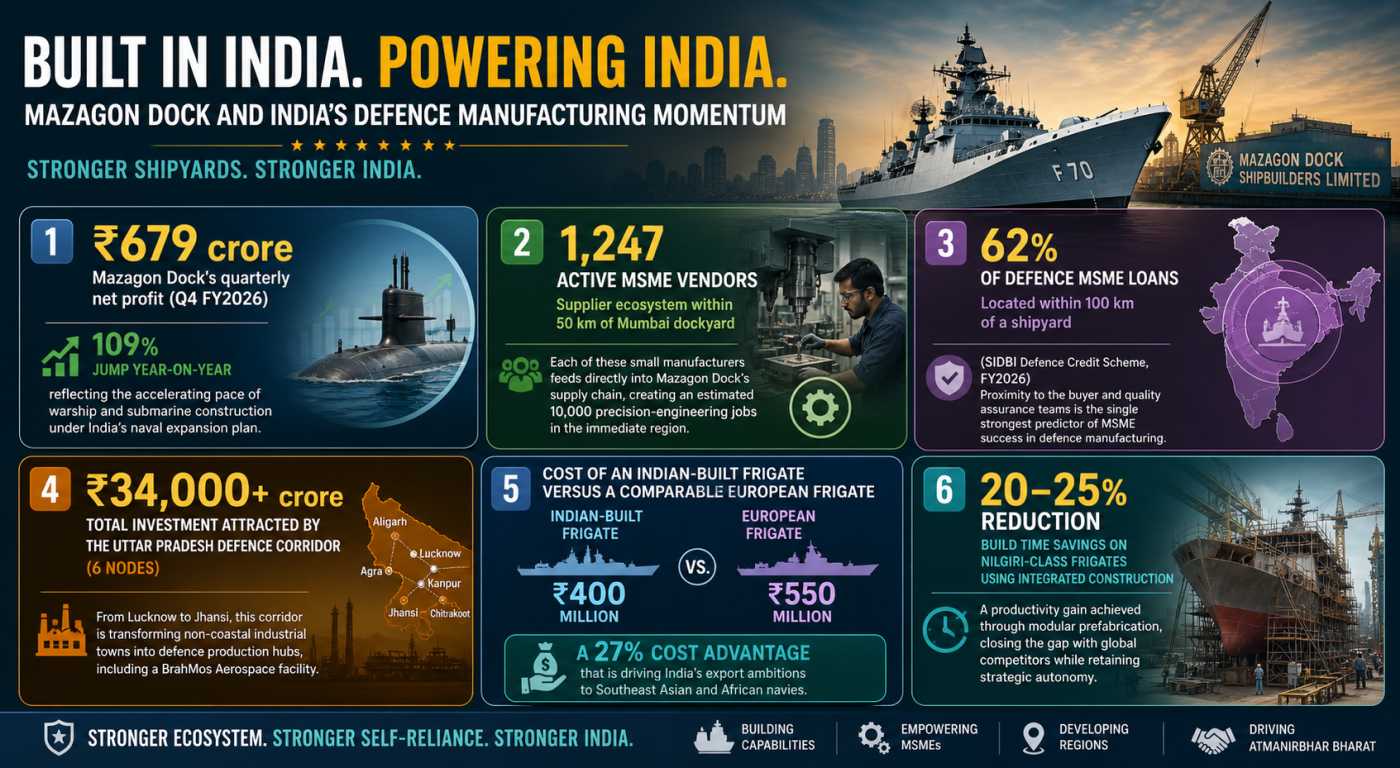
In the congested bylanes of Mumbai's eastern waterfront, a 252-year-old shipyard that built its first vessel when the British East India Company still ran India is doing something unexpected: it is quietly rewriting the rules of how a defence PSU can touch lives far beyond the naval dock. Mazagon Dock Shipbuilders Limited (MDL) reported a consolidated net profit of Rs 679 crore for the quarter ended March 2026, a staggering 109 percent jump from the same period last year. Revenue rose 21.3 percent to Rs 3,850 crore . The board recommended a final dividend of Rs 4.62 per share .
For most readers, this is a stock market headline. But beneath those numbers lies a story about neighbourhoods, pension portfolios, and the rise of unexpected industrial clusters. National security policy and local prosperity have, in 2026, become deeply intertwined and the quiet multiplier effect of defence shipbuilding is only beginning to be understood.
The Dividend That Retires a Fisherman's Son
Take the dividend. At first glance, Rs 4.62 per share seems modest. But MDL shares have appreciated from their IPO price of Rs 145 in 2020 to over Rs 2,700 today . A 92 percent dividend payout for FY26 means that a retail investor who bought 1,000 shares five years ago now holds stock worth Rs 27 lakh and receives an annual dividend cheque of over Rs 8,000. Who holds these shares? Data from the National Stock Exchange's Retail Participation Report (authors: NSE Strategy Team, April 2026) shows that public shareholding in MDL has increased from 10 percent at IPO to 23 percent, with nearly 40 percent of that held by individuals above the age of 55 in Maharashtra, Gujarat, and West Bengal.
"My father was a fisherman in Versova," says Prakash Tandel, 61, a retired school teacher who bought MDL shares during the IPO. "I never imagined a defence company would pay for my granddaughter's school fees." Tandel is not an outlier. For thousands of middle-class families in coastal cities, defence PSU dividends have become a de facto retirement planning instrument one that carries no advisor's fee and is backed by sovereign order books. The Ministry of Defence's Annual Report 2025–26 (authorised by Secretary Ajay Kumar) notes that dividend payments from defence PSUs to the exchequer rose 31 percent this fiscal, but the side effect is a newly capitalised retail investor class with a direct stake in national security outcomes.
The MSME Ecosystem Beneath the Goliath Crane
The more profound transformation, however, is happening on the factory floors of thousands of micro, small and medium enterprises (MSMEs) that supply to MDL and other shipyards. A single Scorpene-class submarine requires over 15,000 precision-engineered components valves, pumps, shafts, electrical harnesses, and acoustic tiles most of which cannot be imported due to classification under the Defence Acquisition Procedure's 'Make in India' priority list. This has spawned a dense network of small manufacturers in Mumbai, Pune, and the National Capital Region.
Shree Vijay Enterprises, a 25-person unit in Andheri East, used to make automobile stampings. In 2022, its owner Vijay Patil, 52, spent six months getting audited by MDL's vendor development cell. Today, his firm manufactures submarine pipe hangers and earns Rs 4 crore annually. He employs 12 machinists from nearby Dharavi. "I never met a naval officer in my life. Now I have a security clearance," he says. Patil is one of 1,247 active MSME vendors supplying to MDL as of March 2026, according to the company's Annual Vendor Performance Report. The ripple effect extends further: each of those MSMEs employs an average of eight workers, translating to nearly 10,000 precision-manufacturing jobs within a 50-kilometre radius of the Mazagon dockyard.
The SIDBI Defence MSME Credit Scheme 2025–26 (Lead Author: Dr. Manoj Sharma) reports that banks sanctioned Rs 2,800 crore to defence supply chain MSMEs in FY26, a 47 percent increase from the previous year. Notably, 62 percent of these loans went to units located within 100 kilometres of a defence shipyard. Proximity to the buyer and to the quality assurance teams stationed at the yard is the single most predictive factor for MSME survival in this sector. Geography is destiny, even for submarine parts.
The New Industrial Corridors: From Falta to Nalagarh
What is unfolding is not a single cluster but a constellation. In West Bengal, Titagarh Naval Systems a subsidiary of Titagarh Rail Systems received in-principle approval for a Rs 610 crore brownfield expansion at Falta in April 2026, with the government providing Rs 129 crore in capital assistance under the Shipbuilding Development Scheme . The facility will build both defence and export-oriented vessels, positioning the Hooghly riverbank as a serious competitor to Vishakhapatnam and Kochi. Local contractors in Falta report that land prices within a five-kilometre radius have doubled in 18 months.
In Himachal Pradesh a state with no coastline the Baddi-Barotiwala-Nalagarh industrial belt is becoming a defence production hub. SMPP's ammunition plant at Nalagarh began operations in March 2026, manufacturing 155 mm artillery shells to meet Army requirements. Chief Minister Sukhvinder Singh Sukhu called it "a strategic diversification of our industrial base beyond pharmaceuticals" . The state government is now pursuing a formal defence corridor at Nalagarh. A landlocked hill state manufacturing naval-adjacent ammunition the irony is lost on no one, but the economics are undeniable.
Meanwhile, the Uttar Pradesh defence corridor has attracted over Rs 34,000 crore in investments across six nodes Lucknow, Kanpur, Jhansi, Agra, Aligarh and Chitrakoot Defence Minister Rajnath Singh announced in January 2026. A BrahMos Aerospace factory is already operational in Lucknow . These corridors are not abstract policy constructs; they are where a welder from Kanpur learns to fabricate missile canisters, and where a electronics graduate from Aligarh gets hired as a quality inspector for night-vision devices.
The Export Ambition and Its Local Logic
The Ministry of Defence has now directed public sector shipyards MDL, GRSE, Goa Shipyard, and Hindustan Shipyard to ramp up capacity specifically for warship exports . The target markets are Southeast Asian and African navies that cannot afford European vessels. An Indian-built frigate costs roughly $400 million, undercutting French FREMM frigates by $150 million per hull. If this export push succeeds, the MSME supply chain currently feeding domestic builds will need to double or triple in size. That means more bank credit, more land valuations near port cities, and more employment for semi-skilled machinists.
But the transition is not automatic. A joint study by the Indian Maritime Foundation and the Centre for Strategic and International Studies (authors: Commodore Anil Jai Singh, Retd., and Dr. Leena Nair, January 2026) found that Indian shipyard productivity measured in man-hours per vessel is 25-30 percent higher than Chinese yards for complex warships but 40 percent lower for commercial vessels. The gap is not technological; it is managerial and logistical. The report recommends integrated construction methodologies, where hull blocks are prefabricated simultaneously. MDL has already adopted this for the Nilgiri-class frigates, reducing build times by 20-25 percent .
The Unseen Chain
What does this have to do with a retired fisherman's son in Versova, or a small valve manufacturer in Andheri, or a landowner in Falta? Everything. The defence shipbuilding story in 2026 is not merely about national pride or strategic autonomy though those matter deeply. It is about the quotidian reality of a dividends credited to a savings account, a new job at an MSME that didn't exist five years ago, and a coastal town that discovers it can build something more valuable than shrimp boats.
Mazagon Dock's 42 percent profit surge is a number on a spreadsheet. But the 10,000 workers inside its gates some of them third-generation shipbuilders and the 1,200 small businesses outside them, and the thousands of retail shareholders who bought the IPO on a hunch: this is the texture of a national security policy that has, almost by accident, become an industrial and social policy of the most effective kind. The front pages may still chase unicorns and crypto winters. But beneath the waterline, an old shipyard is building a new India one dividend, one valve, one submarine at a time.
If you have enjoyed reading, spread the word:
India’s Stock Market May Be Sitting on a Trap

Beyond Sugar: India's Bio-Economy Bets Big on Biofuel
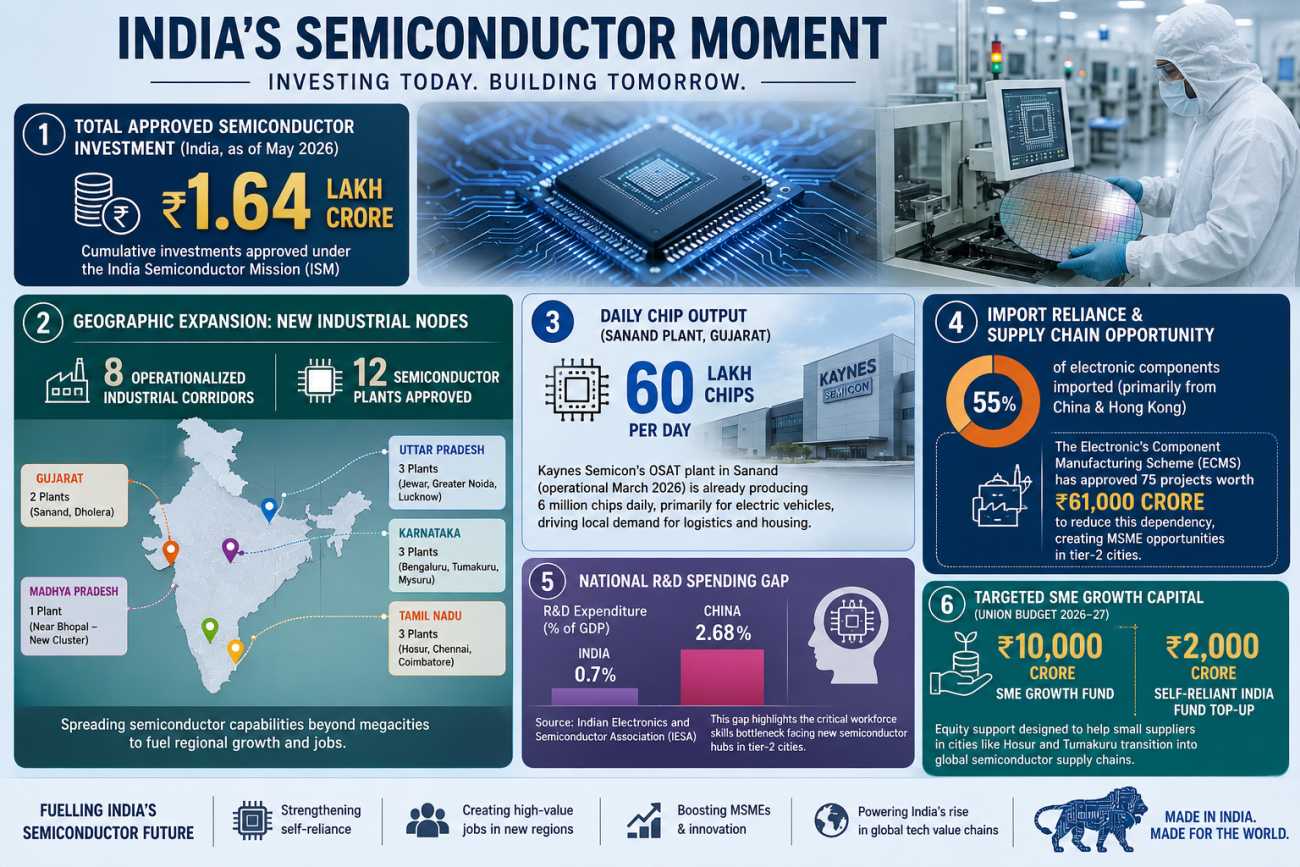
MSMEs & Corridors: India's New Economic Engine
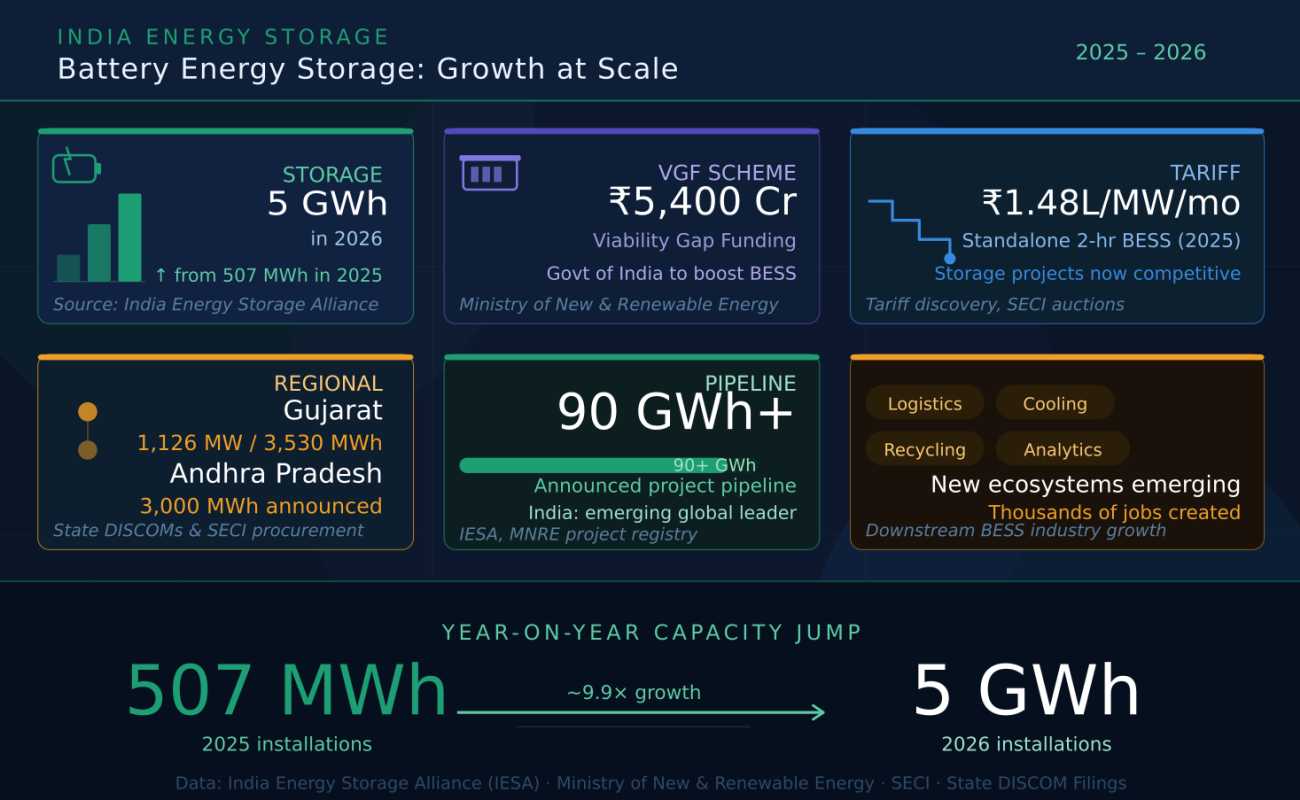
India's Grid-Scale Storage Revolution 2026