
More about State Bank of India
Fundamentals for State Bank of India
Regulatory Filings for State Bank of India

The Renewable Success Story Beyond Solar

Startups Mint India’s New Billionaires

India's Biggest IPO Has a Bigger Meaning

From Watches to Wealth: Titan's New Empire
Fundamentals for State Bank of India



Business Operations:
Sector: Financial ServicesIndustry: Banks - Regional
State Bank of India provides banking products and services to individuals, commercial enterprises, corporates, public bodies, and institutional customers in India and internationally. The company operates through Treasury, Corporate/Wholesale Banking, Retail Banking, Insurance Business, and Other Banking Business segments. It offers personal banking products and services, including current accounts, savings accounts, salary accounts, and fixed and recurring deposits; home, personal, auto, education, and gold loans, as well as loans against insurance policies, property, and securities; overdrafts; mutual funds, insurance, equity trading, portfolio investment schemes, remittance services; digital lending; and mobile, internet, and digital banking services. The company also provides corporate banking products and services comprising corporate accounts, working capital and project finance, deferred payment guarantees, corporate term loans, structured finance, dealer and channel financing, equipment leasing, loan syndication, construction equipment loans, financing Indian firms' overseas subsidiaries or JVs, and cash management, as well as trade and service products. In addition, it offers NRI services, including accounts and deposits, remittances, investments, and loans; agricultural banking services; supply chain finance, and deposits and transaction banking services for SME customers; and international banking services. Further, the company provides life and general insurance; estate planning services; and merchant banking, advisory, securities broking, business & management consultancy, trusteeship service, factoring, payment solution, asset management, investment management, credit cards, and custody and fund accounting services. The company was founded in 1806 and is headquartered in Mumbai, India.
Revenue projections:
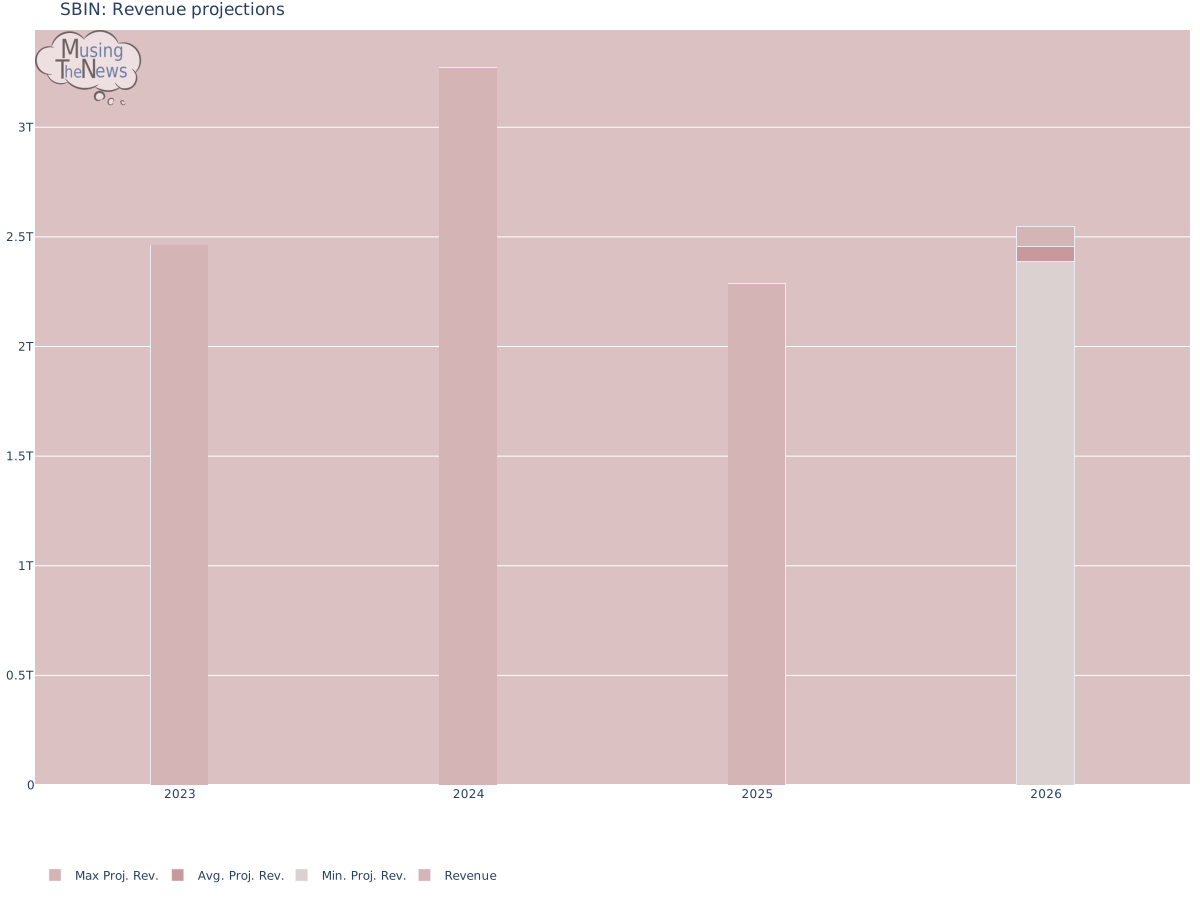
Investors may react cautiously to news that SBIN's revenues are forecasted to be lower than last year's. Such declines are likely to have a negative effect on the company's bottom line, which can lead to concerns about profitability and hinder investor confidence in the company's future performance.
Financial Ratios:
| currentRatio | 0.000000 |
|---|---|
| forwardPE | 10.231371 |
| debtToEquity | 0.000000 |
| earningsGrowth | -0.031000 |
| revenueGrowth | 0.071000 |
| grossMargins | 0.000000 |
| operatingMargins | 0.289600 |
| trailingEps | 91.150000 |
| forwardEps | 102.175950 |
State Bank of India's Forward PE is well-positioned, indicating the stock price is favorable compared to its earnings. This suggests the stock is not overpriced and offers room for growth, making it an attractive option for investors looking for future value appreciation.
State Bank of India's low earnings and revenue growth highlight potential profit shrinkage. This suggests that the company may struggle to maintain its financial performance, raising concerns about its future profitability.
SBIN's negative gross and operating margins indicate that the company is currently unprofitable at both the production and operational levels. This suggests significant challenges in managing costs and generating revenue, which could impact its overall financial health.
State Bank of India's forward EPS is higher than its trailing EPS, suggesting the company is expected to see an increase in profitability this year. This points to positive growth, indicating that State Bank of India is projected to improve its financial performance compared to the previous year.
Price projections:
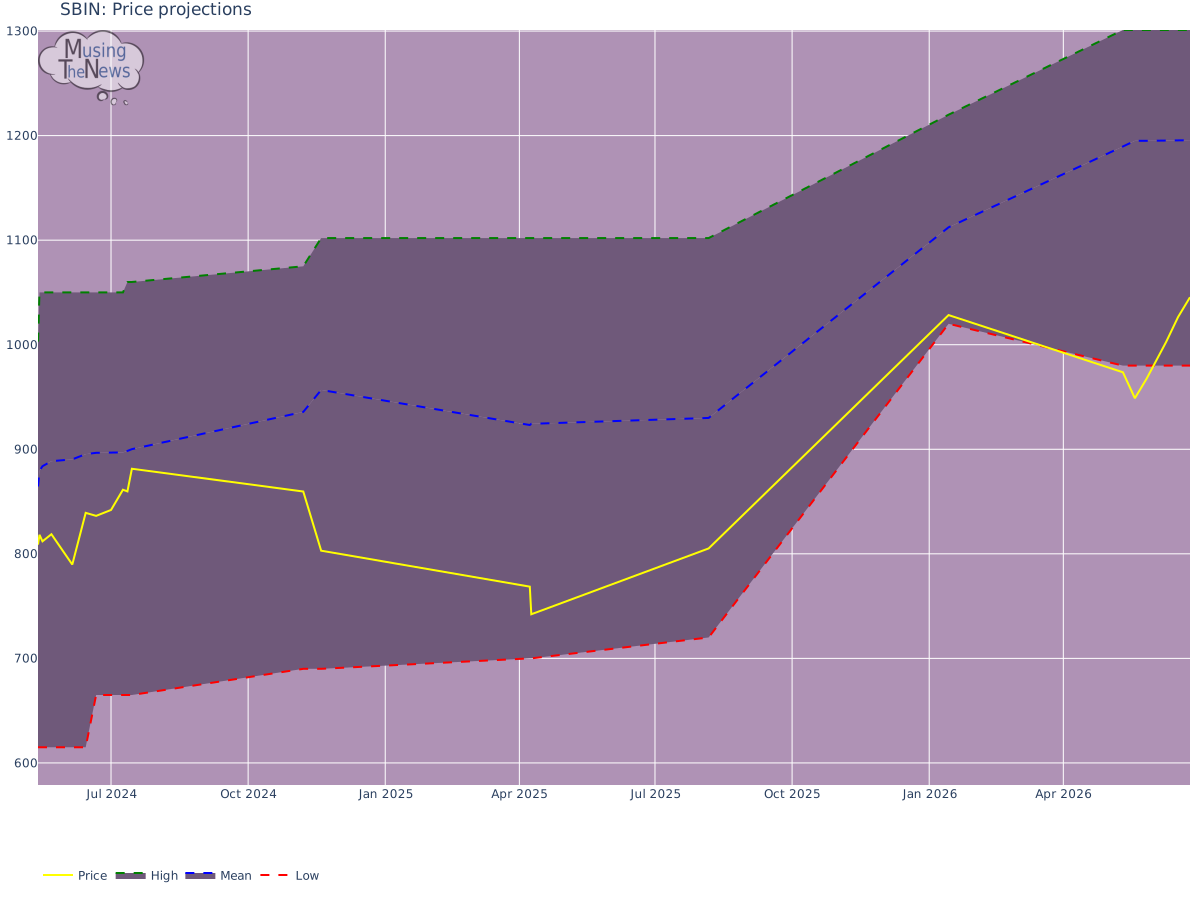
Price projections for SBIN have gradually risen over time, signaling increased optimism about the company's future prospects. This steady upward revision reflects growing confidence in SBIN's market potential.
Recommendation changes over time:
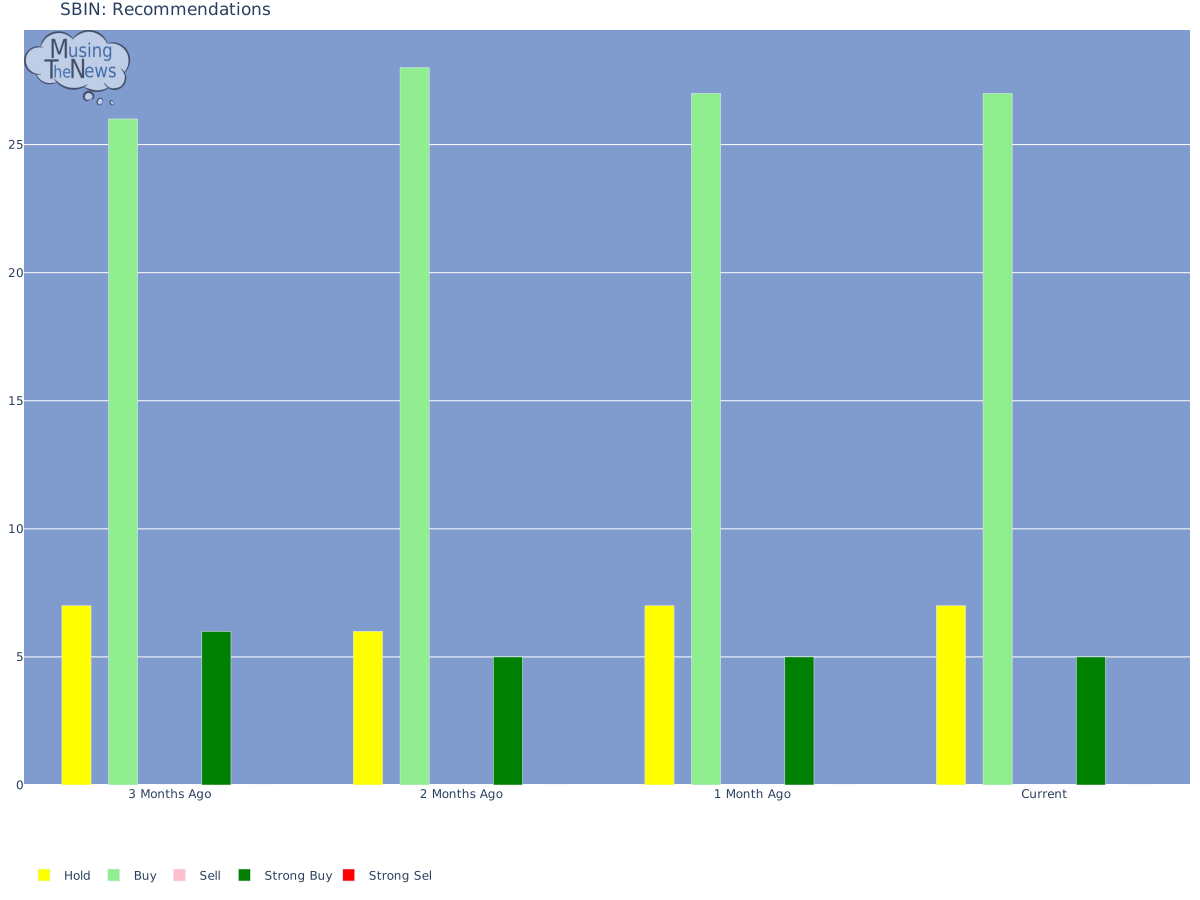
SBIN has recently received a buy bias from analysts, indicating that the stock is being perceived as a favorable investment. This positive sentiment could encourage investors to see SBIN as a wise place to allocate their funds, potentially leading to increased interest in the company's stock.
If you have enjoyed reading, spread the word:
Good prospects:
Companies with the best and the worst fundamentals.
Latest Regulatory Filings for NSE500
Companies with the best and the worst technicals.

SEBI's New Gateway Is Rewiring Foreign Investment in India

Why Japan Backs India’s Truckers
India's $69B Eurasian Trade Power Play