

Tier 2 Towns Are Outsaving India's Big Metros

The Renewable Success Story Beyond Solar

Startups Mint India’s New Billionaires
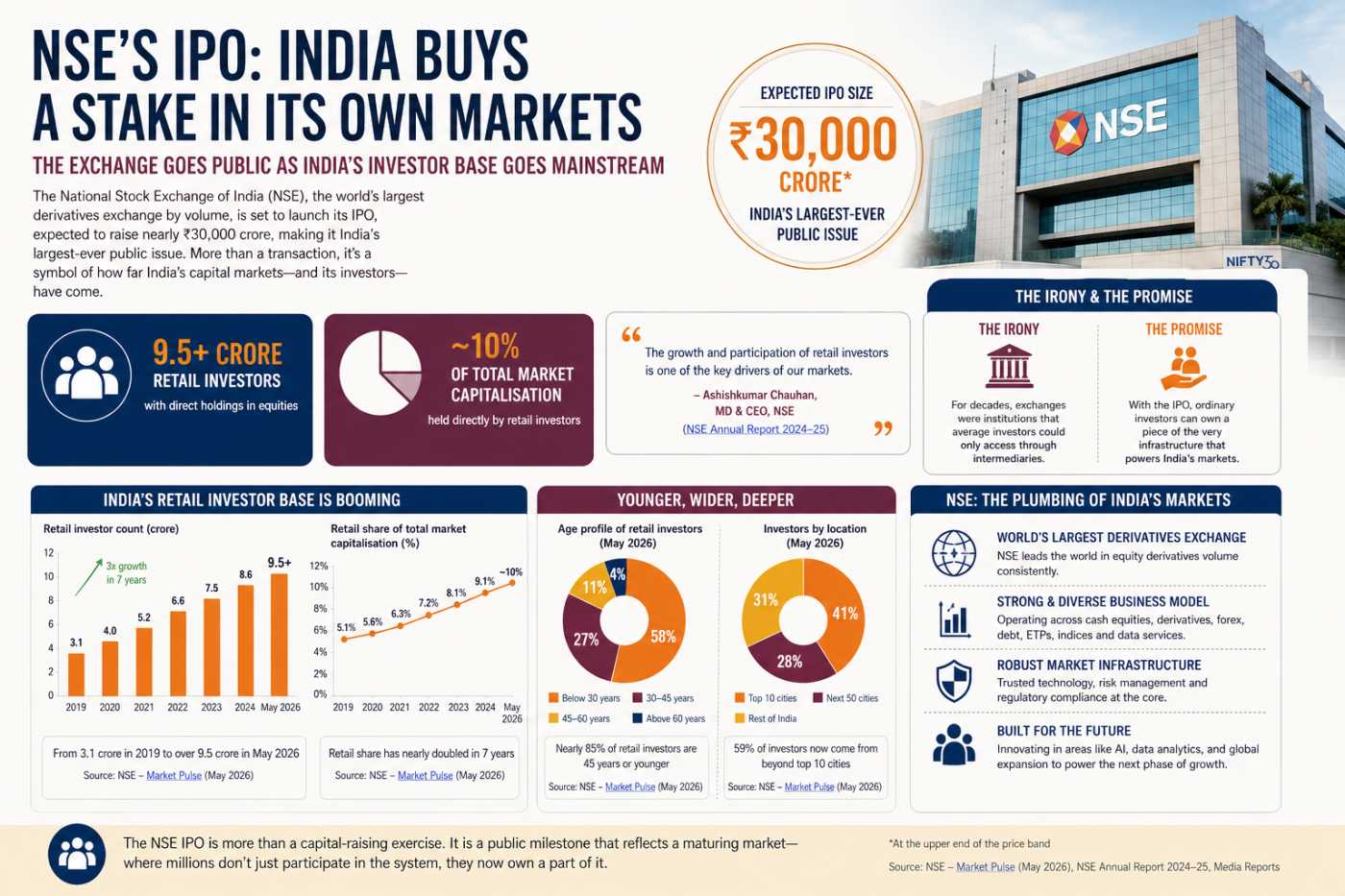
India's Biggest IPO Has a Bigger Meaning
Technicals for Infosys Limited



Price Summary
Infosys Limited's stock tumbled -2.06% today, marking a poor performance in the market.On 2026-07-01, Infosys Limited's stock opened at 1006.0, reached 1014.0, hit a low of 982.4, and rose -2.06% to close at 985.3, with 13033636 shares traded.
Over the previous 52 weeks, the stock reached a high of 1689.8 and a low of 985.3.
Technicals
Aroon: The continuation of Aroon's bearish trend, with Aroon Down still at the 100 level, indicates strong bearish pressure. However, further analysis with additional indicators is essential to better understand the trend's potential impact on the market.

Bol. Bands: The BOLL BANDS is showing a neutral stance, not indicating a clear upward or downward trend for Infosys Limited. This suggests a period of market balance, where neither side is showing dominance.

Parabolic SAR: The PSAR maintains a bearish outlook for INFY, establishing a key resistance level that could limit further gains. This ongoing bearish trend suggests that the market may struggle to overcome this resistance, keeping upward movement subdued.

Stochastic: With the Stochastic K-line below the D-line and under 20, the market shows signs of a mildly bearish trend. This configuration suggests possible weakness for INFY, but the bearish sentiment is not overly strong. Traders should be aware of this potential shift and look for further confirmation.

Tripple Moving Agerage: A bullish trend is indicated by the alignment of the 20-50-100 period moving averages for INFY, but this strength is tempered by the slopes of the faster averages, which hint at a possible reversal. The overall trend remains positive, yet the weakening signals from the shorter-term averages suggest that a change in direction may be imminent.

Before focusing on technical indicators like stock price and volume, it's important to consider a company's fundamentals. These include financial metrics such as profitability, revenue growth, and debt levels. Furthermore, understanding the industry landscape, including competition and consumer trends, provides essential context. By combining this fundamental analysis with technical data, investors can make more informed decisions and draw deeper conclusions about the company's potential for future growth and success.
If you have enjoyed reading, spread the word:
Good prospects:
Companies with the best and the worst fundamentals.
Latest Regulatory Filings for NSE500
Companies with the best and the worst technicals.

From Watches to Wealth: Titan's New Empire

SEBI's New Gateway Is Rewiring Foreign Investment in India

Why Japan Backs India’s Truckers